
From an MA in Arts to Fruit Farmer at a Property Company
Having studied rural sociology for three years, I still felt there was a veil between me and the industry. I wanted to understand through practice why being a farmer is so difficult, and where exactly the hardship and struggles lie. At the same time, I knew that diving headfirst into the fields wouldn’t align with society’s expectations for someone with a higher education. As a compromise, I chose to become a fruit farmer at a real estate company.
I. Starting fruit farming from scratch: a bit of a challenge
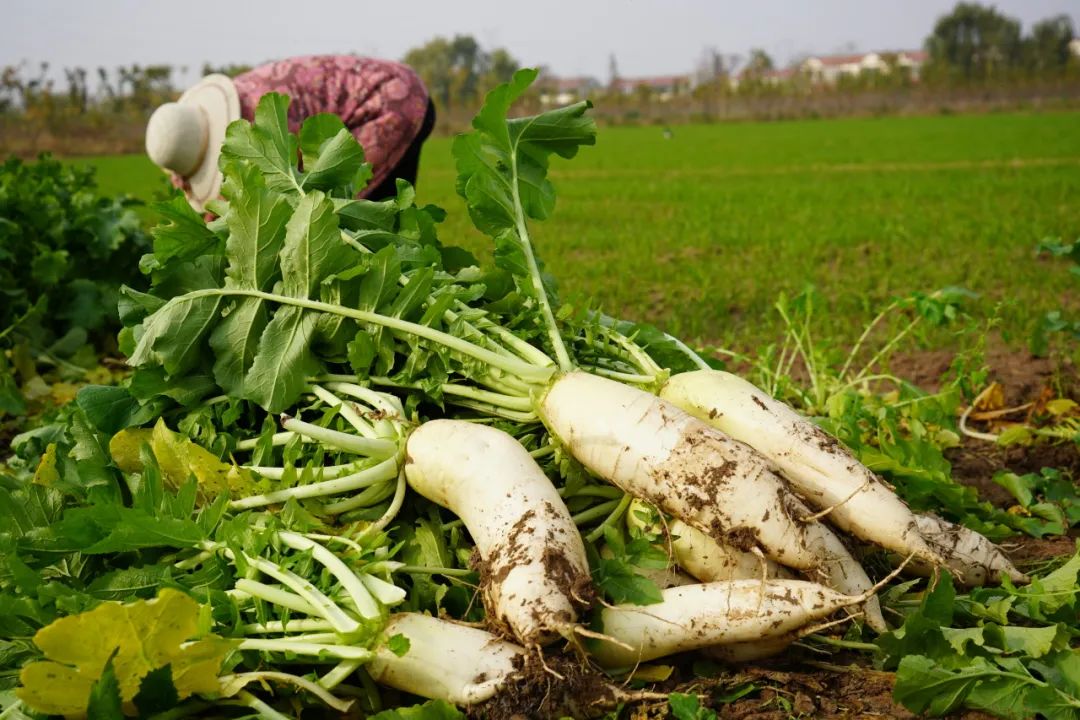
My responsibilities included planning outdoor educational activities for the farm, as well as the production management of the farm and orchards. Among these, fruit yield and sales turnover were key KPIs. Initially, I was reluctant: “I can handle the events, but I really don’t know how to grow fruit. I have neither the knowledge nor the experience—how could I possibly do it?”
I expressed my concerns honestly, but to my surprise, my manager simply chuckled and said, “No matter, we’re all amateurs here. Let’s just get started!” And so, somewhat bewildered, I began my two-year stint as a fruit farmer.
II. Experimenting with New Varieties
City S is situated on the alluvial plain of the Yellow River flood zone, with fertile soil and favourable climatic conditions. As a result, fruit trees are exceptionally common locally, with at least ten thousand mu of orchards in the surrounding area. Local farmers have been growing fruit since the 1960s; besides some peaches, grapes, and strawberries, the primary crop has remained pears.
While local pears have received National Geographical Indication protection, they haven’t achieved the fame of Korla fragrant pears or Dangshan crisp pears. One reason is that the local pear varieties are simply too old-fashioned and no longer align with current consumer preferences. Every April, during the pear blossom season, the orchards are a magnificent sight; however, the resulting pears lack sweetness and crunch. With no market demand, the price naturally remains low.
Guided by staff from the agricultural technology station, the company selected an early-ripening pear variety with high market acceptance. This variety is a new hybrid developed by the Jiangsu Academy of Agricultural Sciences in recent years and is well-suited for local cultivation.
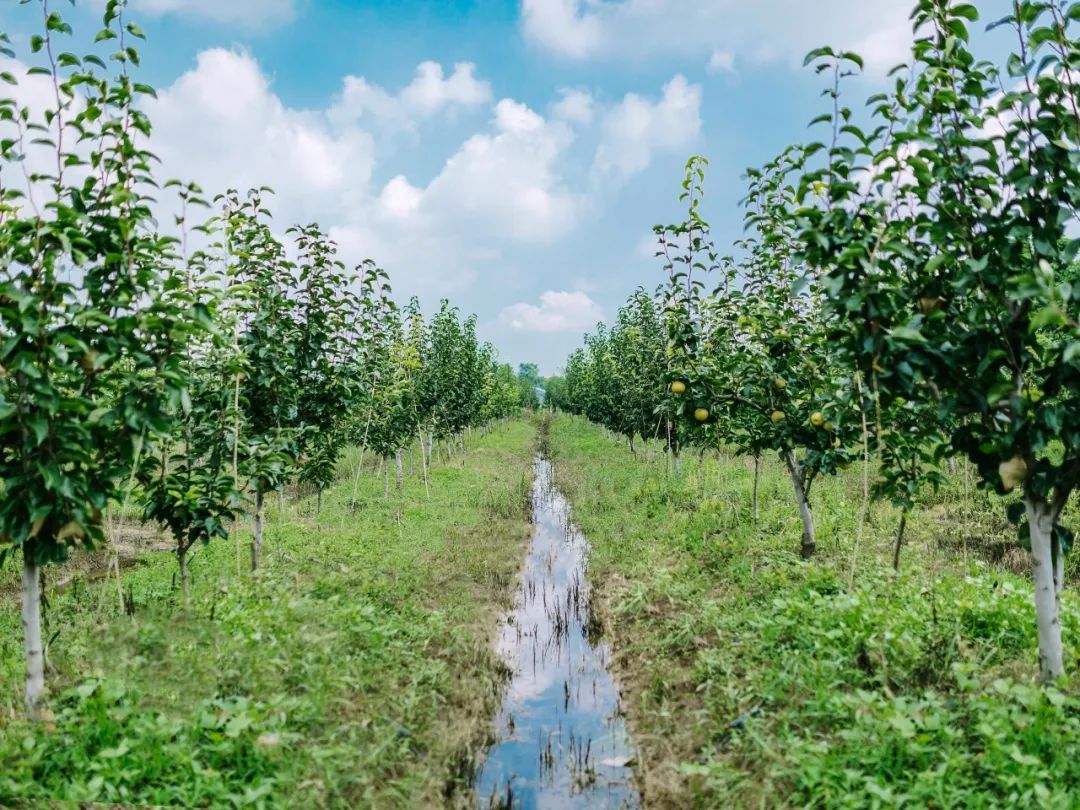
III. Early-ripening pears: not so easy to grow
Work during spring and summer primarily consists of pollination, flower and fruit thinning, and bagging. While the new variety has a relatively high self-pollination rate, polliniser trees must still be planted, and beehives placed or hand-pollination performed to ensure a successful fruit set.
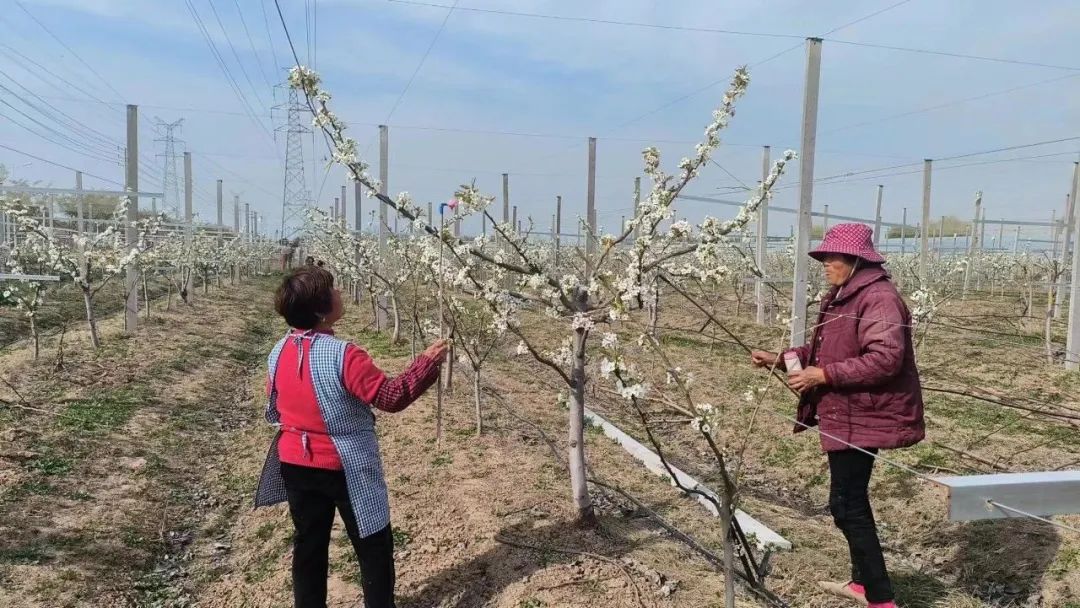
If there is heavy rain during the pollination season, both bees and hand-pollination are affected, which can lead to severe yield losses. Even when the weather is favourable, pollination is no easy task. The flowering period for pears lasts only about 20 days, and with our orchard spanning nearly 300 mu, the sheer volume of work required to dust tens of thousands of trees with pollen is almost unimaginable.
After pollination, there is a brief respite of about ten days before flower and fruit thinning begins. Selecting which fruit to keep is a precise art; it is essential to maintain an adequate leaf-to-fruit ratio—a skill that, unfortunately, I have yet to master.
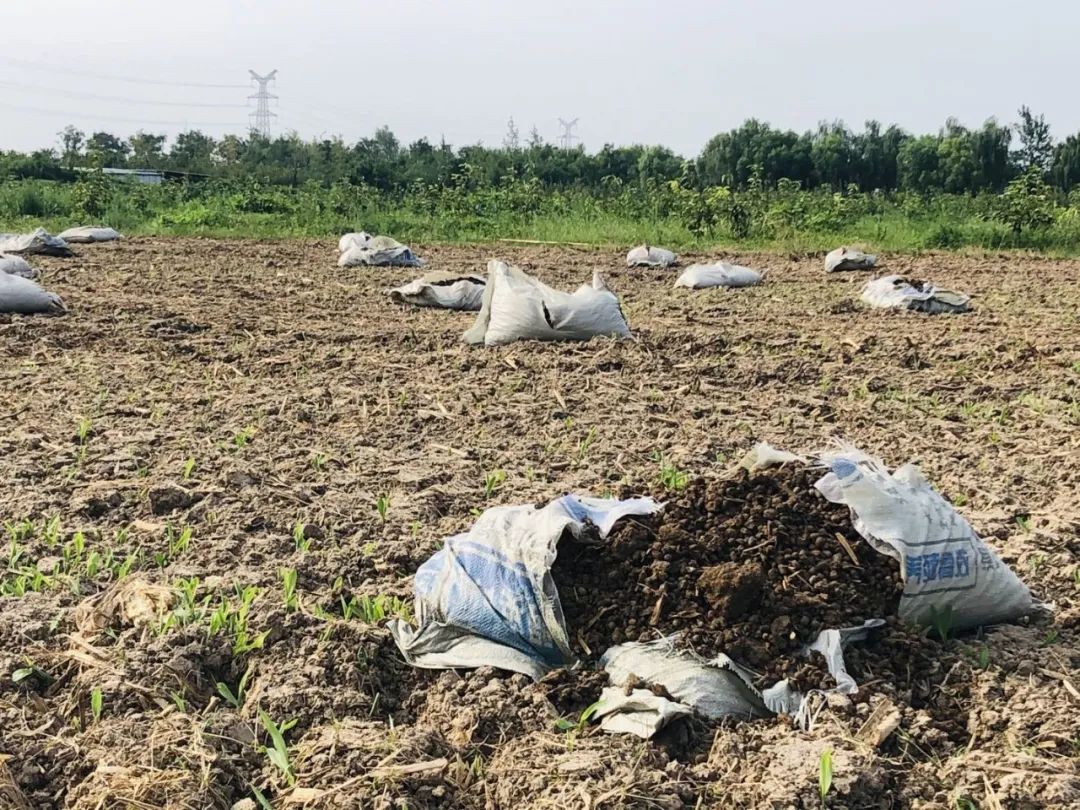
Weeding is another monumental task. To maintain soil fertility and water retention, we leave some weeds between the pear trees. However, if these weeds become too lush or their roots grow too deep, they may compete for soil moisture and nutrients. Therefore, weeding is generally required every month during the summer. When we are short-staffed, the weeds often grow faster than we can remove them.
For a novice fruit farmer like me, all of these tasks were entirely new experiences. Yet, beyond the fieldwork, other challenges awaited me.
IV. People Management
I remember one occasion when a particularly efficient older worker suddenly resigned, explaining that she needed to pick up her granddaughter from nursery between three and four in the afternoon, creating a scheduling conflict. However, it was a critical period for bagging; losing a skilled worker could mean hundreds of trees would fail to bear fruit. After some thought, I persuaded her to bring her granddaughter to the office area to play until it was time to go home together.
Small incidents like this happened frequently. When dealing with workers who are more than two decades my senior, the most effective management strategy is to remain humble and communicate in a way they fully understand. More importantly, this process requires a fundamental understanding of and respect for the farmers.
Beyond managing the team, I also had to purchase various pieces of agricultural machinery while adhering to company administrative regulations. According to the rules, I must submit a fund utilisation plan for the following month at the start of each month, and equipment can only be purchased after passing through multiple layers of approval. However, many needs in agricultural production are spontaneous. During my first year, in order not to miss the critical farming windows, I exhausted every possible means of negotiating with the administration—a process that, I must admit, was quite draining.
V. Growing Pears is Hard, Selling Them is Harder
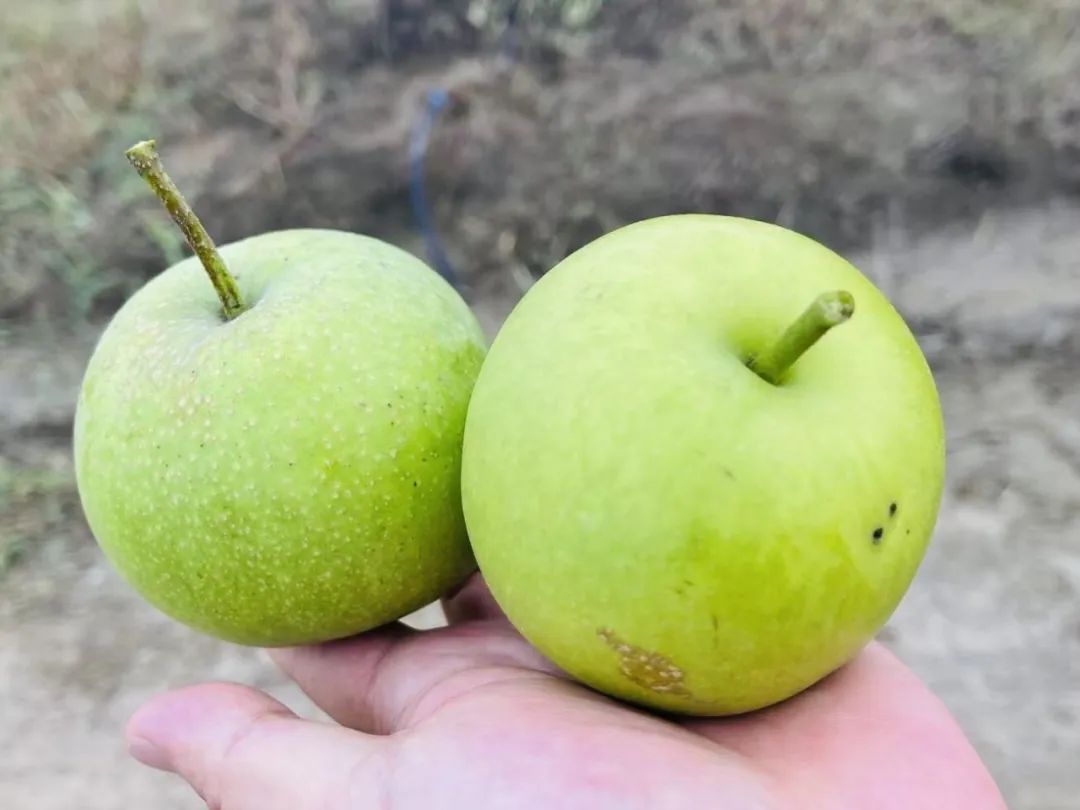
Despite enduring many ‘firsts’, a first year of trial and error eventually saw the orchard bear fruit. Having my colleagues praise the taste of the pears gave me a profound sense of accomplishment. However, another matter had become pressing.
As is well known, fresh fruit has a very short shelf life and is difficult to store. The yield from 300 mu was neither large nor small, making it uneconomical to either build or rent cold storage. Faced with the pressure of performance reviews, our only option was to strive to sell everything in a short space of time.
Looking back, it seems our expectations for the new variety were somewhat overly optimistic. After visiting numerous fruit markets, supermarkets and fruit shops, we discovered that the orchard’s early-ripening pear variety was relatively new, and market acceptance was low.
The scale of the orchard presented another awkward problem: on the one hand, it wasn’t small enough to be a Community Supported Agriculture (CSA) project, where a few dozen or hundred consumers could absorb the farm’s entire output. On the other hand, it wasn’t large enough to be like a major agricultural company with stable buyers for bulk purchasing.
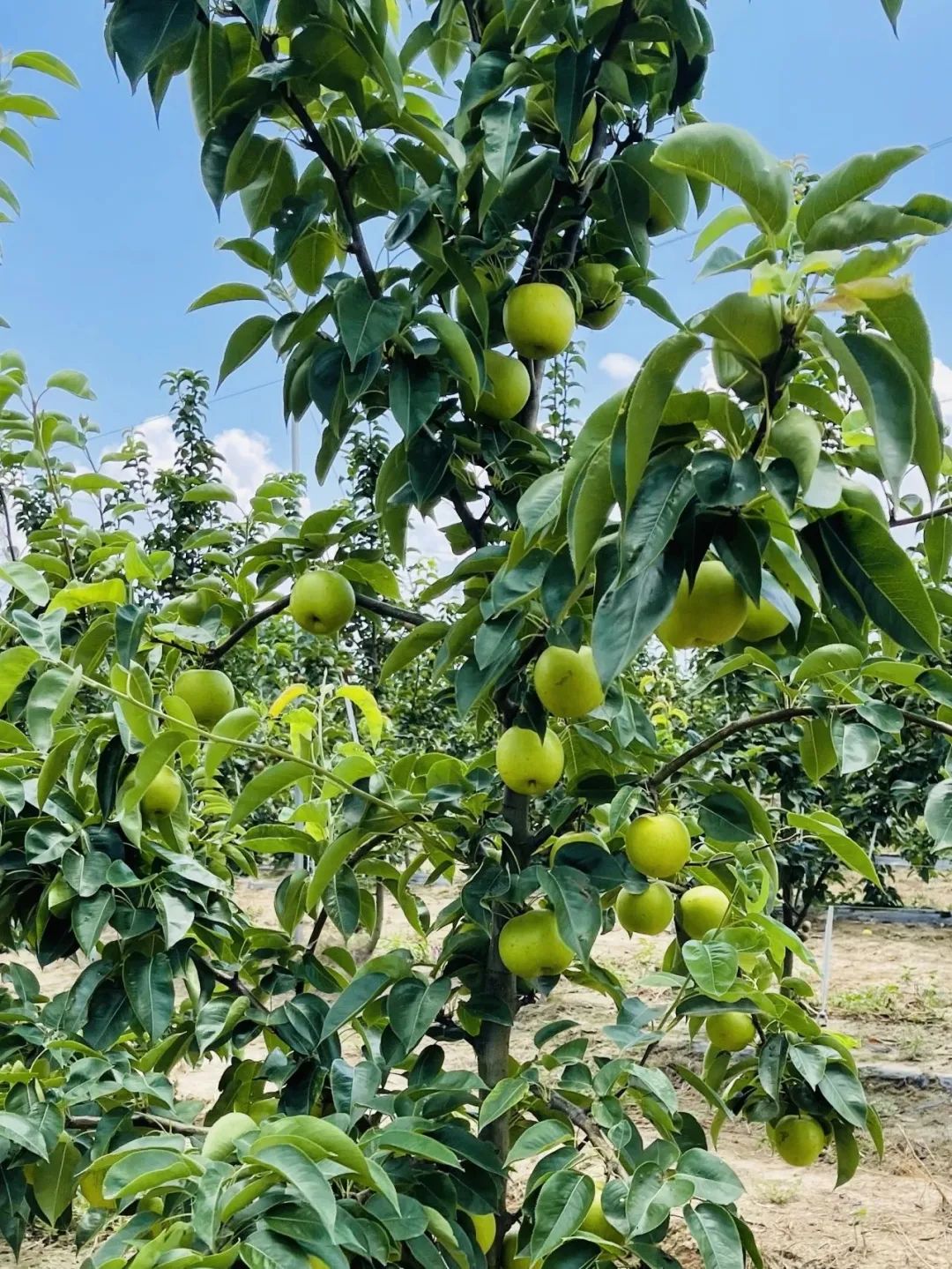
Some argue that the rise of e-commerce sales models represents a bottom-up revolution starting from the end of the industry chain. However, from my observation, consumers can only decide whether to enter the online market; they have no control over what they are actually able to buy. Small producers are shut out by the barriers of commodification and standardisation, staring at the consumers from the other side of the door.
To bypass the various intermediaries in the supply chain and reach consumers directly, we eventually opted for traditional “circle” marketing: taste before you buy, word-of-mouth, and targeted sales. From managing orders and shipping to after-sales customer service, everything was handled by our own team; it truly felt as though “every single step was a struggle”.
VI. Bidding Farewell to the Orchard
Regardless, agriculture is worth experiencing. Only by understanding the relationship between humans, food, and nature from the producer’s perspective can one truly “vote with their consumption”.
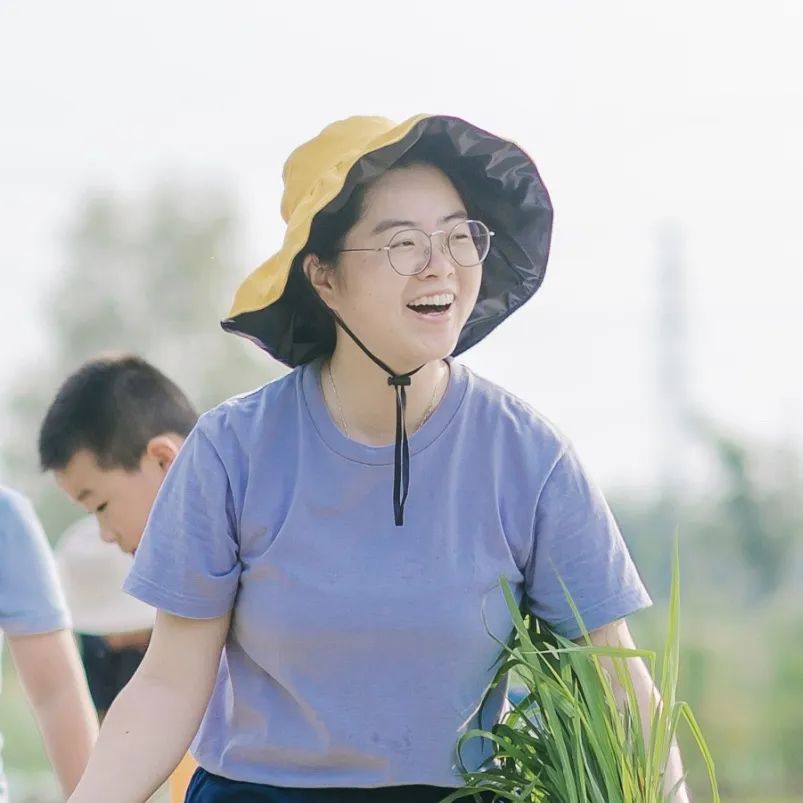
All images in this article were taken by the author
Editor: Zen