Brazilian deforestation: what does it have to do with us?
The Amazon rainforest is disappearing at a rate of millions of hectares per year.
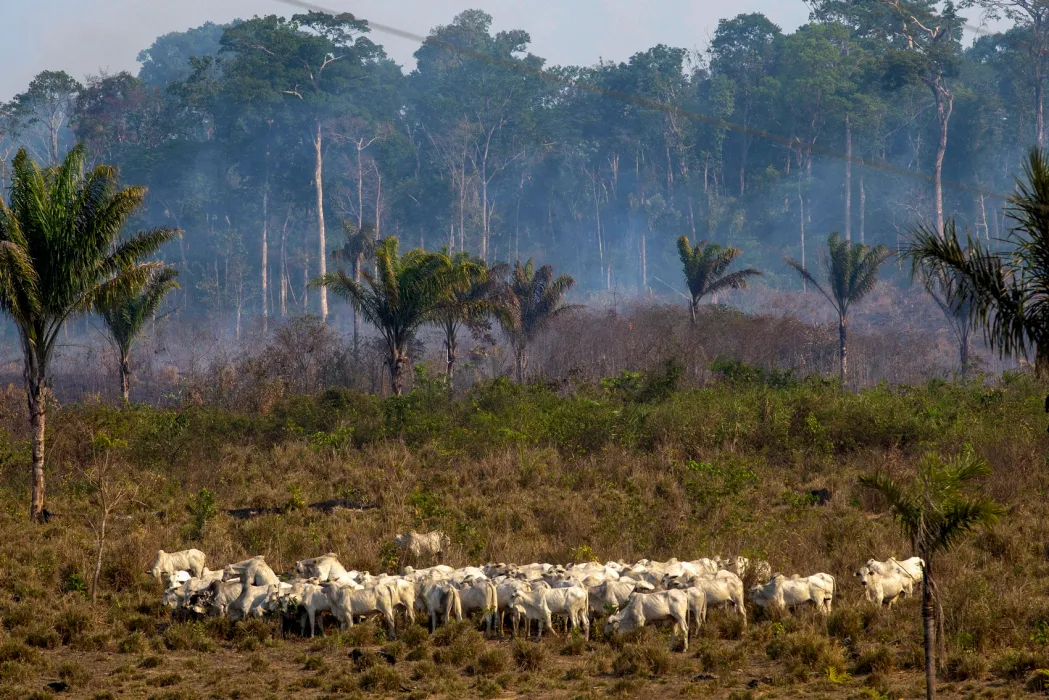
In the first two decades of the 21st century, deforestation in the Brazilian Amazon covered as much as 44 million hectares—an area larger than China’s Yunnan Province. Livestock development is the primary driver of illegal deforestation; low-cost pastures and feed have established the cheap competitive advantage of the Brazilian beef industry. Industry giants, led by JBS, have been sourcing livestock from illegally deforested pastures, profiting from environmental destruction.
In January this year, a piece funded by Foodthink’s Lianhe Project, ‘Fake Meat’ Displacing Real Meat: Tables, Herders, and the Amazon, found that JBS meat products have reached the tables of herders in the Qinghai-Tibet plateau. Since 2022, mainland China has imported over one million tonnes of Brazilian beef annually, accounting for more than 40% of total beef imports. Additionally, Europe and Hong Kong, China are also major importers of Brazilian meat products.
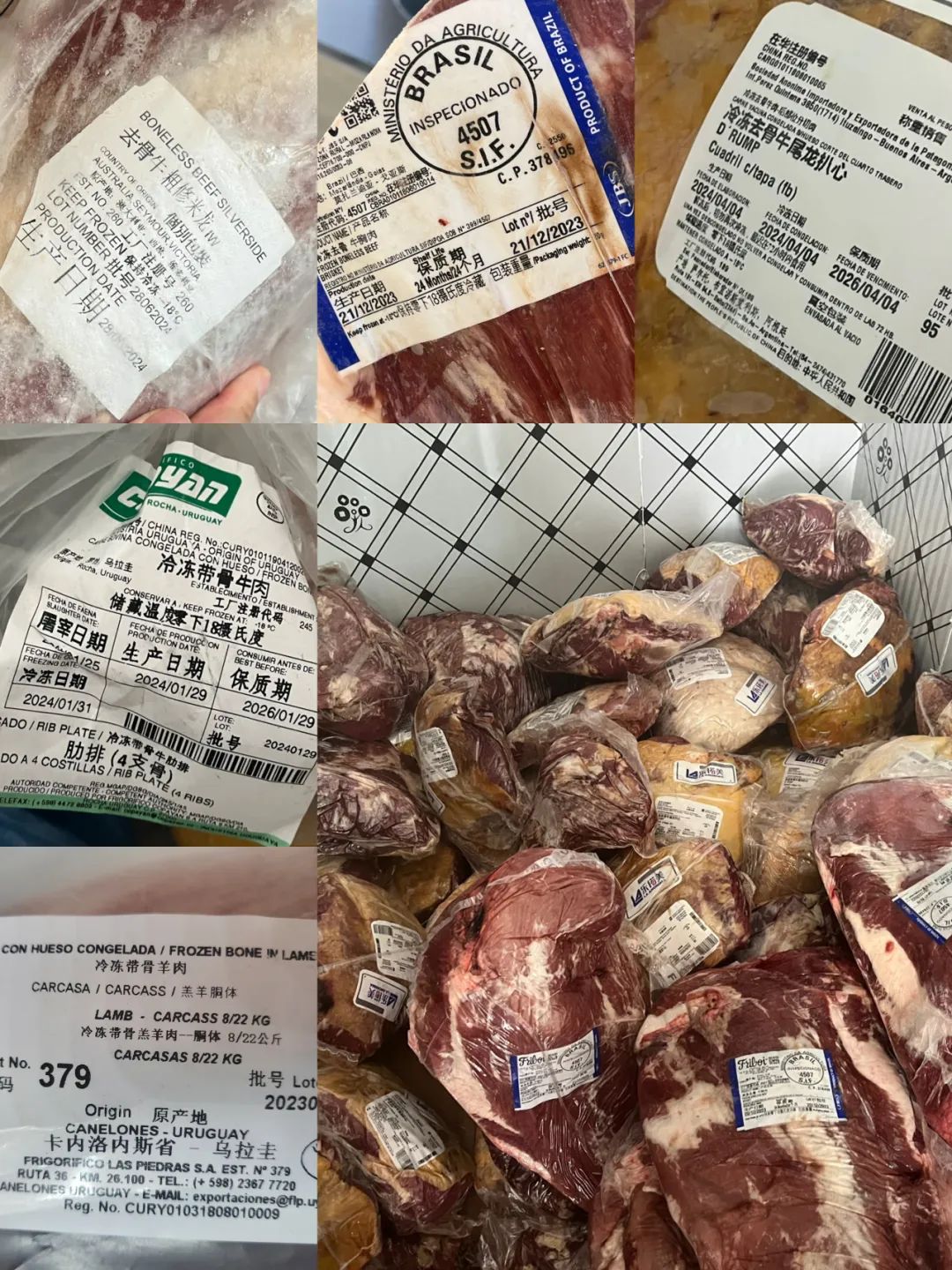
Some believe the link between beef consumption and deforestation is pure nonsense—a typical example of the ‘China is to blame’ narrative. Some support environmental protection, arguing that importing Brazilian beef eases the pressure on China’s own grasslands, making it a ‘necessary evil’. Others prioritise food security, believing that relying on imports will eventually leave the country vulnerable to supply chain strangulation.
There are also readers who attempt to understand the complexities the article seeks to present. They see the destructiveness and negative externalities of industrial production systems, the multifaceted value of traditional livestock farming, and feel firsthand how the loss of biodiversity, accelerating climate change, and injustices within the agri-food system affect our shared future as a global community.
What do you think? Which end of the spectrum do your thoughts lean towards? We invite you to participate in the poll at the end of the article and leave a comment to tell us your thoughts.
Viewpoint 1: They just want to raise the prices!
What a baffling article. They just want to raise the prices, relying on the small amount of meat the herders sell. The rich can afford it, but ordinary people can’t even dream of it!
The core issue is that they want to protect their own interests. Imported meat has significantly impacted the previously stubbornly high prices of beef and mutton, so they are using this distinction between ‘real’ and ‘fake’ meat to prop up those previous high prices.
Meat has become cheaper; it’s just that their interests have taken a hit. Ordinary people just want to get by—they’ll buy from whoever is cheapest.
An interesting point is that those who raise cattle all believe their cows are superior and should be sold for more. However, most people who pay for beef do not accept that price; some herders themselves don’t even accept it, buying cheap imported meat for their own consumption. No one denies that grass-fed is better than grain-fed, but no one mentions that grass-fed allows the rich to eat better, while grain-fed allows ordinary people to afford beef. There’s no need to emphasise that Tibetan yak meat contains Omega-3s that are good for cardiovascular health; the fact that ordinary people can eat beef, and eat more of it, is already an improvement in quality of life. It seems the yak herders in China have contributed almost nothing to this, yet they think they should earn more. In short, if you think your cows are so great and you should get more money, sell them to the rich—sell them to the world.
On one hand, I sympathise with the herders being displaced and loathe the profit-driven capital that destroys the ecosystem; on the other hand, I feel that cheaper beef allows more people to eat more meat. Per capita meat consumption in China is already low.
Objectively, I understand and sympathise with the herders, but on my salary of 3,000 yuan, I also want to be able to afford a bit of beef.
As an average consumer, it is entirely understandable to prioritise price when it comes to the staples of daily life. Only when the granary is full can one appreciate etiquette; only when food and clothing are sufficient can one understand honour and shame. Faced with such grand issues, most people will still prioritise their most basic survival needs. Real change is difficult to achieve through individual effort alone.
Point 3: Small-scale farms simply cannot compete with industrial farming
Free-range farming can never compete with intensive industrial farming; that is the law of business.
Their grass is better, their technology is superior; if you don’t think about improving production methods, all you can do is shout from the sidelines.
This is merely a glimpse of the so-called advanced and developed products of modernisation, such as technological progress and the division of labour. One could call it progress, or one could call it a regression, but it is a trend that evolves with the times. It can neither be resisted, nor is it clear why one would wish to.
Many people cannot afford high-priced beef and mutton; after all, their income is what it is. Having imports to supplement the supply lowers the price, meaning more people can afford to eat meat. Is that not a good thing? As for the income of herders, industrial transition is a process, and some pain during that period is inevitable. Just think of the hardships faced during the era of mass redundancies; it was the same for people across the whole country.
Why is the cost of raising beef cattle so low for foreigners but not in China? Is it not because the farming methods in pastoral areas are too inefficient and the costs too high? Is it not that imported meat is cheap, rather than domestic meat being too expensive? What is there to say about small-scale farms losing to industrial ones?
Traditional production models in the era of a market economy must be reformed; they must keep pace with the times.
A very well-written and realistic article. As a native of Gannan, this piece touches on things that few locals ever ask about. As a region on the periphery of the Qinghai-Tibet Plateau, animal husbandry in the livestock areas of our L, M, and X counties was once a pillar industry. However, due to traditional livestock farming similar to family contracting, as well as natural factors like the lack of large-scale pastures, local livestock farming has remained very local and traditional. It cannot compete in the market with large-scale, capitalised, factory-style livestock industries. It is like comparing livestock industry in the American West with livestock factories on the Pampas; with the globalisation of economy and capital, failure is inevitable. South America doesn’t just produce Brazilian beef, nor is it only in recent years that Argentine beef has entered the Chinese market. Everything that exists has its reason; to some extent, the consumption patterns of most consumers represent market demand… the market determines demand, and capital flow absorbs sunk costs. However, as a local, I do not wish to see a local industry that provides a livelihood be infinitely compressed or left wondering where to go. I believe the sustainable development and industrial upgrading of local livestock farming are matters of urgency. Many of us locals only buy local grass-fed meat and rarely buy imported meat. Even the local catering industry sells premium categories of local grass-fed meats. But relying solely on a tiny traditional and upgrading market, coupled with the younger generation’s vagueness regarding traditional markets, makes it impossible to withstand the shock of capitalised livestock industries.
Why is meat that strictly follows food safety standards, passes inspections and quarantines in more than one country, and circulates legally in many parts of the world labelled as “fake meat”? Why is meat produced in traditional ways—which are clearly unhealthy, unhygienic, and unsustainable—considered “real meat”, simply because it comes from a traditional way of life? Why yearn for or insist upon an inefficient, unhealthy, and unhygienic way of production and living? Why is a safe, healthy, and efficient way of production—which allows more people, including those who previously could not afford it, to eat meat at a lower price—almost a priori seen as wrong or bad, even if it complies with laws and regulations?
(Reply to the above) You are completely conflating concepts. 1. Safety and health are two different things; try drinking Cola as if it were water every day. 2. Health and flavour can be lost in the pursuit of safety and profit.
In reality, the quality and safety of imported meat surpass most local meat; it’s just that freezing affects the freshness and texture.
Actually, the quality of beef and mutton from Brazil, Argentina, and Australia isn’t bad; it’s mainly that it has to be frozen for transport, and frozen meat definitely tastes different from fresh meat.
Profit is just profit; so-called strict adherence to food safety has long been a hollow phrase! Look at the diet in China today; strict adherence to food safety standards has long been hollowed out by profit and so-called modernisation! I ask you: do you think the food you make yourself is healthier, or your so-called food-safety-compliant pre-prepared meals?
The production of dairy products has very high requirements for raw materials and processes. Most of the milk we drink now—also called “antibiotic milk”—often exceeds antibiotic limits; there’s no other way, just as many medicines for illness contain hormones. Raising cattle is the same. Then there are the requirements for processes and the production environment; it’s quite troublesome.
I am a feeder working in a fattening lot. You have no idea how dirty it is. I wouldn’t dare eat it myself. They get an injection every few days. There are other things I won’t mention. I can’t say what kind of injections they are. If you have the means, eat more normal meat.
Fattening completely destroys the original, authentic quality of the meat. Honestly, since fattened beef and mutton appeared, I’ve rarely eaten them. Because they smell too foul. Fattened meat might improve the texture, but it makes the original flavour stink. Mutton is especially foul. Originally, beef and mutton from the grasslands were more distinctive than those from other places, but now they all smell the same, only the regional names differ.
I visited Inner Mongolia before; the beef there is yellow-fat beef, which is indeed delicious and filling. At a barbecue restaurant, we ordered meat by the catty; two of us ate 1.5 catties (without any side dishes) and were incredibly full. In Shanghai, we could eat two catties and still want side dishes… In 2021, I bought a piece of bone-in meat there and kept it frozen. I cooked it in 2024; when blanching it, there was hardly any blood foam, and it was very fragrant and not gamey. I didn’t need to add spring onions, ginger, or spices—just a bit of salt and it was delicious, very fresh, with a hint of milky fragrance.
Free-range beef and mutton from Tibetan regions are the healthiest.
To be honest, I grew up in the grazing lands; I love meat, and I love it very much. Nowadays, if I go to a restaurant and the beef or mutton isn’t local, it’s 100% imported. It’s not that imported meat is bad, but I truly don’t want a single bite of it.
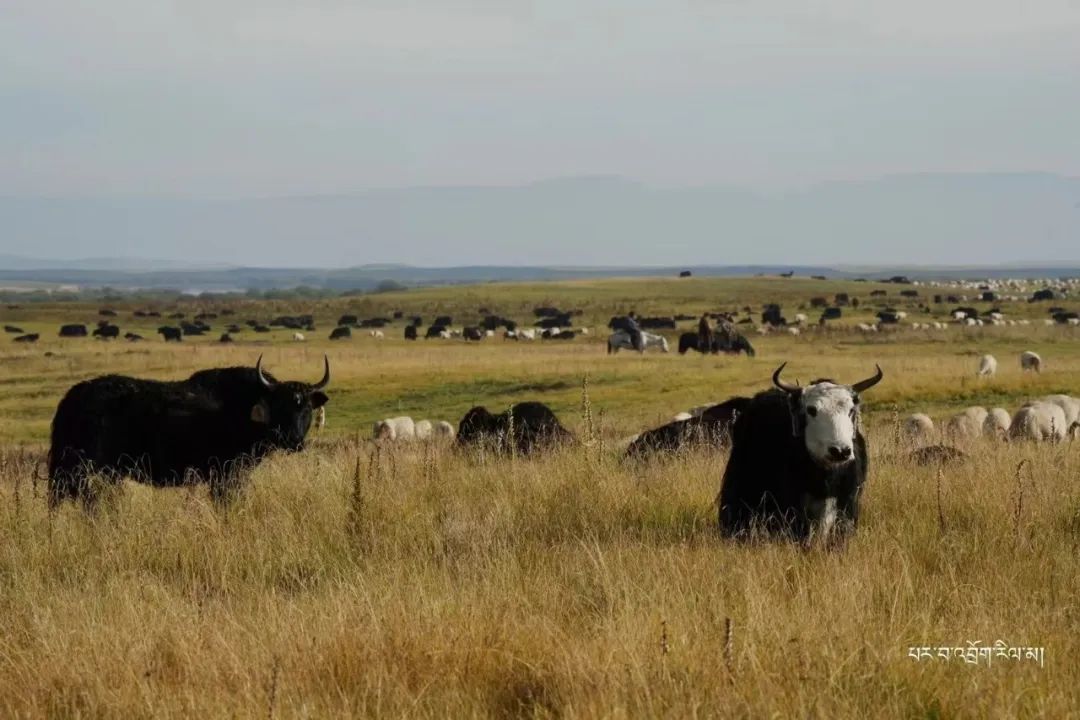
Opinion 7: “There’s always some rebel trying to plot against the Emperor!”
The classic “China is Guilty” narrative: China, which couldn’t even put enough food on the table before the 80s, is now somehow burdened with the guilt of the Brazilian rainforest’s destruction.
Oh, absolutely, right you are. So Chinese people eating meat is the root cause of the Amazon’s destruction, while it’s perfectly fine for Americans to do it? Typical spineless “public intellectuals”.
You can’t embrace free trade only when you’re dumping goods on others. Besides, whether Brazilians destroy their rainforests is their business—what does it have to do with us?
Mate, spot on. Today it’s your meat consumption affecting the rainforest; tomorrow it’ll be your seafood affecting the oceans; the day after, it’ll be your industrial development affecting the atmosphere. The moral finger-pointing and gaslighting never stop—eventually, even breathing will be a crime. Now, because we’ve stopped burning straw, pests and diseases are becoming more frequent.
Ordinary people might be eating basic imported meat, but this indirectly protects our own pastures and keeps beef prices down. In this economic climate, it’s the only way people can afford beef year-round—why isn’t that mentioned? Is there something wrong with sacrificing a little for the greater good? Must beef prices remain sky-high to be “correct”? When forced to choose between two evils, you take the lesser. It’s not easy being the “parent” in China.
Furthermore, don’t blame yourselves for the deforestation. It has nothing to do with us; our greatest contribution to the world is simply managing our own environmental protection well.
If we must draw a connection, let me say something politically incorrect from a globalised perspective: perhaps it is precisely through globalisation and extensive imports—relying on imported soy for cattle feed and importing meat directly—that China’s grazing lands and grassland ecosystems are relieved of the burden of ensuring food security. This allows us to maintain “China’s Water Tower” and the ecological barrier of the Qinghai-Tibet Plateau… That’s why many in China are working to promote “zero-deforestation soy”. It’s early days, but it’s worth watching. Any effort to link local issues with a grander perspective is commendable, but it requires caution, as the complexity may far exceed our imagination. —《No Matter What, Yak Should Not Be Just ‘Beef’》
Do you know why the state always buys imported meat? Do you know how much is invested annually in the restoration and protection of grasslands? Do you know the subsidies provided to herdsmen for equipment? I hope you can study this comprehensively, combining it with the state’s long-term strategic thinking. Try talking to staff in the agriculture and livestock sectors. I used to think like you, but after learning about national policy, I realise the state is thinking long-term. No matter how much imported meat Chinese people eat, it has nothing to do with tropical rainforest destruction. Stop throwing baseless accusations around; there are other ways. Our own pastures need protection too—let’s worry about our own backyard first.
Mate, if you don’t eat it, someone else will. But you need to understand that the soy issue didn’t happen overnight. Many people here have stopped raising cattle and sheep because they lose money every single day. When the vast majority of Chinese people stop farming, do you really think imported livestock will stay cheap?
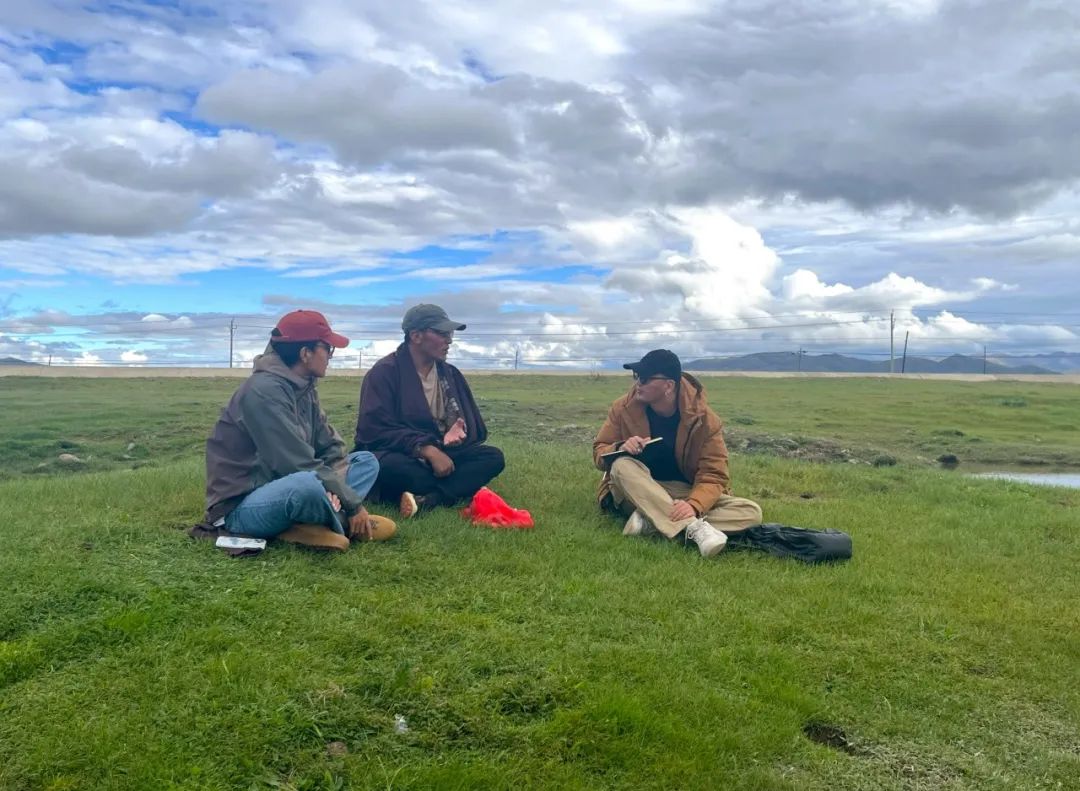
Opinion 10: Deforestation on the other side of the ocean concerns every living being on Earth
From a herdsman’s perspective, the term “fake meat” is incredibly accurate; it perfectly captures their definition of “meat”. Especially when viewed through the lens of global food security, calling meat produced via modern industrial feed and accelerated growth “fake meat” is highly representative and provides vital guidance for food health and safety!
This is an example of how industrialisation and globalisation have impacted human life. Because the issue of the yak isn’t just about what meat we eat… changes in lifestyle, the destruction of the ecological environment, and the reshaping of culture and history are all hidden within this.
Eat cheap “fake meat”? Or expensive “real meat”? More of the cheap “fake meat”? Less of the expensive “real meat”? In truth, there are many options. But as a herdsman, the choice must consider the sustainability of one’s livelihood. As a consumer, one must perhaps consider the sustainability of well-being (including non-material dimensions such as health, education, social relationships, environment, and psychological state). —《’Fake Meat’ or ‘Real Meat’? Perhaps Food Security is What We Should Be Focusing on and Thinking About》
I don’t understand why you cast yourself in the role of the consumer and then look for excuses for that consumption. The encroachment of imported beef on the traditional lives of herdsmen is a complex issue; consumers and state policymakers created this status quo together. Why shouldn’t it be criticised?
Growing up in the grazing lands, eating habits are naturally different from those in farming regions, and tastes differ too. This isn’t a matter of being “inferior” or about shouting matches; it’s about another group of ordinary people—whom you don’t understand—whose living and production spaces are being encroached upon, and who are powerless to resist.
As someone working in agriculture and rural affairs, I believe the provincial government departments should consider unifying the management of herdsmen’s livestock—including, but not limited to, providing quality testing and establishing livestock alliances. Although it is difficult, small-scale farmers are numerous and scattered; they are the bedrock of national food security and must not be abandoned.
I can say with conviction: the value of the Tibetan yak has not vanished; rather, it needs to be recognised and reassessed within a modern context. We must comprehensively consider economic, ecological, and cultural factors to promote the sustainable development of the yak industry.
Only by following the laws of nature and living in harmony with it can we be truly healthy! Traditional nomadism is the true way of survival. Be grateful to nature and hold it in awe.
I work in agriculture. The author’s writing is excellent and the analysis is spot on. However, I believe everything follows a pattern; the retribution for the ‘killing the goose that lays the golden eggs’ approach taken by the likes of Brazil and Argentina will soon come to pass.
Emotionally, I deeply sympathise with the herders, and the climate crisis is urgent. In some countries, land is disappearing at a speed that ‘slow’ cannot describe. Even if we ignore what happens abroad, the frequency of extreme weather at home is increasing; this year, Liaoning saw reduced crop yields due to drought. Deforestation on the other side of the ocean concerns every living soul on Earth. Buying ‘fake meat’ not only harms local herders but also endangers our own environment—how can anyone say it has nothing to do with us?
Take livestock farming as an example: is intensification the only way forward? The negative effects of intensive production are significant. Many environmental damages and ignored health risks—born from a logic where economic gain was the primary metric—have not been addressed. Conversely, you can see that traditional livestock farming is sustainable and green. If our market mechanisms and policy supports are not adjusted in time, allowing products that better meet our modern health, environmental, economic, and social needs to vanish while harming producers, that is a failure of the system, not a simple matter of value preference.
The essence of the problem with cheap meat is negative externalities—profound damage caused to the environment and society during production, the cost of which is not factored into the price. Tradition should not be viewed as a static legacy, as it is constantly shaped and reconstructed throughout history. While respecting tradition, we must also recognise its nature as something that co-evolves with the needs of the times. In contrast, climate change and ecological imbalance are irreversible costs that everyone will eventually pay for. ‘Cheapness’ is merely an illusion, bought at the cost of uninternalised environmental and social burdens.
This is a fantastic piece. It portrays the complexities of life under the influence of corporate globalisation and reveals many hidden connections, making us realise that the cumulative effect of individual actions can become an unstoppable torrent. These connections are real; we cannot pretend they don’t exist. Anthropology, of course, is not about reminiscing over the ‘old’ to resist the ‘new’; its essence lies in a fundamental concern for the human condition. Regardless of whether we possess a ‘grand historical’ perspective, we should cast a caring glance towards the vulnerable in our living world, rather than turning a blind eye to the suffering of others.