Throughout 2024, we received a wide array of books spanning food, agriculture, ecology, sustainability, and culture—each documenting the complexities and possibilities of our world in its own way.
From the hurried labourer to the modern grassland pastoralist, from the food politics behind foie gras to the diverse efforts in seed conservation, and from the industrial traps of ultra-processed foods to the revelations of fungal networks on natural symbiosis… these works lead us from blind belief towards questioning, and from our own narrow corners towards the vast world, witnessing the contradictions and hopes inherent in the relationships between people, land, food, and nature.
It is our hope that these books bring us reflections on possibility, inspiration, or imagination in the coming year, allowing us to rediscover nature and ourselves through the act of reading.
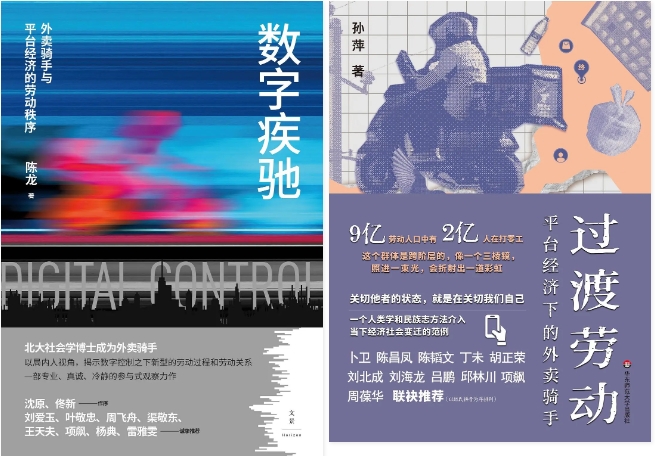
Digital Sprinting: The Labour Order of Delivery Riders and the Platform Economy
Author: Chen Long
Shanghai People’s Publishing House | Century Wenjing
Published November 2024
Transitional Labour: Food Delivery Riders under the Platform Economy
Author: Sun Ping
East China Normal University Press | Mint Experiment
Published July 2024
Delivery-themed films, mass incidents, academic monographs, and even tabloid gossip together mapped out the discourse on food delivery in 2024. These two works present the lives of delivery riders in greater detail from a grassroots perspective, offering general readers a chance to understand this field comprehensively while archiving these experiences for future memory.
The riders weaving through the streets and alleys are the most visible face of the platform economy. Firstly, the public’s attention to these ordinary people has triggered a broad empathy among the ‘wage slaves’ for the riders; secondly, because riders are omnipresent, they represent a natural field that is easily accessible for reporters and researchers. Consequently, since 2020, a series of public concerns regarding food delivery have consistently focused on the theme of the rider.
However, at present, there is ‘much thunder but little rain’—genuine change remains elusive. Therefore, beyond ‘speaking for grassroots labourers’, we must consider how to view the platform economy from more diverse perspectives to advance a deeper public discussion. While we still pay tribute to the authors who persist in speaking out, there is perhaps more that can be done within the current space of public opinion.
—— Wang Hao (Editor, Foodthink)
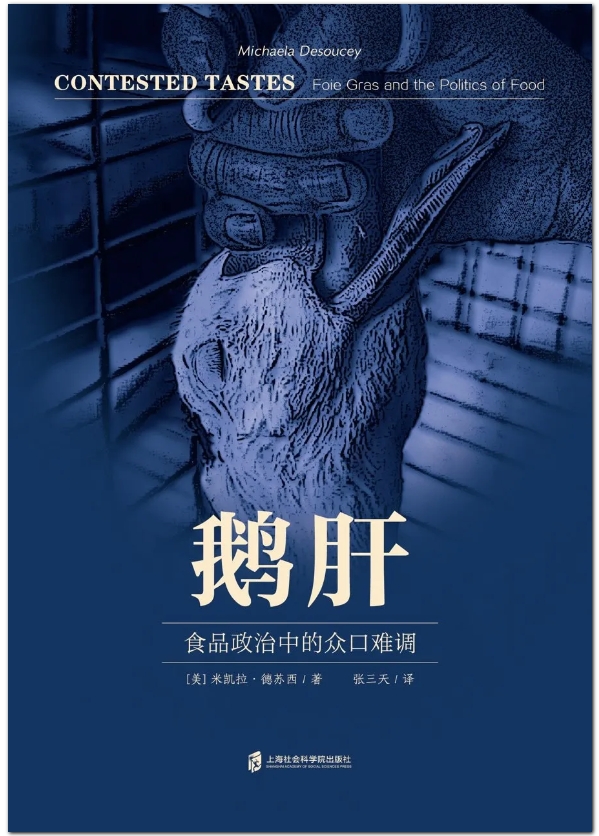
Foie Gras: A Matter of Taste in Food Politics
Author: Michaela DeSoucey [USA]
Translator: Zhang Santian
Shanghai Academy of Social Sciences Press | “Food Talk” Translation Series
Published August 2024
The book argues that the history of foie gras is deeply complex; it is not merely a food item but carries multiple cultural, political, and moral meanings. DeSoucey points out that while foie gras is revered as a delicacy and a traditional French gourmet staple, it has simultaneously faced criticism and even attacks from animal rights groups due to the controversial practice of gavage (force-feeding). Drawing from the perspectives of cultural sociology and organisational theory, she examines how foie gras has become a litmus test for moral and political disputes and explores the varying outcomes of these controversies. DeSoucey treats foie gras as a “cultural object”, conducting a comprehensive exploration from its historical origins to its modern industry and contentious moral standing. Through a profound analysis of its historical and cultural significance, she reveals the complexity of foie gras across different cultural and political contexts, further analysing the political and cultural conflicts behind food to pose a provocative question: do we truly decide what we eat?
—— Zhu Yan (Associate Researcher, Institute of Sociology, Shanghai Academy of Social Sciences)
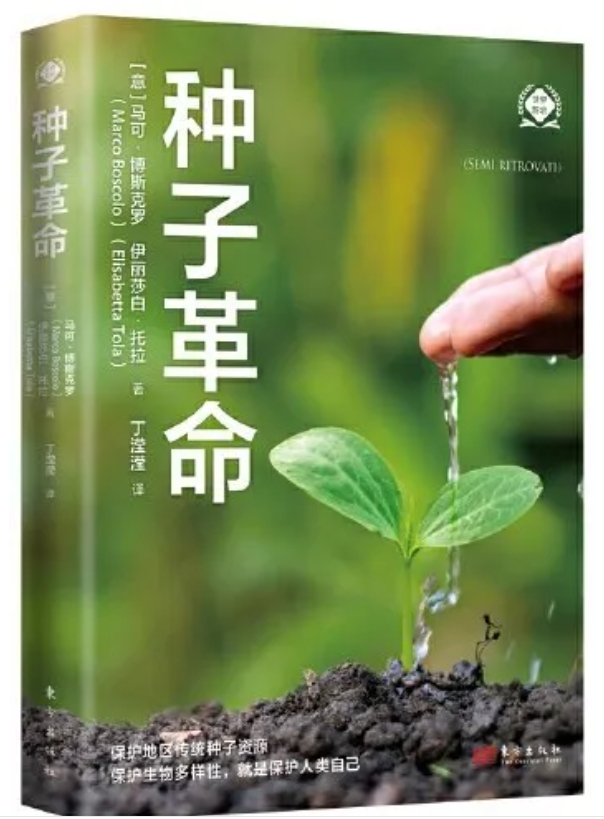
Seed Revolution
Authors: Marco Boscolo [Italy], Elisabetta Tola [Italy]
Translator: Ding Yingying
Oriental Publishing House | World New Agriculture Series
Published January 2024
Through the authors’ field visits, this book presents cases of farmers worldwide engaged in the in-situ and living conservation of traditional seeds. The text reveals how the preservation of traditional seeds protects cultural and ecological diversity, addressing the problems caused by industrial agriculture in areas such as food security, rural development, and biodiversity. Furthermore, the book demonstrates the application and progress of the concept of the “collective” in breeding innovation, reminding us that Darwin’s theory of natural selection applies not only to natural biodiversity but can also drive the sustainable transformation of seeds and agricultural systems. This perspective provides a new direction for ecological protection and agricultural transition.
—— Guan Qi (Head of Eastern Office, Farmer’s Seed Network)
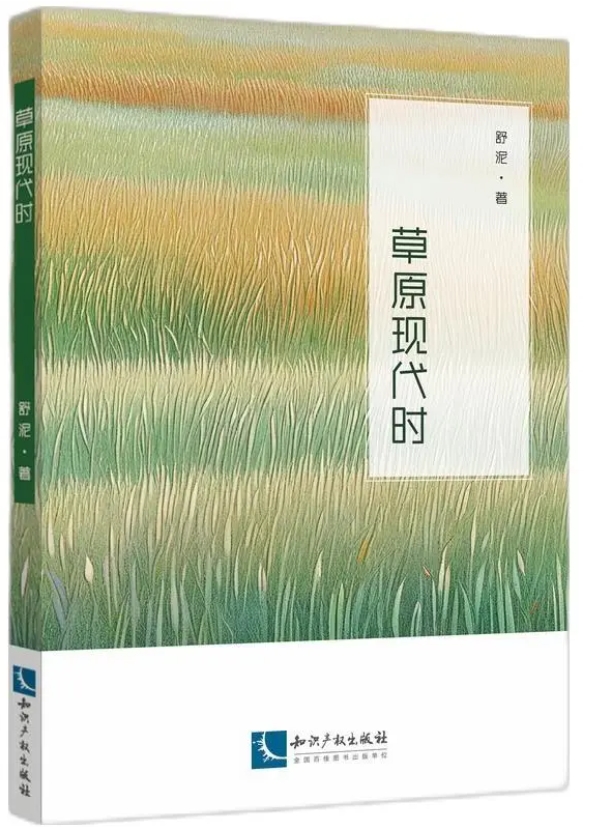
Modern Times of the Grasslands
Author: Shu Ni
Intellectual Property Publishing House
Published August 2024
The dual contracting reform of grassland and livestock, which began in the 1980s, profoundly altered the pastoral landscape of Inner Mongolia; individual wire fences, tube wells, and livestock pens replaced what were once communal pastures. If *The Wisdom of Nomadism* summarised traditional knowledge that is now in decline, then in this new book, Shuni seeks to convey a lesser-known side of the grasslands: just as the pastures are adapting to new property rights systems and management methods, nomadic culture is seeking its own form of modernity amidst the shocks of the outside world. Driving off-road vehicles to herd horses, herder cooperatives building their own cold storage, and launching study tours to welcome tourists—rather than merely undergoing passive modernisation, herders are learning to leverage the market, striving to ensure that traditional culture receives the value it deserves. This, perhaps, is an essential lesson for the new generation of herders.
— Xiao Zhu (Foodthink Editor)
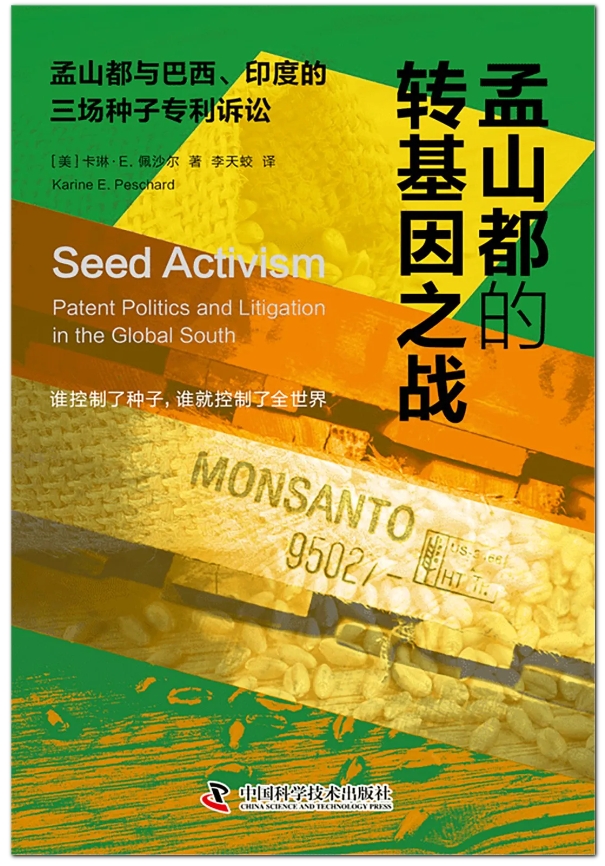
《Monsanto’s GMO War: Three GMO Seed Lawsuits between Monsanto, Brazil, and India》
Author: Karine E. Peschard (USA)
Translator: Li Tianjiao
China Science and Technology Press | Zhongke Academy
Published June 2024
“Whoever controls the seeds controls the world.” Since the advent of genetically modified (GM) crops, Monsanto has quickly extended its reach into the Global South, backed by intellectual property and breeders’ rights. By analysing three lawsuits filed against Monsanto in Brazil and India regarding GM crop royalties, Peschard exposes the company’s ploys and open schemes, while outlining the evolution of the seed law frameworks in both countries amidst a tug-of-war between various interests. Although the outcomes of the three lawsuits were not entirely satisfactory, legal activism did indeed foster multi-party coalitions and serves as a reminder that a system providing greater protection for the seed rights of smallholders is not only possible, but necessary.
— Zen (Foodthink Editor)
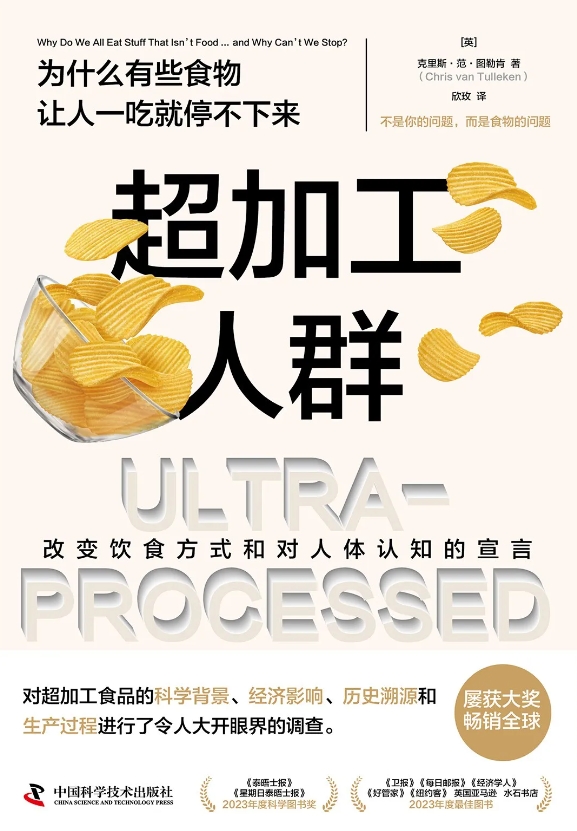
《Ultra-Processed People: Why Some Foods Make It Impossible to Stop Eating》
Author: Chris van Tulleken (UK)
Translator: Xin Mei
China Science and Technology Press | Zhongke Academy
Published August 2024
This book provides a clear explanation of the essence of food since the late 1930s. It points out that in the UK, approximately 75% of the population derives 60% of their calories from ultra-processed foods (UPFs). This dietary habit is not only prevalent in the UK but shows a similar trend in other countries. Through extensive research, the book demonstrates a close link between the overconsumption of UPFs and various health issues. It reminds us to do our best to choose natural, whole foods, support diverse local produce, pay attention to the supply chains behind our food, and understand the far-reaching impact of industrial agriculture on the environment and health.
—— Li Hui (Founder of Xihuo Sustainable Living Space)

“Rhymes of the Naxi: A Visual Record of the Naxi and Mosuo Peoples”
“Mosuo Sages: An Oral History of the Dongba”
“Watching over the Dongba: A Cultural Record of the Mosuo People”
Authors: Song Yiqing / Zhuang Yufen / Sun Qingzhong / Yang Duojizashi / Shengen
In the hidden realm of the Mosuo, on the border of Sichuan and Yunnan, over 400 Dongba rituals are still held every year. Dongbas and Xiawu wander through the villages, guarding the land and its waters. Here, people live in harmony with nature, treating all living things with kindness and spending their days in the mountains with unity and joy. The vast and complex Dongba culture is a concentrated expression of local folk customs, and the primitive Dongba script is the only living pictographic writing system in the world. The “Dongba Culture Trilogy” brings together a decade of exploration and three years of photography by seasoned humanities scholars and renowned photographers in the Naxi valley, providing an urgent record of the folk customs and cultural memories of ancient Naxi and Mosuo villages through cultural records, visual archives, and oral histories.
—— Han Xiao (Editor at CITIC Press Group)
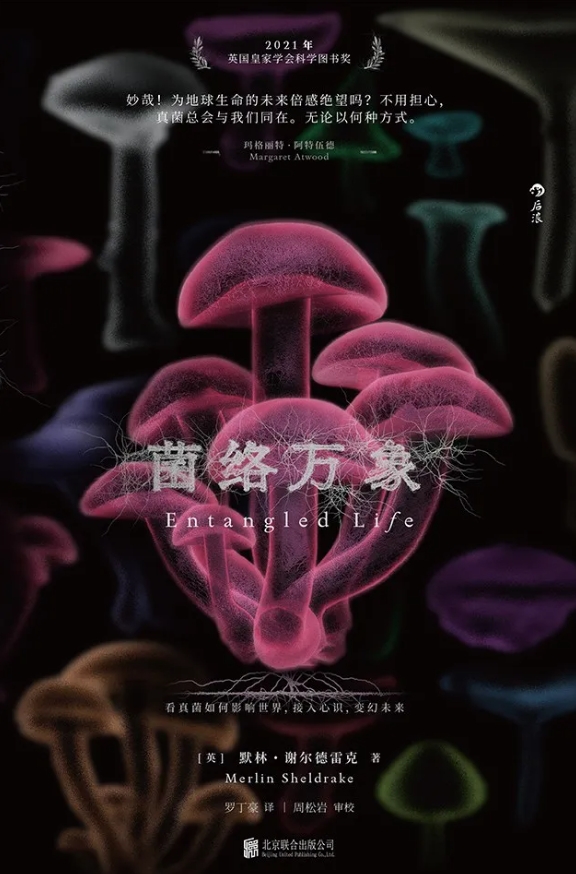
“Entangled Life”
Author: Merlin Sheldrake
Translator: Luo Dinghao
Beijing United Publishing Company | Houlang Science
Published November 2024
When people think of fungi, most imagine mushrooms, but fungi are far more than just a meal. “Fungi are everywhere, yet easily overlooked”—from tiny penicillium and yeast to the vast networks of the honey fungus, fungi sustain or kill plants and animals, survive in radiation, outer space, or inside insects, decompose rock, produce medicine, induce hallucinations, maintain the relationship between plants and soil, and influence the composition of the Earth’s atmosphere. These life forms, distinct from plants and animals, offer us clues on the path toward human exploration and coexistence with nature through their mysterious, powerful, and often ignored existence. By discussing fungi, this book teaches us to break our prejudices about evolution, ecology, individuals, intelligence, and life. The more we understand fungi, the deeper our understanding of this planet beneath our feet and of ourselves becomes.
—— ZX (Foodthink)
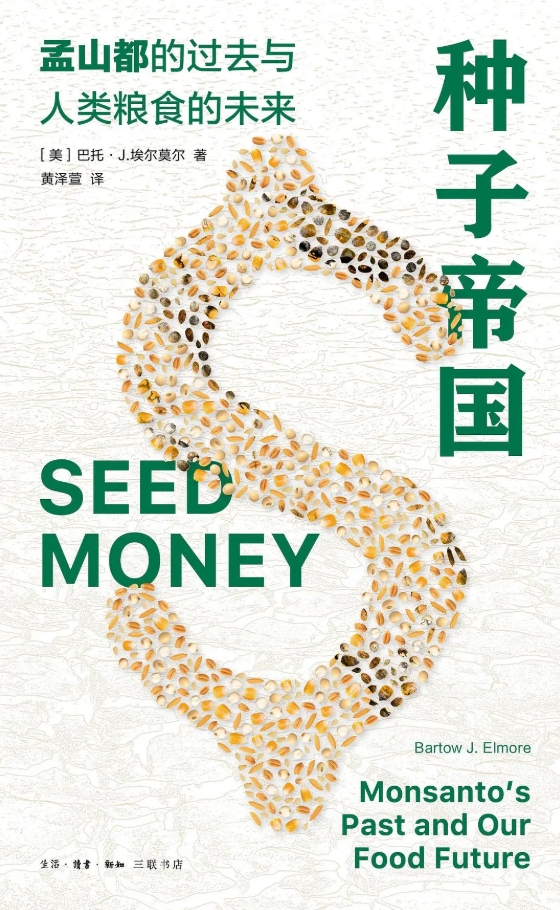
“Seed Empire: Monsanto’s Past and the Future of Human Food”
Author: Bart J. Elmore
Translator: Huang Zexuan
Sanlian Bookstore | Yale
Published April 2024
This book is a principled work by an environmental historian. Accessible and easy to read, it traces the development of a multinational giant—Monsanto—within the broader context of the history of industrial capitalism, allowing us to understand how science and technology intervene in daily life and what problems they bring to the human environment. The author avoids conspiracy theories and does not stop at archival research; he writes not only a corporate history and an environmental history but also presents the lived experiences of many people associated with this giant. Although Monsanto as a company has ceased to exist, the technology remains. How to view the social nature of technology is one of the many meaningful questions raised by this book, especially when it escapes the control of ordinary people and becomes an elusive tool wielded only by specialists.
—— Xu Zhun (Professor at Lingnan College, Sun Yat-sen University)
In addition, in 2024, we received many new books that discuss food, agriculture, and related fields from different perspectives and in various forms. Here, we wish to thank the authors, publishers, and readers who have supported and cared for the field of food and agriculture over the past year. It is through your records, reflections, and critiques—your attention, introductions, and choices, your curiosity, understanding, and questioning—that more nutritional knowledge can return to the land and nature upon which we all depend.
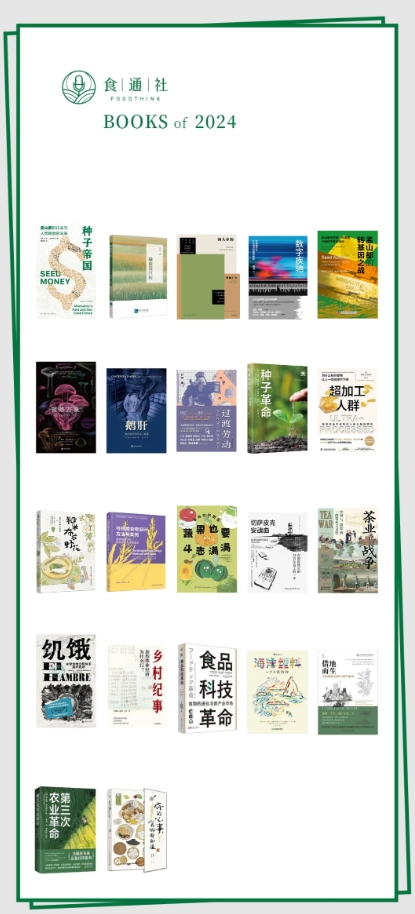
– New Year’s Comment Giveaway –
👇
Finally, which books on food, agriculture, or sustainability did you read this year that are worth recommending?
We welcome your thoughts in the comments section.
Based on the number of likes and the quality of the comments,
we will select 5 readers to receive
a copy of either “Seed Empire” or “The Fermentation Bible”!
We look forward to discovering more valuable books.
Any language, any age (priority given to 2024 publications).
If you would like to join our shared reading activities,
please scan the Foodthink personal WeChat ID at the end of the article,
add the note “Reading Club”,
and join our food and agriculture reading community.
Planning: Foodthink
Editor: ZX