
A Woman’s Country Life: From Impossible to Possible | Grandma Kouzi

Women’s Lives
At sixty, looking back on her thirties, a woman finds it so remote, as though another lifetime has passed.
In the 1990s, in my thirties, the air was filled with all manner of apocalyptic fables.
Whether in novels or films, the protagonists of these apocalyptic tales—those who save or destroy the world—are invariably men. Their exploits are too grand and perilous for a mere woman to follow, and frankly, I never had the heart for it.
As a woman and a mother to a young child, what captured my attention and stayed with me was the precarious fate of women amid apocalyptic crisis.
I have long forgotten the title of that most gripping end-of-century novel, or the name of its protagonist, yet the fates of three women remain etched in my memory.
In these apocalyptic tales, the male lead is inevitably the saviour, a deity figure who saves the world and battles demons. Scarred but unbroken, he grows stronger with every setback. In stories such as these, a god does not die.
In that fictional doomsday epic, women appear and vanish in quick succession, mere supporting players to the saviour.
The first to perish is the protagonist’s wife. She hardly even makes an appearance, having died before the narrative even begins, a victim of cancer brought on by environmental pollution.
The second is his first love, who dies as the unrest begins. Though famine invariably accompanies such turmoil, she does not starve; rather, she dies for food. Protecting a grain supply costs her life; the very provisions meant to sustain others take hers instead.
The third is his pure, unattainable love, the scientist who discovers the food meant to save humanity. She is raped and killed by a mob in the midst of the chaos.
Men save the world; men destroy the world. Women are destroyed within it. This is no apocalyptic allegory; it is, fundamentally, the reality for women in this world: their fates and lives are merely a part of the male experience and the male narrative.
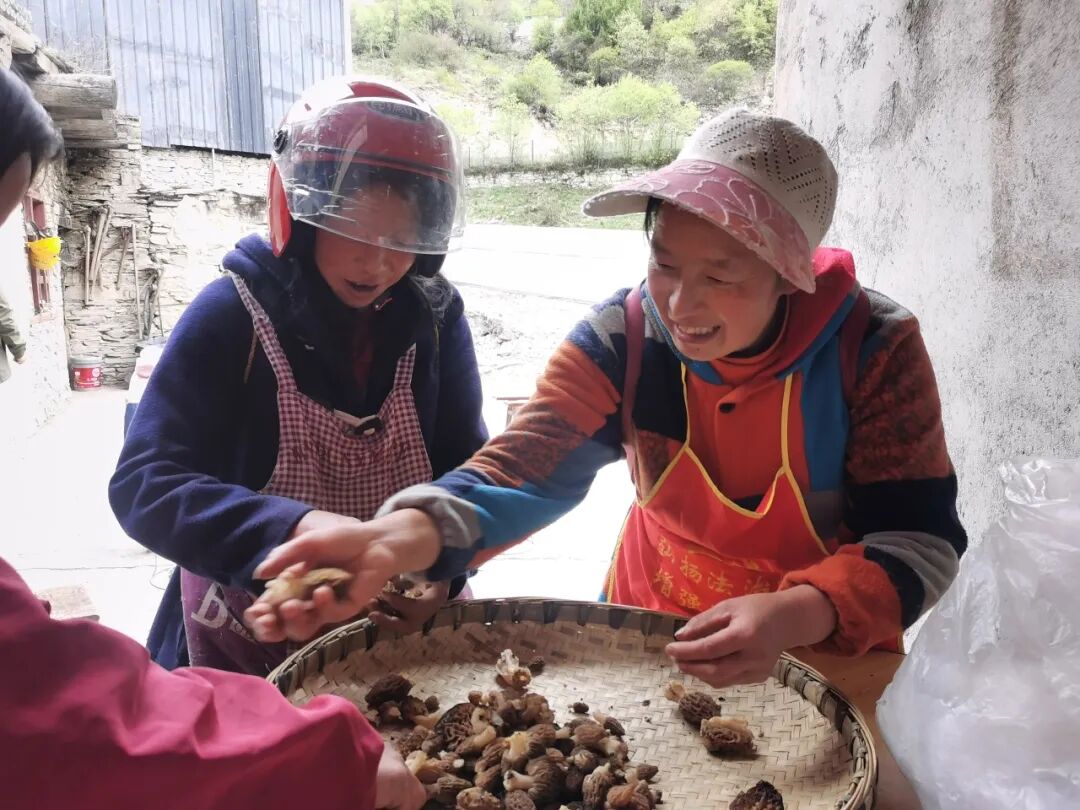
◉ Muyunpo Women’s Harvesting Group. Image source: Foodthink
Women’s Pastoral Life
The land is the foundation that nourishes life. From ancient elders singing as they played with earthen bricks to Tao Yuanming of the Eastern Jin dynasty gathering chrysanthemums by his eastern fence, from Walden and nature writing to the myths of capital, people across time and cultures have turned to the land in myriad ways.
Is it possible for women, working the land, to lead independent, self-directed lives of their own free choosing? Or, to put it more bluntly: Can a woman live alone in the countryside?
In neither the primitive nor the agricultural age was this possible; the level of productivity dictated otherwise.
As social animals, humans both actively forged societies through natural selection and were, in a sense, “compelled into society” for the sake of survival. The lower the level of productivity, the larger the group required to sustain life. In ancient times, only by belonging to a clan could a person survive, regardless of whether they were man or woman.
As levels of productivity rose, the smallest unit capable of surviving on the land shrank, evolving from extended clans to nuclear families. Occasionally, legends would surface of individuals living entirely apart from society, such as <em>Robinson Crusoe</em>. Yet these remained mere legends, and their protagonists were invariably men.
I love reading Laura’s <em>Little House on the Prairie</em> series, which captures the authentic lives of Americans during the frontier era. The West, with its vast spaces, sparse population, and abundant resources, was a uniquely blessed pastoral landscape. The basic unit of survival was the family, with each household functioning as a self-contained ecosystem. Men felled trees, built cabins, farmed, and hunted; women fed the cattle, milked them, ground flour, baked bread, and churned their own butter and made soap. Every household required a complete chain of provision—food, clothing, shelter, and daily necessities—to survive. Many tasks traditionally deemed “women’s work” could certainly be undertaken by men; if one disregarded the finer things in life, a solitary man could scrape by. But a woman could not. She needed, at the very least, the support of a man and the structure of a family.
“Wives and daughters carry baskets of food, children bear pitchers of drink. They follow one another to bring provisions to the fields, while the able-bodied men toil on the southern slopes.” In China, the pattern is the same. “My aged wife draws a chessboard on paper; my toddler taps a needle to fashion a fishing hook.” In Chinese pastoral narratives, women likewise remain in supporting roles, mere auxiliaries to the main story.
Over three years—2006, 2007, and 2008—I filmed a documentary in a small village called Chexu, situated in Zhongdian County (now known as Shangri-La) on the banks of the Jinsha River. Every household here maintained a complete, self-sufficient system. Paddy fields along the river yielded two harvests a year of wheat and rice for human consumption. Dry land on the hillsides was planted with mulberry trees, beans, and maize to feed cattle and pigs. Forests higher up provided firewood for heating and cooking, along with timber and stone for building.
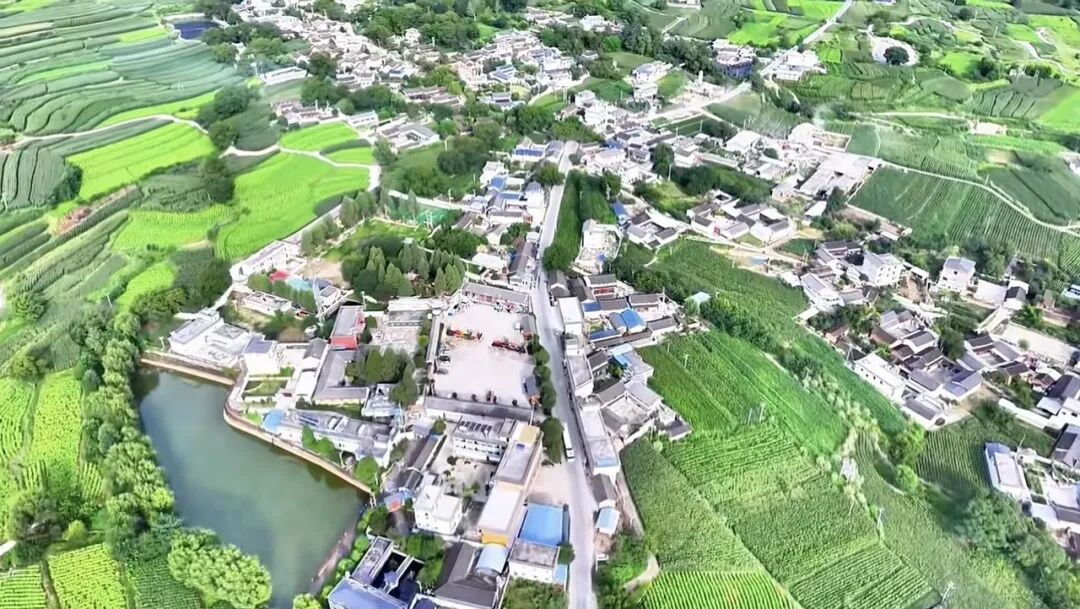
◉ Chexu Village in Shangri-La is sometimes referred to as “Little Jiangnan”. Image credit: Douyin user @藏域桃源
Fifty years ago, the smallest unit of survival here was the extended family. Daily life encompassed everything from planting mulberry trees and raising silkworms to boiling cocoons, reeling silk, spinning thread, weaving cloth, embroidering, and tailoring garments—a workload no couple could manage alone. Only when the necessity of producing their own clothing faded did the large family shrink into the nuclear unit.
I loved that place, and I loved the way of life there. Yet I also knew how superficial that admiration was. I was painfully aware that, with my own abilities, I could never sustain such an existence. I believed that a woman surviving entirely on her own in the countryside was little more than a pipe dream.
What I did not know then was that women already could, in fact, claim their own pastoral life, entirely on their own terms.
On the other beautiful island of Taiwan, a real woman was turning her back to the land—not to perish, but to thrive. For life itself, for a way of living, and for an enduring dream of union between women and the earth. Her name is Li Baolian; we call her A Bao.
A Bao has already chronicled her experience of living alone on the land in <em>Seeking the Mountain</em> (<em>Tao Shan Ji</em>), a work often compared to “China’s <em>Walden</em>.”
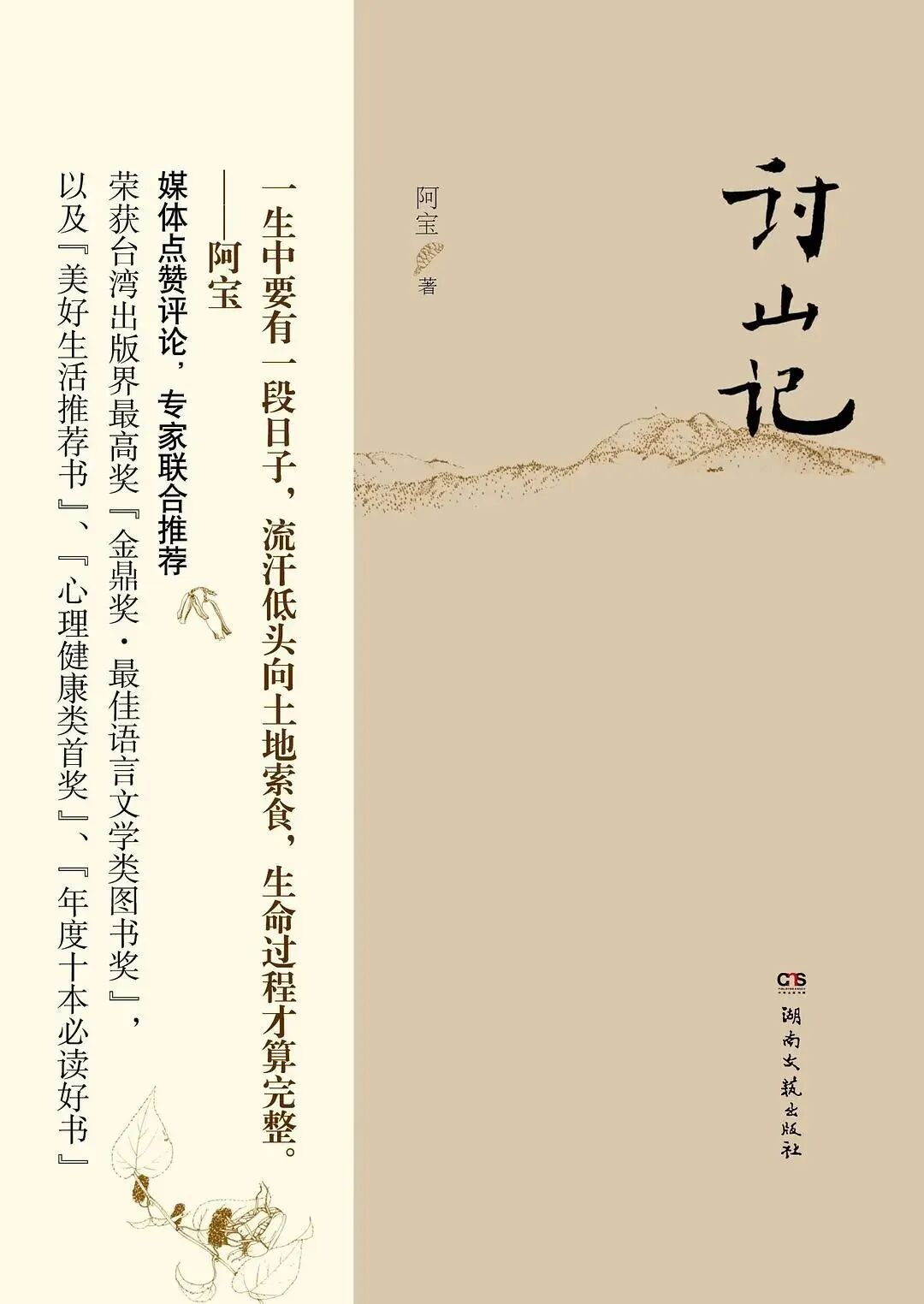
◉ <em>Seeking the Mountain</em> (<em>Tao Shan Ji</em>) chronicles A Bao’s journey of moving into the mountains. Image credit: The Paper
From a purely practical standpoint, <em>Walden</em> reads more like a two-year piece of performance art—steeped in philosophical reflection rather than genuine survival practice. It is later classics of nature writing, such as <em>Alone</em> and <em>The Walnut Farm Journals</em>, that document long-term, self-sufficient solitary living. Both of those authors were men, exceptionally capable figures who might be described as “real-life male supermen”.
I have often quoted a Bosnian survivor of the Bosnian War who remarked that those who endure in times of chaos all “turn into beasts”. Borrowing that same phrasing, I would say that those who survive alone in the wilderness are either rugged men to begin with, or they become them.
Environmental pollution, food safety crises, apocalyptic scenarios… these are challenges every modern person must confront. Yet almost all of them impose an additional burden on women. Perhaps that is why women need a piece of land even more—or rather, why they need the direct, sustaining support that the earth provides. At the same time, the harsh realities of survival demand a higher degree of resilience and skill from women seeking to draw that sustenance from the soil.
What I want to know is, whether ordinary people can rely on their own labour and limited funds to choose the life they want, particularly women. Abao’s story inspired me.
A Bao was once a wandering woman, crossing mountains and rivers with a canvas roll strapped to her back. She felt that a life wasn’t truly complete without a period of “facing the yellow earth, drawing sustenance from the soil.” After she turned thirty, this urge became especially pressing. In 1999, answering the call of the land, she went to Li Shan to learn fruit farming. For over twenty years, A Bao has remained true to her principles, putting them into daily practice.
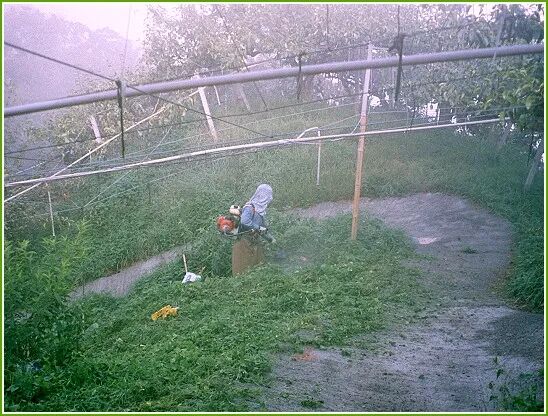
◉ A Bao at work. Image source: A Bao’s website
A Woman’s Way of Life
After turning to farming, A Bao did make a brief trip down from the mountains. During her mother’s final years, she rented a house near the Yuanshan Veterans Hospital in Yilan, at the mountain’s base, shuttling back and forth between the orchard and the hospital.
The farmhouse I rented while farming in Yilan in 2018 and 2019 turned out to be the very house A Bao had once lived in.
A Bao now makes her home in Li Shan and intends to remain in the mountains. Over the years of solitary life in the wild, she cleared plots for vegetables, taught herself carpentry to maintain the house, and tackled all manner of plumbing and electrical gremlins. On my last visit to Li Shan before leaving my post, I found her dismantling the wooden cabin piece by piece, determined to complete the insulation and reinforcements before winter arrived. Li Shan’s high altitude means winter snowfalls can completely cut off the mountain roads. She is bringing warmth to the winter with her own two hands.
Once, A Bao was too delicate to properly wield a pair of pruning shears, and she even documented that early embarrassment in her book. Though she has since developed a formidable grip, her hands remain slender. A Bao is a painter with an artistic sensibility, and even her work apron reflects this, cut and woven in a thoroughly Bohemian style. She remains that slim woman from the south, speaking in a soft, unhurried voice. Though she lives alone in the wild and holds her own against every challenge, she has not become a man.
Abao’s rise as the first one-person farmer in Lishan owes much to Taiwan’s social support systems. Lishan may be remote, but it is served by buses. Moreover, courier services have always delivered straight to the village, and with widespread internet access, she can market her produce across the island without ever leaving home. Her fruit is renowned throughout Taiwan, sparing her the hassle of sales; by keeping her orchard at a manageable scale, she can handle everything entirely on her own. Machinery and tools help people overcome physical limitations, and they are particularly empowering for women who may lack the strength for heavy labour. Abao owns a tricycle and is a keen tool enthusiast. She has a rather impressive tool wall, styled with a distinctly artistic flair. She has drawn the outline of each tool in a cartoonish line on the wall, marking exactly where each one belongs.
While practitioners of natural farming often reflect deeply on and critique modernity, modern society has likewise provided ordinary people with the means to live independently. Women’s one-person farms are a prime example, made possible by a stable social environment, a comprehensive support network, the widespread availability of machinery in the post-industrial era, and internet-based sales and courier services.
Abao has spent over twenty years alone in Lishan. She has already purchased the mountain woodland she has cultivated for years and intends to continue living there. Through her work on the land, she has not only redefined her own life but also shown other women that such a redefinition is possible, carving out a space of “possibility” through her own practice. The more she succeeds, the wider that space opens up for those who follow. Many have benefited from this, myself included. By the end of 2017, I had become a new farmer in Yilan. Before me, there were already nearly thirty women running solo farms, some farming full-time, others pursuing a “half-farming, half-X” lifestyle.
Though I am the same age as Abao, I began twenty years later; by the time I finally found Evil Man Valley, I was already approaching sixty. From the outset, this has been a modern woman’s solitary experiment in returning to rural life—an attempt that recognises clear physical boundaries and embraces a measured, rather than total, retreat to the land.
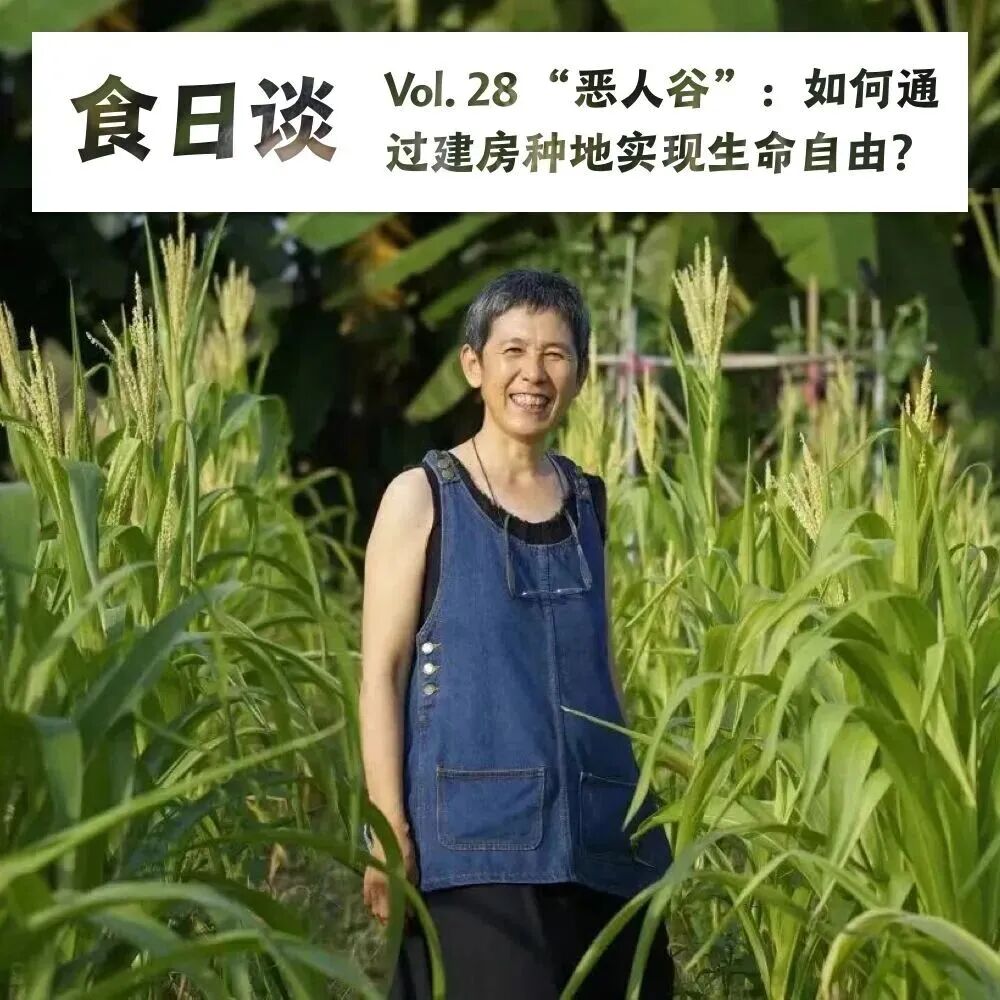
◉ Click to read the story of Grandma Kouzi farming and building her home.
Living the pastoral life alone
A Bao practises production-oriented agriculture, achieving sustainability by selling fruit. She uses the proceeds to buy rice, and relies on Taiwan’s modest but growing community of eco-friendly smallholders to maintain a high quality of life.
My approach is lifestyle-oriented: I don’t produce goods for sale, nor do I scale up. I farm solely to put food on my own table three times a day. Though Woren Valley is small, it has all the essentials. I grow whatever I fancy eating, with the aim of achieving the highest possible standard of living.
I’m not brave enough to live in complete isolation, nor can I tolerate ‘zero-distance’ socialising. What suits me best is ‘making my home among people’—keeping a comfortable distance from the village, yet close enough to ride my bike to town and the swimming pool.
Knowing my own limitations and unable to master A Bao’s carpentry skills, I hired professionals right from the start to build my house at Woren Valley, and I paid a hefty price in trial and error. Oh, how I wish there were ‘ifs’ in this world—I could have easily saved 200,000 yuan. Fortunately, dear readers, you don’t need to rely on ‘ifs’. I’ve already blazed the trail, avoided the landmines, and written a guide to help you steer clear of pitfalls.
I spent 500,000 yuan; with my lessons learned, you can pull it off for 300,000 yuan. If you aren’t as wary of villages as I am and are willing to rent a house within a village, you could achieve self-sufficiency in southern China within five years for under 200,000 yuan.
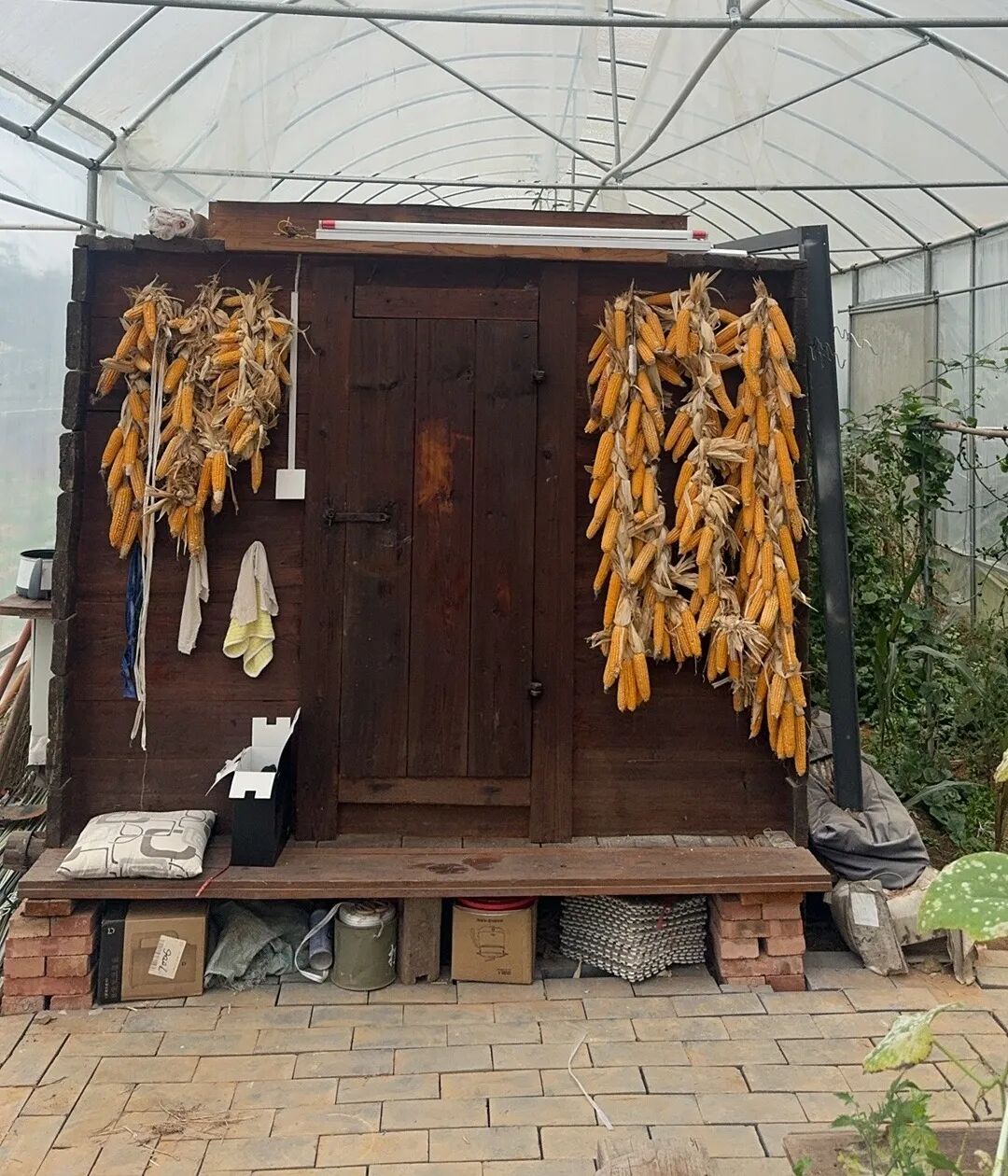
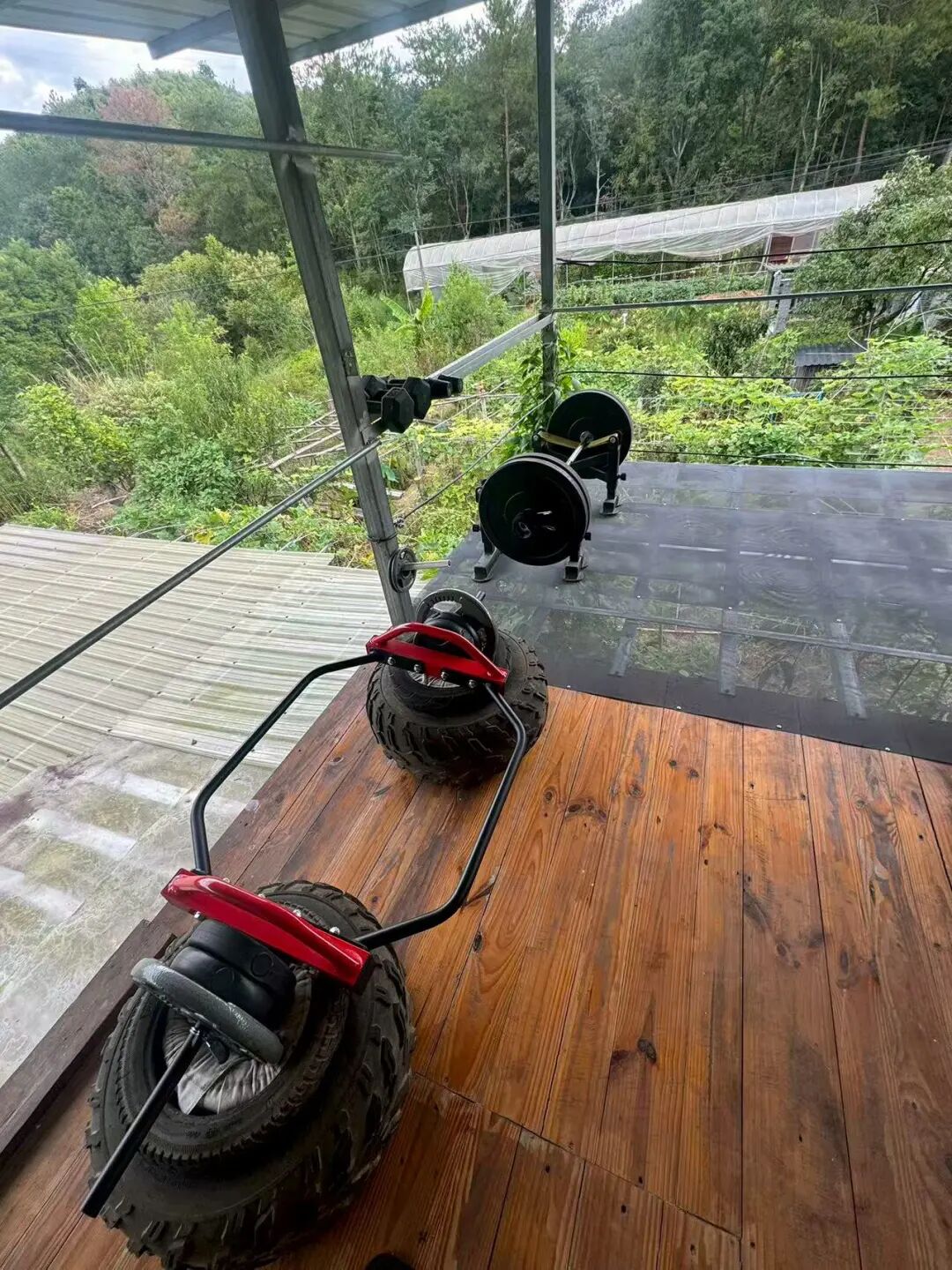
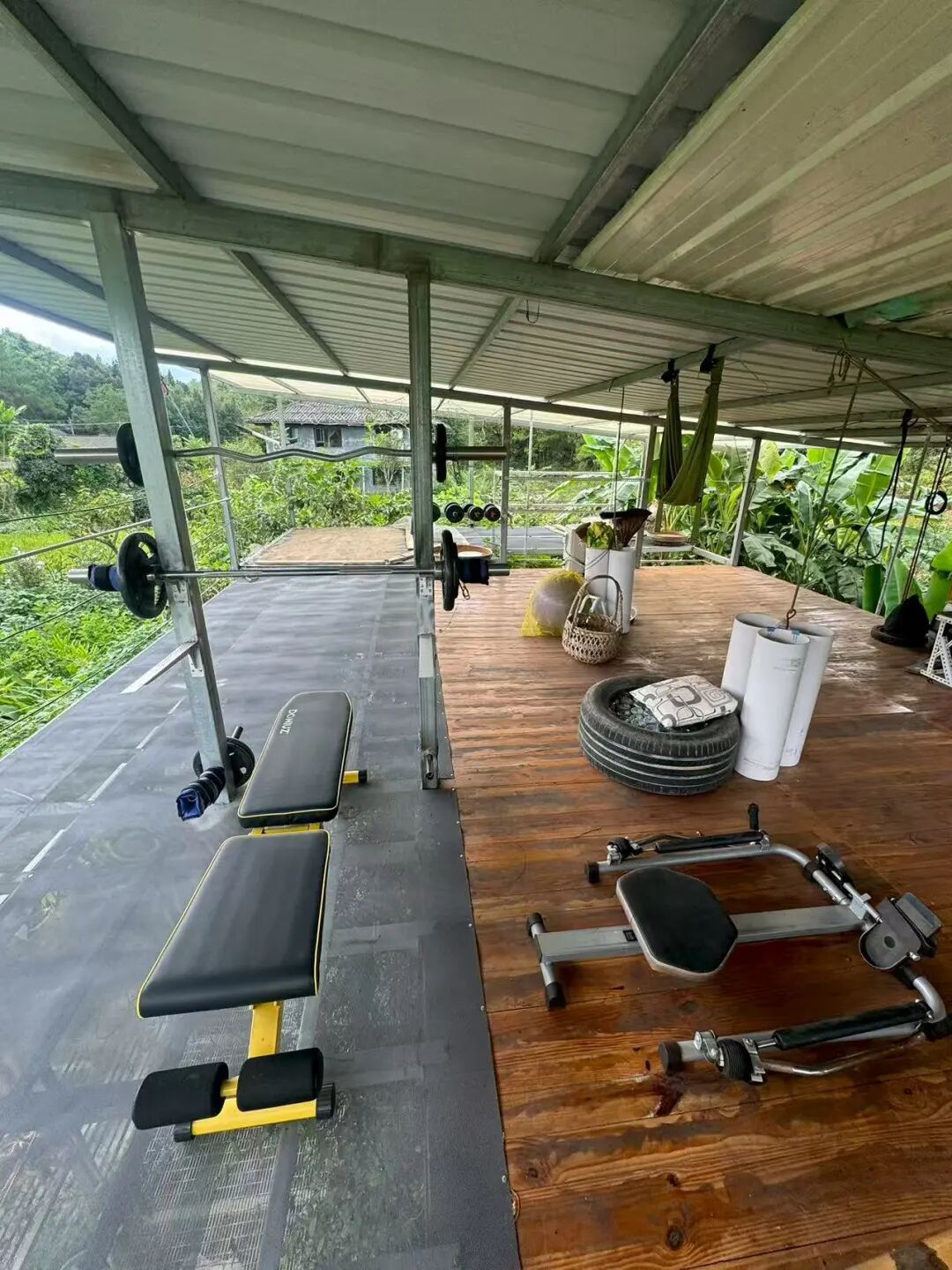
◉ The ‘Winter Palace’ and some fitness equipment, constructed from a second-hand grain barn. Photo credit: Kouzi
If, like me, you adhere to a strict ‘three-no’ philosophy—no chemical fertilisers, no pesticides, no herbicides—and you’re part of a community like Meicuntou in Liancheng, Fujian, which opens its doors to such people and provides shared public services, your costs could be even lower. A one-person farm could be set up for just over 100,000 yuan.
From knowing nothing about agriculture and lacking any confidence in my own manual labour, to moving effortlessly around Evil Valley; from the sub-health typical of middle-aged city life to comprehensive improvements in my health check-up results—I have reached the initial stage of “not eating a single bite of outside food”. By my fifth year at Evil Valley, everything except salt is self-sufficient. This year, I harvested 40–50 jin (20–25 kg) of rapeseed, over 100 jin of peanuts in their shells, over 100 jin of maize, over 100 jin of various rice, over 100 jin of different beans, and more than 100 pumpkins. The measurements are mostly the vague “over 100 jin”, because once the harvest exceeds what’s needed for survival, I stop weighing and counting it, and just take it straight to feed the chickens and ducks.
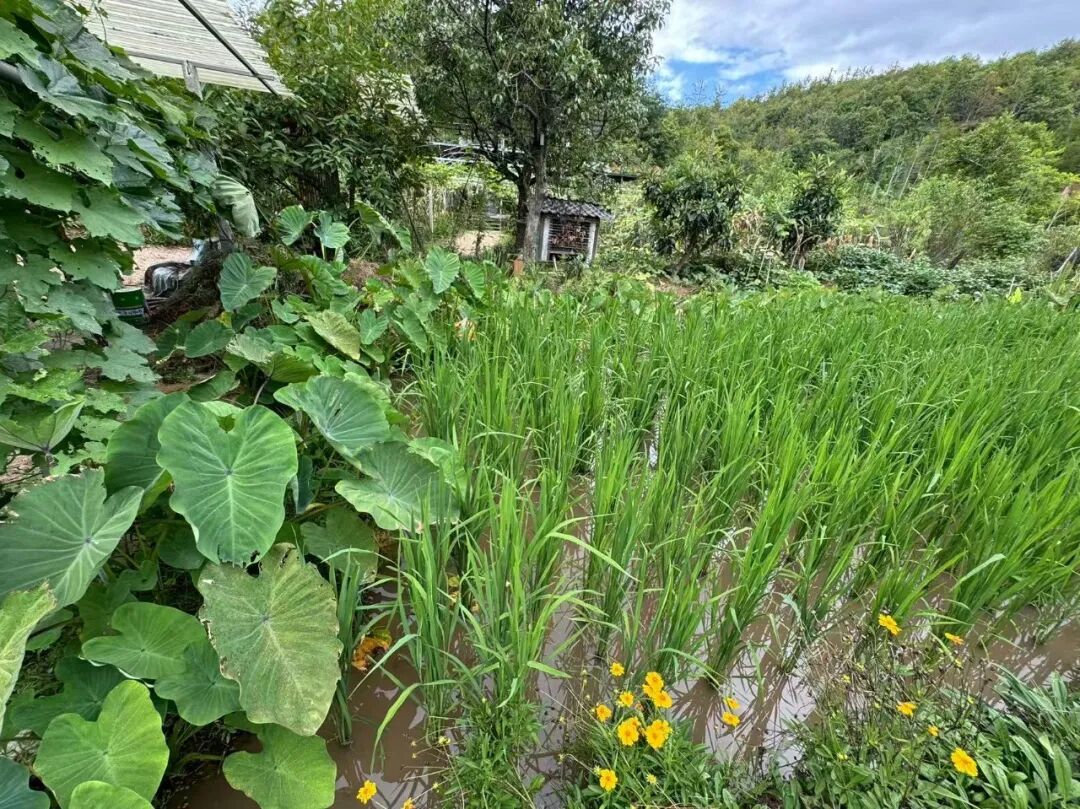
◉ A corner of the smallholding, where taro is grown in the rice paddies and along the field bunds to capture sunlight at different levels. Photo: Kouzi
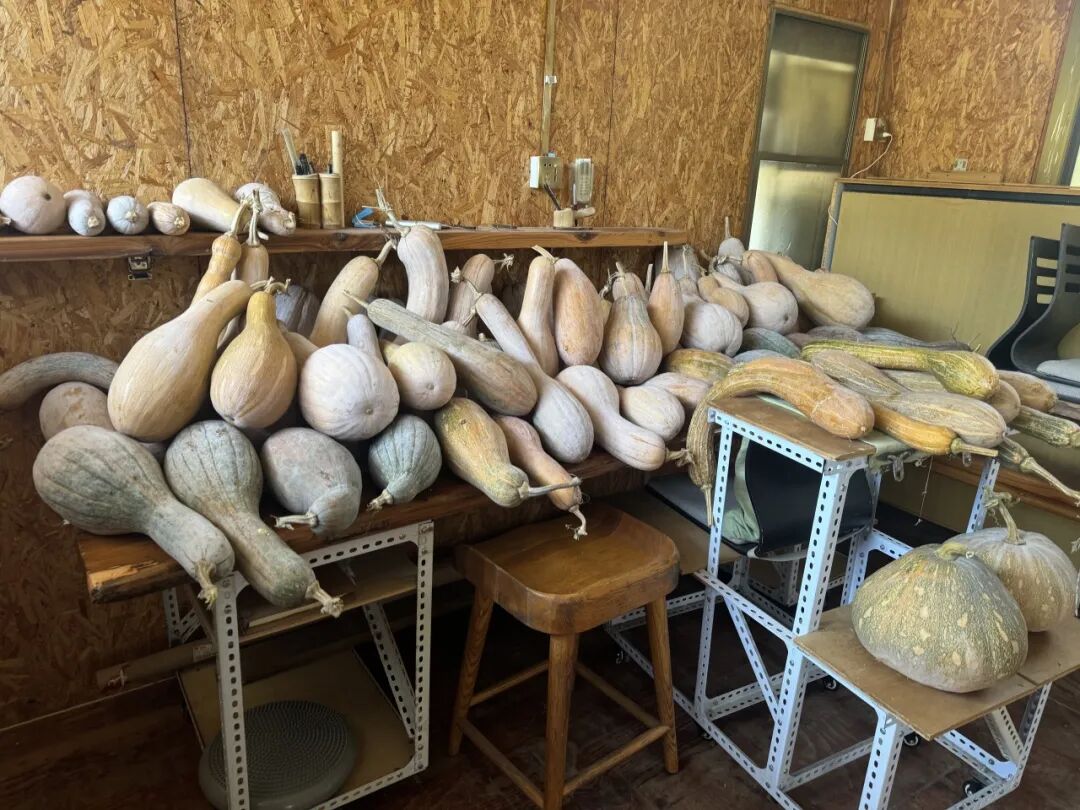
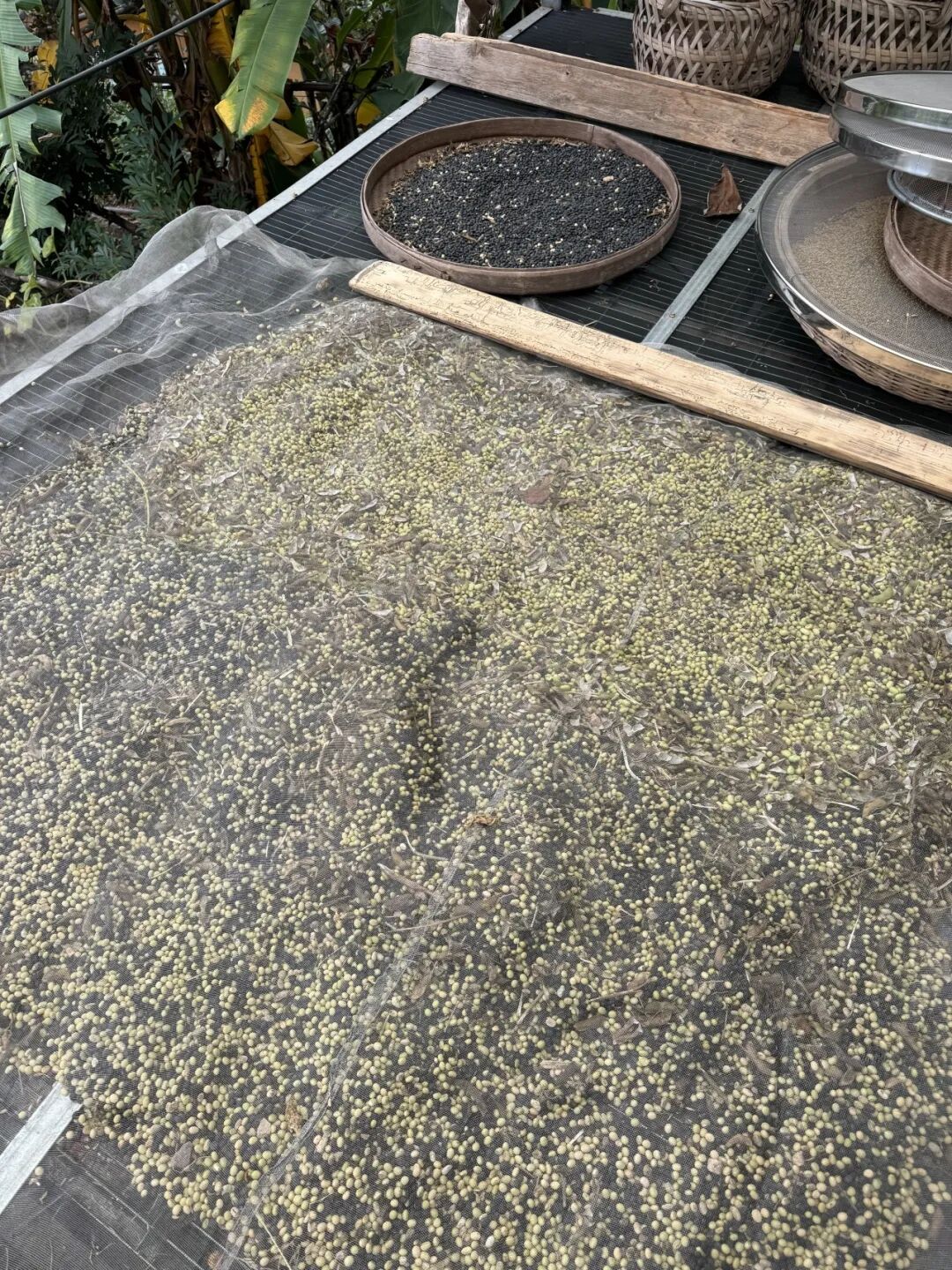
◉ Pumpkins and various beans harvested in 2025. Photo: Kouzi
This is a life built by a woman in her sixties through her own labour and hands. The long-held hope of earlier generations of women for independence and self-reliance is now realised, thanks to technological advancement and the progress of our times.
By 2025, I had achieved a basic level of fruit self-sufficiency and have since started keeping fish. I am now exploring a ‘chicken-centric design’—tailoring everything to the flock’s needs to create a sustainable, self-renewing cycle of growing and rearing within a half-mu plot. Aiming to maintain the same egg yield and number of hens, I am confident I can cut supplementary feeding by half by 2027. I will also adopt a ‘duck-centric design’ and work towards an integrated system for chickens, ducks, and fish.
I want to explore the ultimate state of living in complete self-reliance—particularly what it means for a woman to live independently in the countryside. By the time I am seventy, I aim to have established a fully self-sufficient living system, complete with my own water and power. I will have finished restoring the soil, transitioned to full no-till farming, and built a food forest across the entire property, bringing the whole place into a state of permanence. This will not only mean better food and a more comfortable existence, but will also better match the physical capabilities of an older woman and respond more effectively to the practical demands of daily life.
– This is Foodthink’s 799th original article –
Foodthink
Author
Kouzi
A steadfast farmer and village brewer. Full-time foodie, part-time farmer, amateur writer.
About the ‘Her and the Land’ Column
This year marks the UN’s International Year of Women Farmers. Foodthink has launched the ‘Her and the Land’ column to focus on women within agriculture and food systems. We will step into fields, markets, fishing ports, pastures, kitchens, laboratories, and city streets to see the women who are often overlooked yet always present—those who engage in production, research, cooking, distribution, and care, supporting our daily lives with practical experience and wisdom. They are not only cultivators of the land but also vital builders of rural communities and food networks. Through interviews, writing, and workshops, we hope to tell their stories, explore how women’s participation shapes our food systems, and invite you to join the conversation: how might a fairer, more dignified future unfold for women working in food and agriculture?
Editor: Xiaodan
Layout: Minglin