
Plastic mulch pollutes farmland as authorities engage in absurd power struggle
I. Airborne Plastic Blight
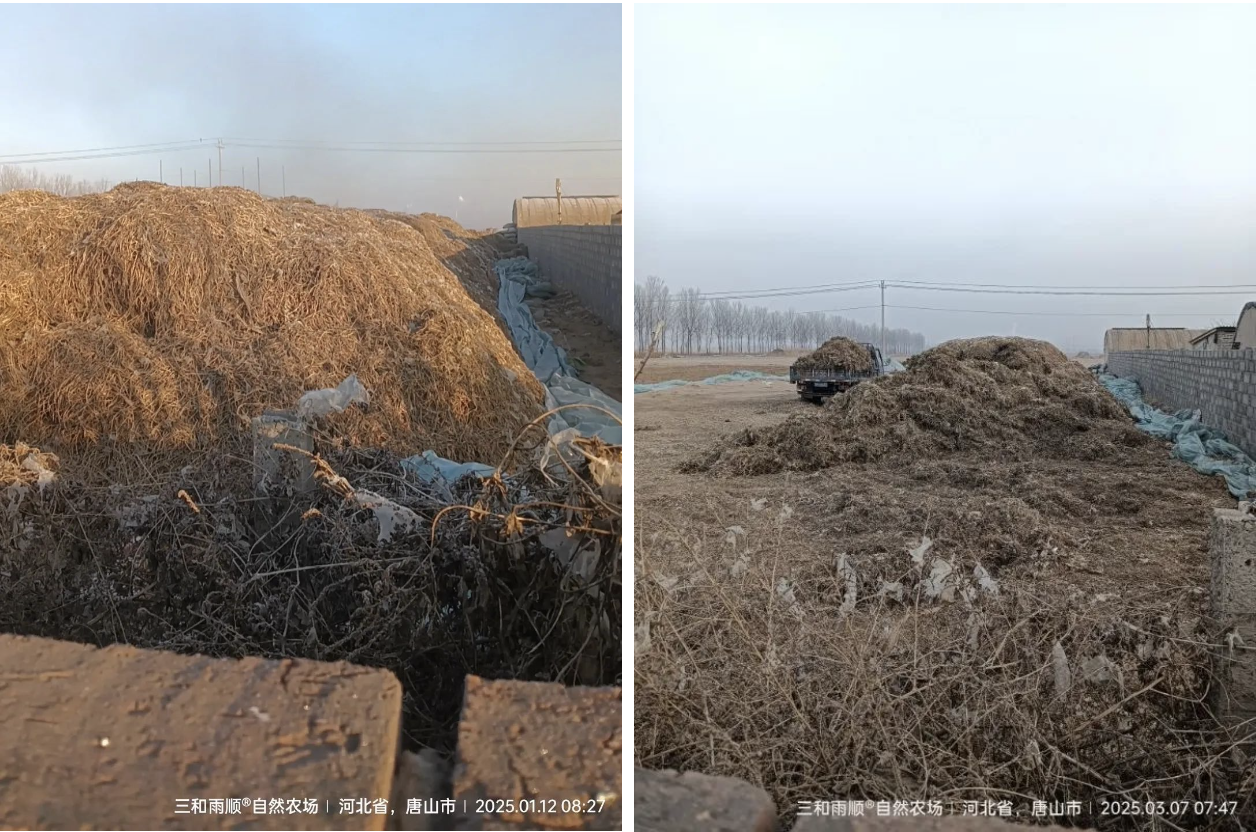
Left with no choice, Li and a few workers spent their time picking up the fragments in the cowshed. “This film is light and brittle; it looks like sub-standard, ultra-thin plastic mulch,” he noted.
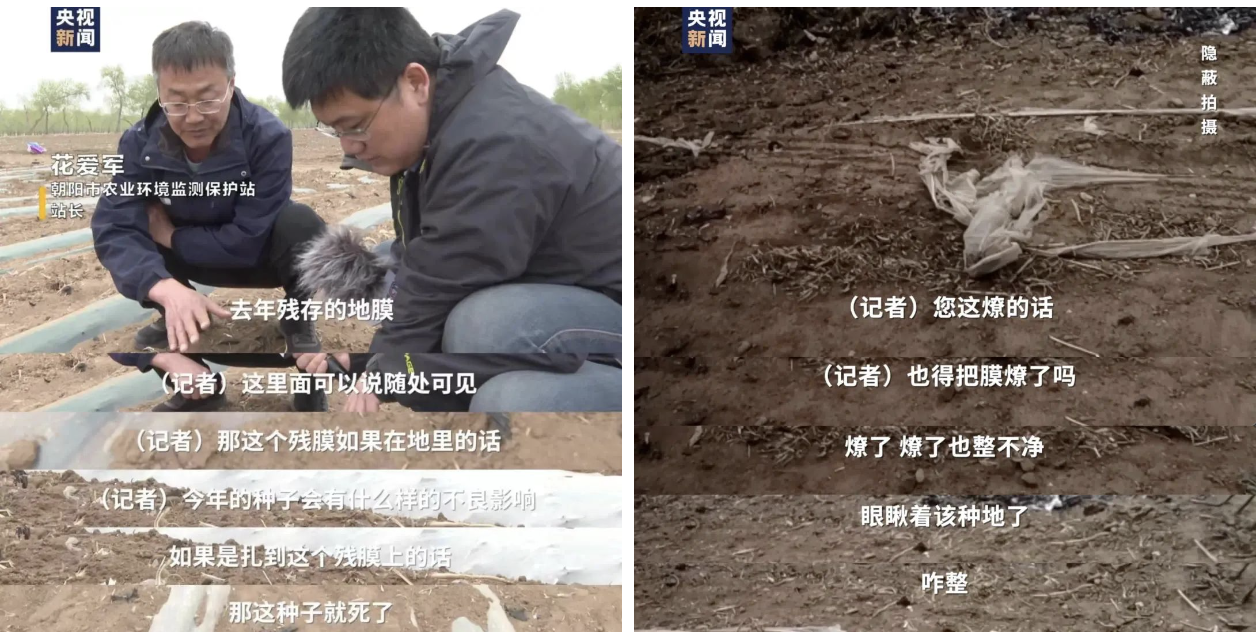
If left untreated, the mulch would be mixed into the soil during ploughing. This would not only hinder the growth of the current crop but also make recovery impossible. Since it is difficult to decompose, the plastic would only break down very slowly into fragments, potentially being absorbed by the crops as microplastics.
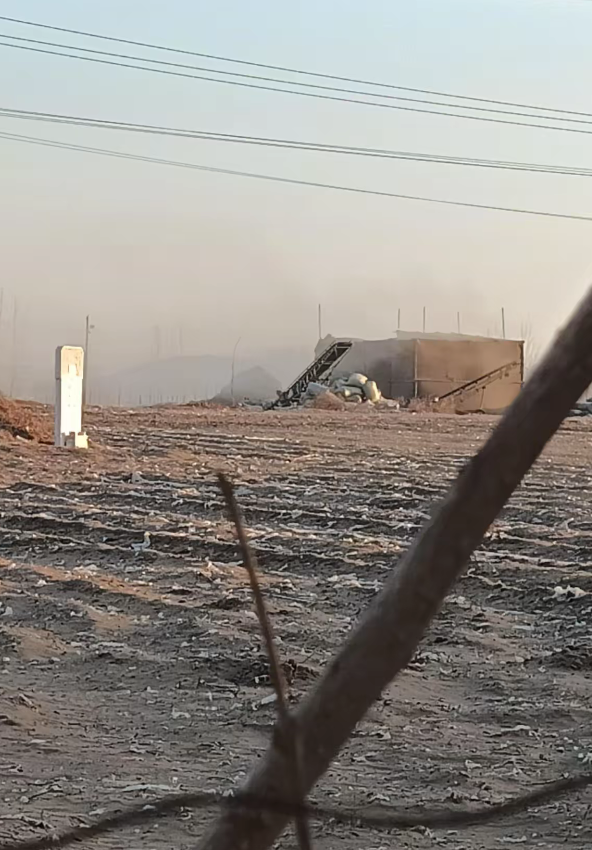
How did Li, who does not use plastic mulch himself, become a victim of mulch pollution? As it turned out, on 25 December last year, a temporary processing plant was set up just 100 metres from his field. This small facility, covering only a few dozen square metres, buys large quantities of peanut stalks from local farmers, which are then shredded and processed into coarse fodder for livestock. Because the plastic mulch is not removed during the purchase of the peanut stalks, the mulch remains entangled with the plants and is fed directly into the machinery. The shredded plastic then blows in the wind across the surrounding farmlands, including Li’s.
This plant was hastily erected after the peanut harvest on land that was originally designated as basic farmland in the village. Due to its rudimentary nature, the site lacked any protective measures, allowing the plastic mulch to drift wherever the wind took it.
On 1 January 2025, Li called the 12345 Mayor’s Hotline to report the pollution. He subsequently submitted written explanations to the local sub-district office, the Bureau of Ecology and Environment, and the Bureau of Agriculture and Rural Affairs to report the situation.
More than two months have passed since the incident began. The season for sowing spring wheat is almost here, and Li also plans to plant peas, garlic, rapeseed, and pak choi—vegetables that would provide the primary source of his annual income. However, the plastic mulch in his soil has delayed his sowing. He is now on the verge of missing the planting window, which would jeopardise an entire year’s earnings.
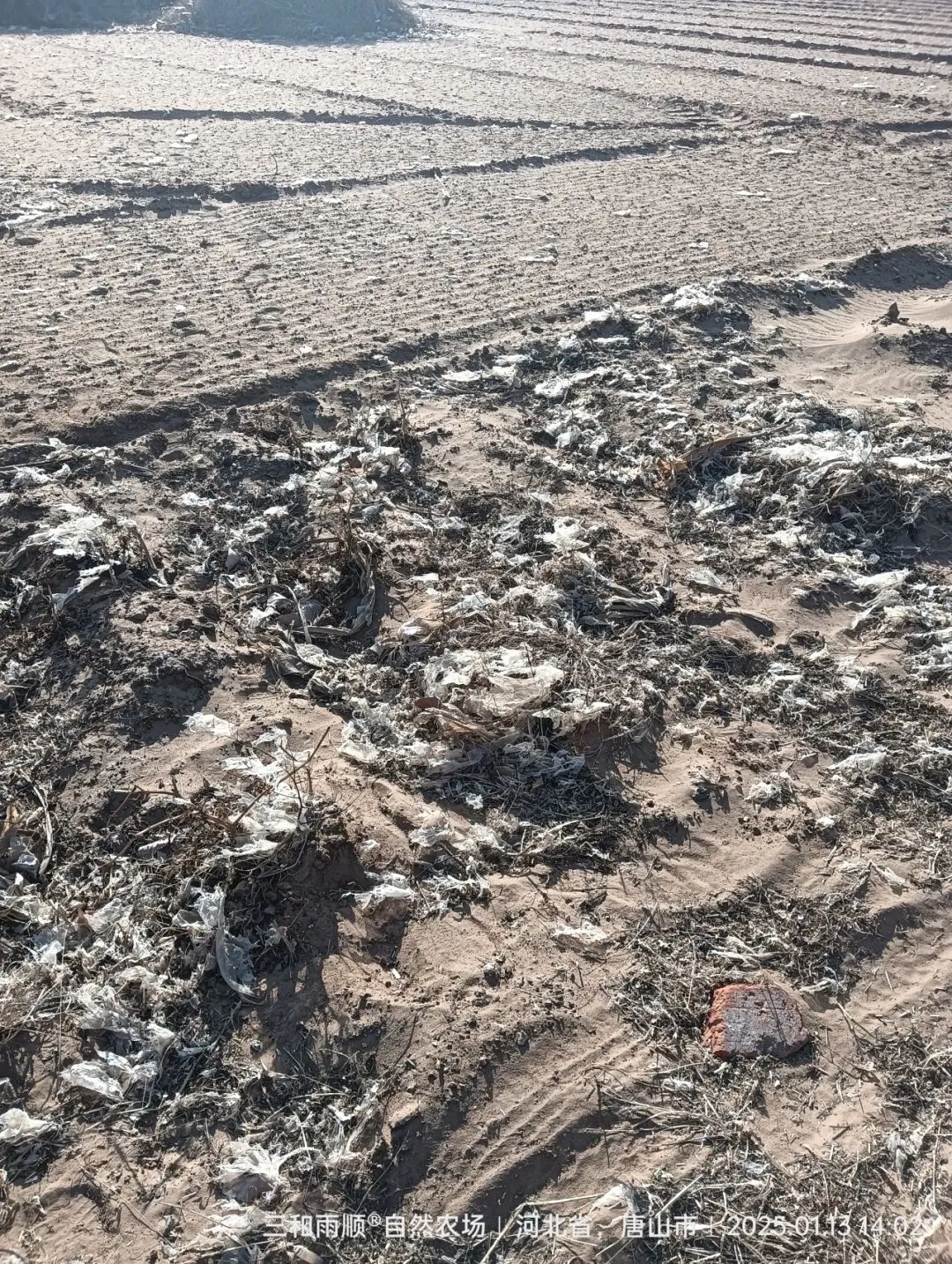
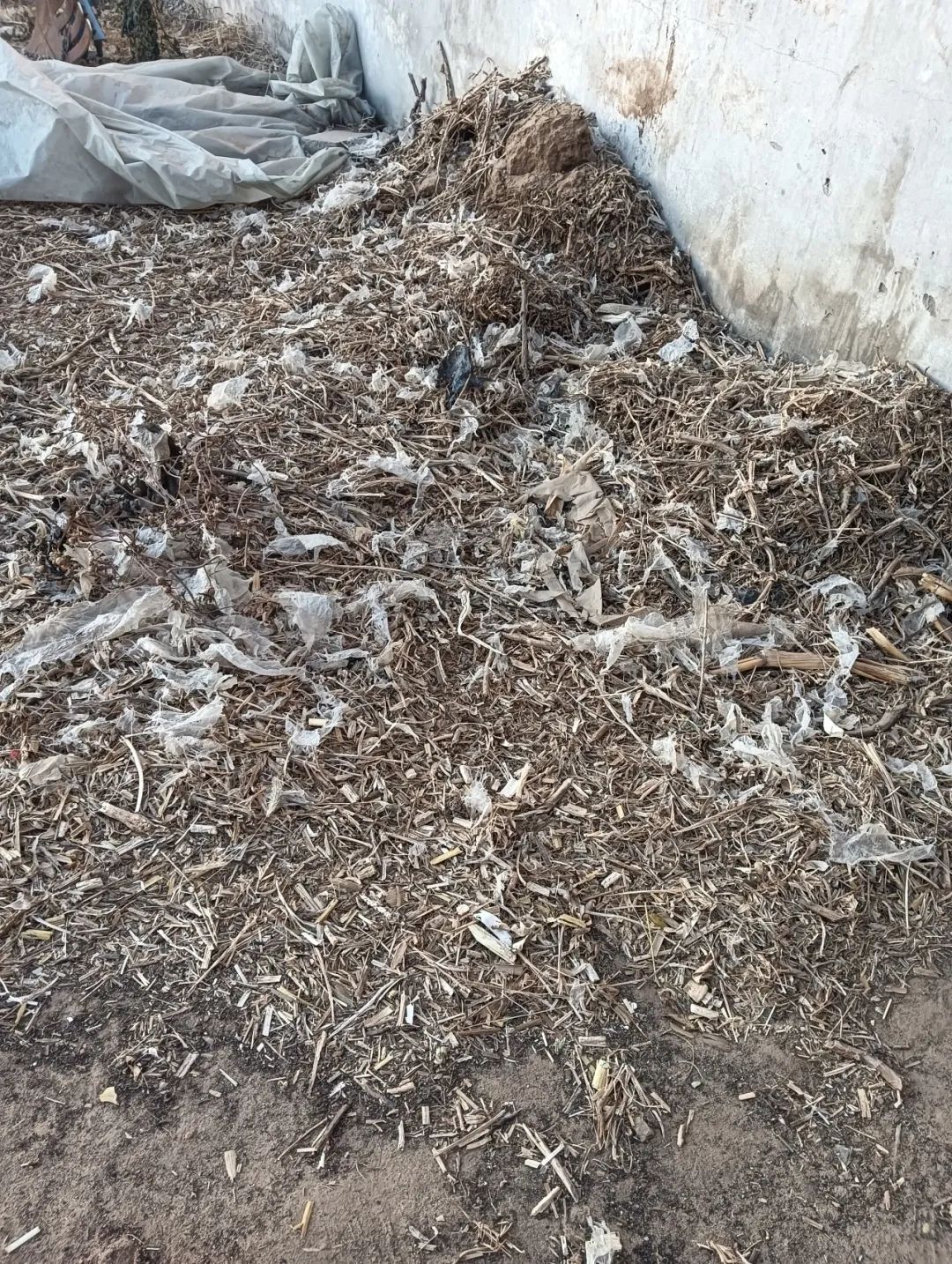
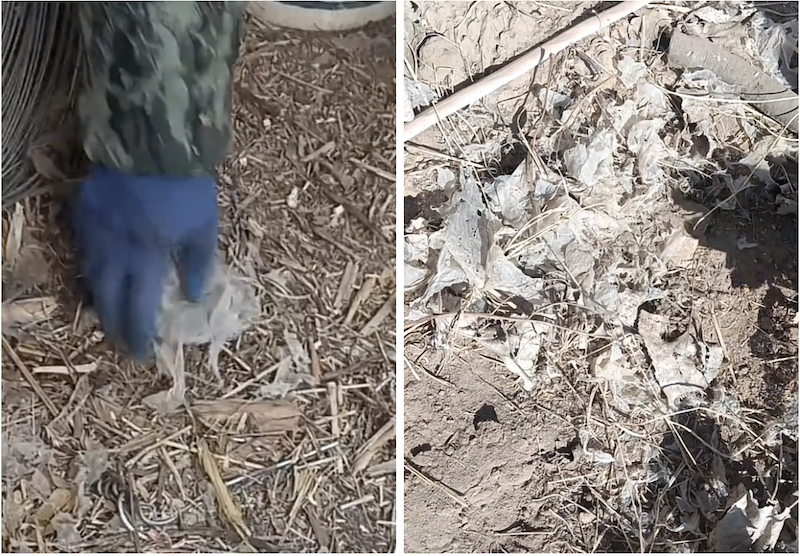
Li was once a dealer in agricultural supplies and had seen first-hand the damage that pesticides, fertilisers, and plastic films cause to people and the land. Fifteen years ago, he transferred the land-use rights of farmland in his home village of Nuomizhuang to practice ecological farming, growing grains and vegetables without the use of pesticides, fertilisers, or herbicides. These 70 mu of farmland have been a sanctuary he has worked hard to protect for years. It is for this reason that he is so deeply distressed by the plastic mulch pollution that many other farmers have come to accept as normal.
Related articles ▼
As the processing plant refused to take action, Li had to pay 2,000 yuan out of his own pocket to the village party secretary, who passed the money to the company. Subsequently, the company installed a simple shield along the edge of Li’s farmland. The plant had also promised to pay for the village collective to hire people to collect the mulch that had blown into Li’s fields, but after a few days, the effort ceased, with the company claiming they “could not afford to pick it up every day.” The company is unwilling to stop operations, yet as long as processing continues, plastic mulch continues to blow in daily. Left with no other options, Li could only continue to lodge complaints with the government.
II. The Agriculture and Environment Departments: A “Battle of Laws” from Afar
Both stated in their replies that the pollution caused by the plastic mulch did not fall within their respective areas of responsibility. Therefore, they claimed they could not take enforcement action against the company and that the matter should be resolved by the other department.
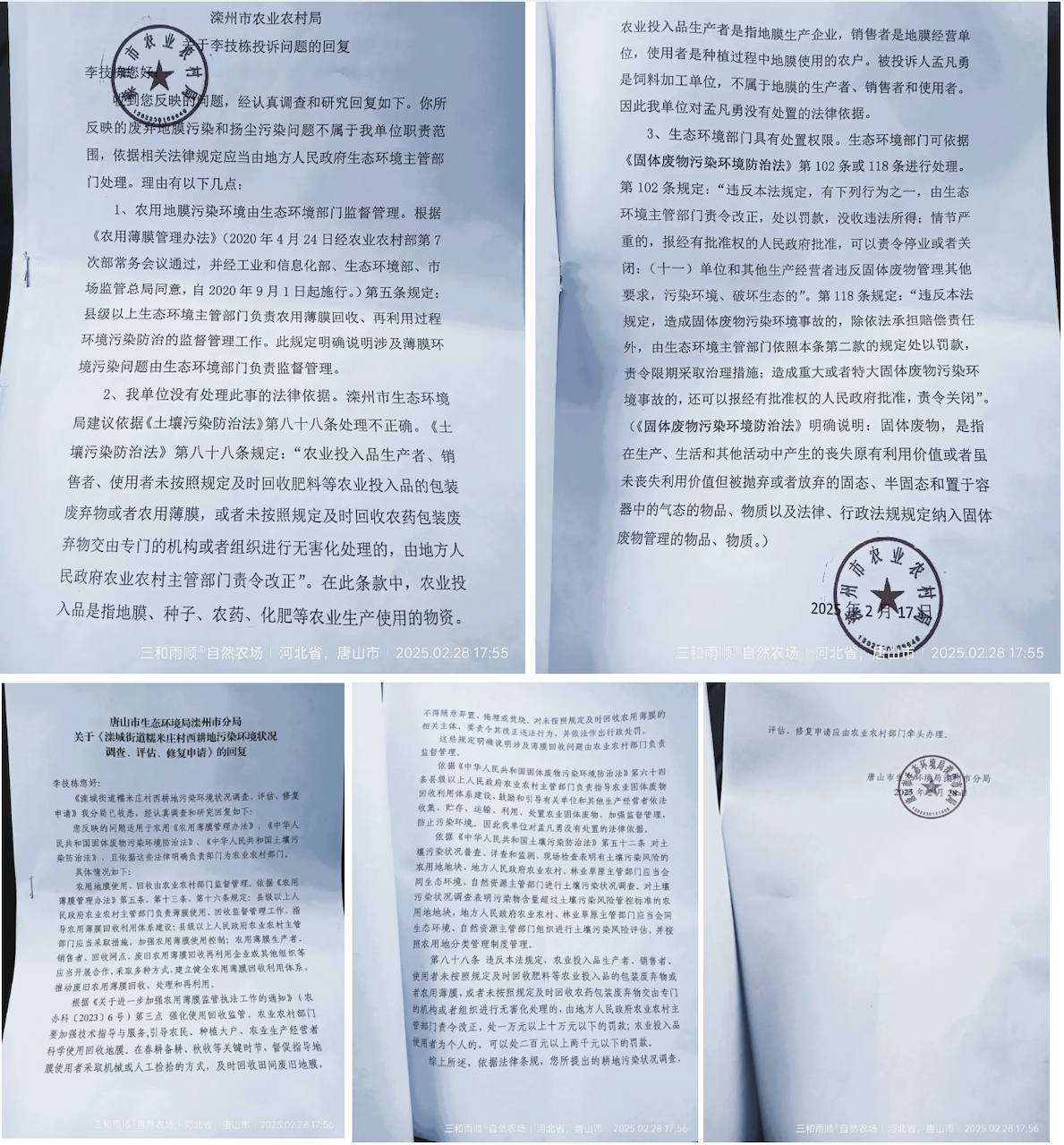
Meanwhile, the Bureau of Agriculture and Rural Affairs only cited the fourth sentence: “The ecological environment departments of people’s governments at or above the county level are responsible for the supervision and management of environmental pollution prevention and control during the recovery and reuse process of agricultural plastic film.”
In other words, in the chain of poor recovery and resulting pollution, they each saw only the other’s failure while turning a blind eye to their own duties.
Secondly, a point of heated debate between the two was: is the plastic mulch polluting Li’s farmland still, in legal terms, “plastic mulch”?
The Bureau of Ecology and Environment suggested handling the matter according to Article 88 of the *Soil Pollution Prevention and Control Law*: “Where producers, sellers, or users of agricultural inputs fail to recover packaging waste of fertilisers or other agricultural inputs, or agricultural plastic films… in a timely manner in accordance with regulations… the agricultural and rural department of the local people’s government shall order rectification.”
However, the Bureau of Agriculture and Rural Affairs responded that a fodder processing company is not a producer, seller, or user of plastic mulch, and therefore “this unit has no legal basis for disposal.” They further cited Article 102 of the *Law on the Prevention and Control of Environmental Pollution by Solid Waste*, arguing that this is “solid waste pollution” and should therefore be penalised by the ecological environment department.
Essentially: in this case, the material that blew into Li’s field is no longer “plastic mulch” in a legal sense; it is “solid waste.”
“Solid waste” refers to items generated during production, living, and other activities that have lost their original utility value, or items that, while still useful, have been discarded or abandoned.
But the Bureau of Ecology and Environment made a cleverer move, using the *Solid Waste Law* to defeat the *Solid Waste Law*. They cited Article 64 of the same law: “The agricultural and rural departments of people’s governments at or above the county level are responsible for guiding the construction of the recovery and utilisation system for agricultural solid waste, encouraging and guiding relevant units and other production and business operators to collect, store, transport, utilise, and dispose of agricultural solid waste in accordance with the law, and strengthening supervision and management to prevent environmental pollution.”
Translated: while solid waste falls under my jurisdiction, agricultural solid waste is still the business of the Bureau of Agriculture and Rural Affairs.
Upon receiving these two replies, Li felt utterly helpless. He continued to report the problem through government websites and telephone hotlines, but so far, there has been no progress.
III. Who is Actually Responsible for Agricultural Solid Waste?
Yet, the presence of waste film in processing facilities is inevitably a consequence of poor recovery in the fields. In 2023, the Chengde Procuratorate in Hebei ordered the local agriculture and rural affairs department to fulfil its duties in supervising the use and recovery of plastic film, following large-scale pollution of farmland in one village.
The logic of recovery versus pollution is simple: recover the film, and there is no pollution; fail to recover it, and pollution is inevitable. At the governmental level, however, recovery falls to the agriculture and rural affairs department, while pollution falls under the remit of the environmental department—their responsibilities are two sides of the same coin. When pollution occurs, it means failures have happened at both stages; both departments bear some responsibility and both have grounds to intervene.
In reality, however, “both should manage” has devolved into “neither will”. Despite the introduction of a suite of laws and regulations—including the *Law on the Prevention and Control of Environmental Pollution by Solid Waste*, the *Soil Pollution Prevention and Control Law*, and the *Administrative Measures for Agricultural Plastic Film*—it seems that the more regulations there are, the easier it is for the relevant authorities to find loopholes to shirk their responsibilities.
One expert in solid waste research argues that the *Solid Waste Law* is overly vague regarding the management of agricultural solid waste, leaving the actual regulatory framework for such waste effectively blank.
Agricultural plastic film is the fourth most critical production input after seeds, pesticides, and fertilisers. Because emphasis has long been placed on usage over recovery, plastic film pollution in China is severe: nearly 300 million *mu* of land are covered with film annually, with consumption nearing 1.45 million tonnes—approximately 75% of the global total.
Due to limitations in technology and equipment, China’s recovery rate for agricultural film has long remained below two-thirds. In 2017, the former Ministry of Agriculture issued the *Agricultural Film Recovery Action Plan*, launching 100 demonstration counties for film management in the Northwest. The goal was for these counties to achieve a seasonal recovery rate of over 80% within two to three years.
While concrete action was finally taken to tackle film pollution, this only addressed “seasonal” recovery. The cumulative amount of residual plastic film in China has already surpassed one million tonnes.
According to monitoring data from the Ministry of Agriculture in 2016, all mulched farmland in China contains some level of plastic film residue. In some areas, residues reach 4–20kg per *mu*, with some plots exceeding 30kg—equivalent to six layers of film. This residual film destroys soil structure, impairs seedling emergence, and hinders root growth, leading to reduced crop yields. There is currently no authoritative data on the total economic loss to national agricultural production caused by these long-term accumulations.
Furthermore, a 2019 paper by Zhang Bin and colleagues from the Rural Economic Research Centre of the Ministry of Agriculture and Rural Affairs noted that film residue is particularly acute in regions outside national project zones. Ultra-thin films remain prevalent on the market, and farmers lack the incentive to recover the residues.
Yan Changrong, a researcher at the Chinese Academy of Agricultural Sciences, previously estimated that the cost of removing film from peanut stalks for use as livestock feed is approximately 30–50 yuan per *mu*. Since this cost is rarely covered by anyone, the film is simply left to scatter into the environment, becoming a significant source of plastic pollution.
When plastic film contaminates animal feed, it can severely impact animal health and, in extreme cases, prove fatal, thereby damaging the livelihoods of livestock farmers.
Plastic film does more than just harm the soil and agriculture; wind-blown fragments also threaten public infrastructure. During the May Day holiday in 2021, a high-speed train on the Beijing-Guangzhou line was forced to stop in the Dingzhou section of Hebei after plastic film became entangled in the overhead power lines, causing dozens of other trains to be delayed or suspended.
Reports of plastic film bringing high-speed rail to a standstill are merely the tip of the iceberg. Staff from the local sub-district office and the agriculture and rural affairs bureau have told Old Li that similar instances of film pollution are so frequent in the area that they are simply impossible to manage.
Old Li’s primary demand now is for a formal assessment of the pollution on his and his neighbours’ land, followed by soil remediation based on scientific findings. He is concerned not only with visible fragments of plastic film but also with invisible microplastics.
“I have persisted in raising this issue not just for myself, but for my fellow villagers and the well-being of future generations,” he said. “Our generation should not leave behind a landscape of devastation for those who come after us.”
For Old Li, turning to the internet for help was a last resort after all other avenues failed. However, recent developments have only increased his anxiety: since he approached the authorities, the processing company has accelerated its operations, and more plastic film has been drifting into the fields. He suspects they are racing to finish this batch of raw materials before disappearing. As the processing plant is merely a temporary structure on farmland, they can simply vanish overnight.
Tackling plastic film pollution requires more than just a clear division of responsibilities between government departments; it demands sensible solutions and detailed regulatory frameworks.
Who is responsible? What is the solution? Old Li needs an answer, and so does the polluted land.
If you are also concerned about plastic pollution from agricultural film
And wish to explore potential solutions
Please scan the QR code to join our discussion group

Our thanks to Zhang Miao, Liu Jinmei, and Tian Jing
for their assistance in the writing of this article
Editor: Foodthink