
What makes this Kunming eco-restaurant Lonely Planet worthy?
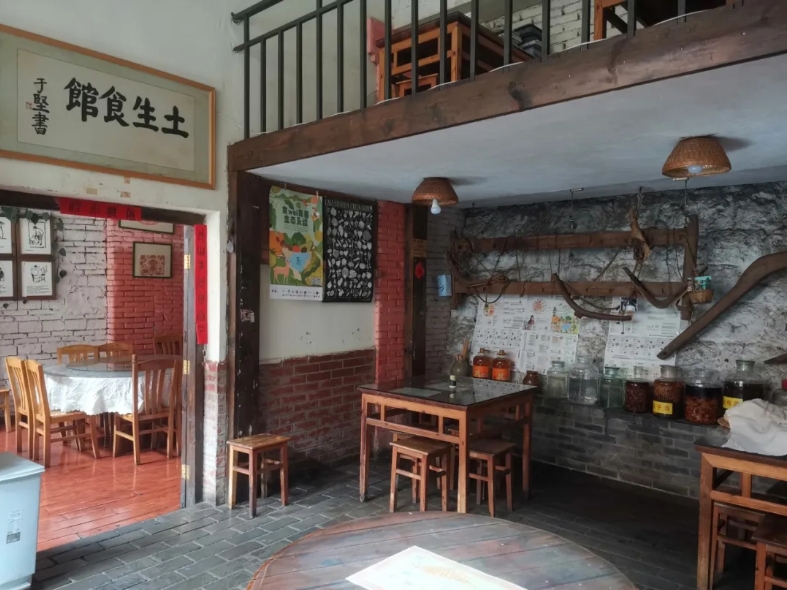
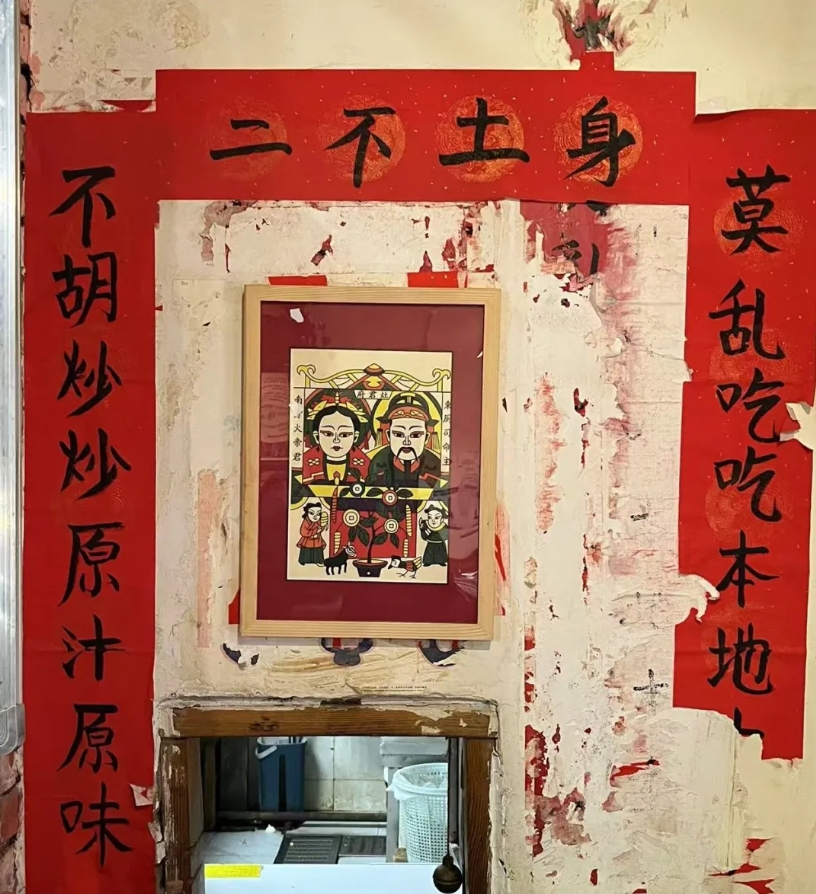
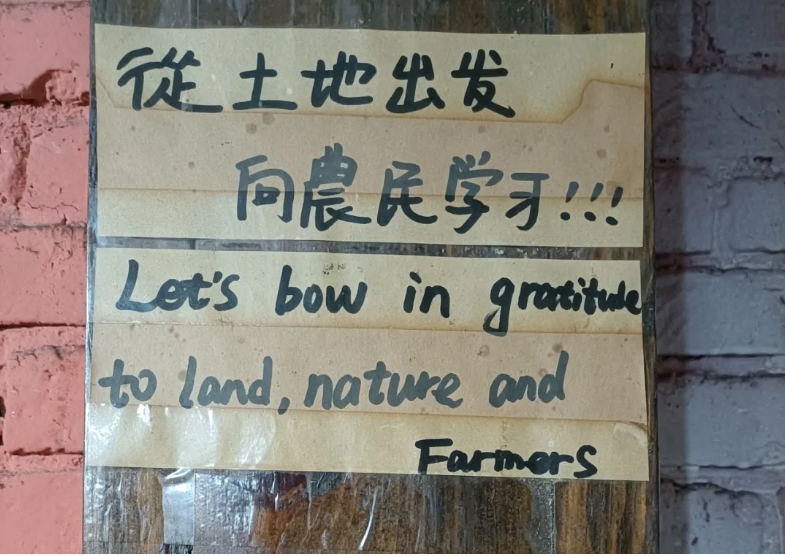
In a prominent spot in the dining area hangs the calligraphy for ‘Tusheng Shiguan’, penned by the renowned Yunnan poet Yu Jian. Each table features an illustration explaining why pesticide use should be minimised and how to use them responsibly.
A few years ago, this eco-restaurant was recommended by the travel guide Lonely Planet; it was also voted the best Chinese restaurant in Southwest China for four consecutive years by users of GoKunming, the region’s largest English-language website.
I. Eco-dining, and delicious too
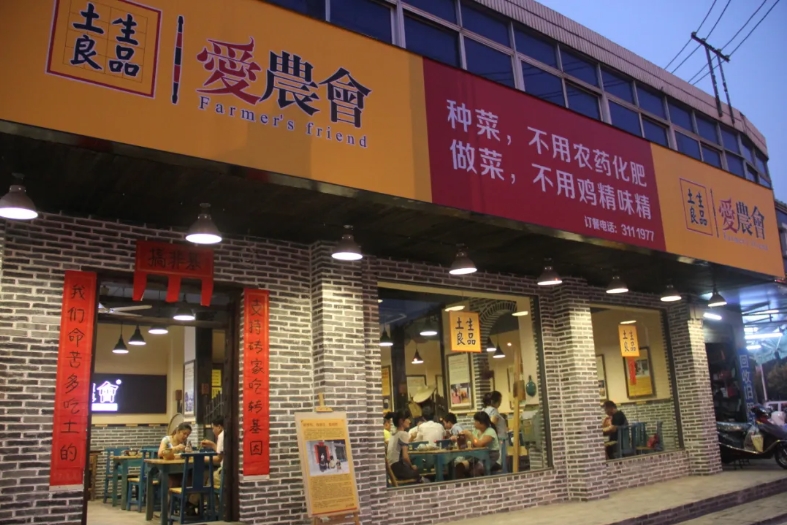
As we stood at the door ordering, the proprietress, Yang Lifen, noticed our new faces. ‘Almost everyone who eats here is a regular,’ she explained, stepping over once she had finished her task. ‘We use seasonal vegetables grown in our own garden, without pesticides, and the kitchen uses neither chicken powder nor MSG.’
‘Is your farm in Kunming?’
‘In Qujing, just over a hundred kilometres from here.’ No sooner had we finished ordering than the proprietress donned her apron and disappeared into the kitchen.
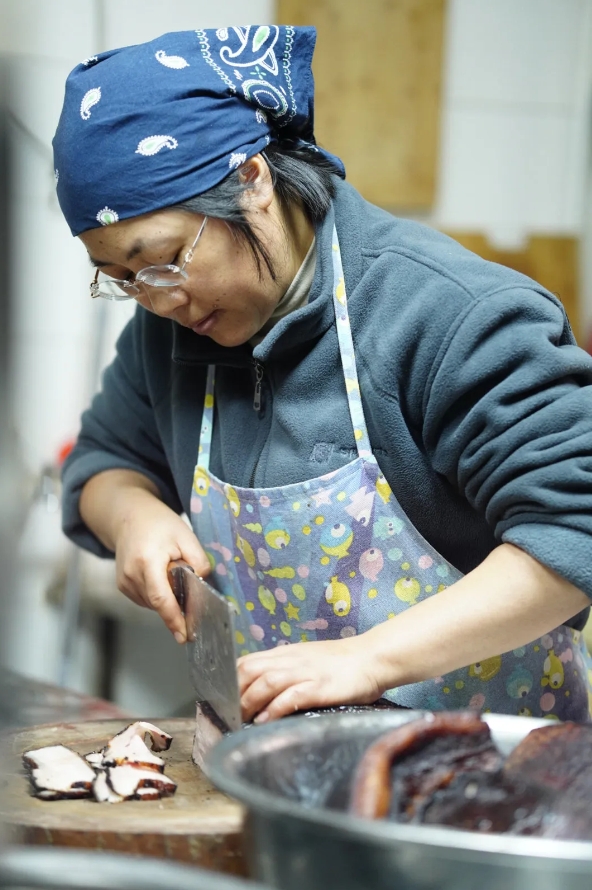
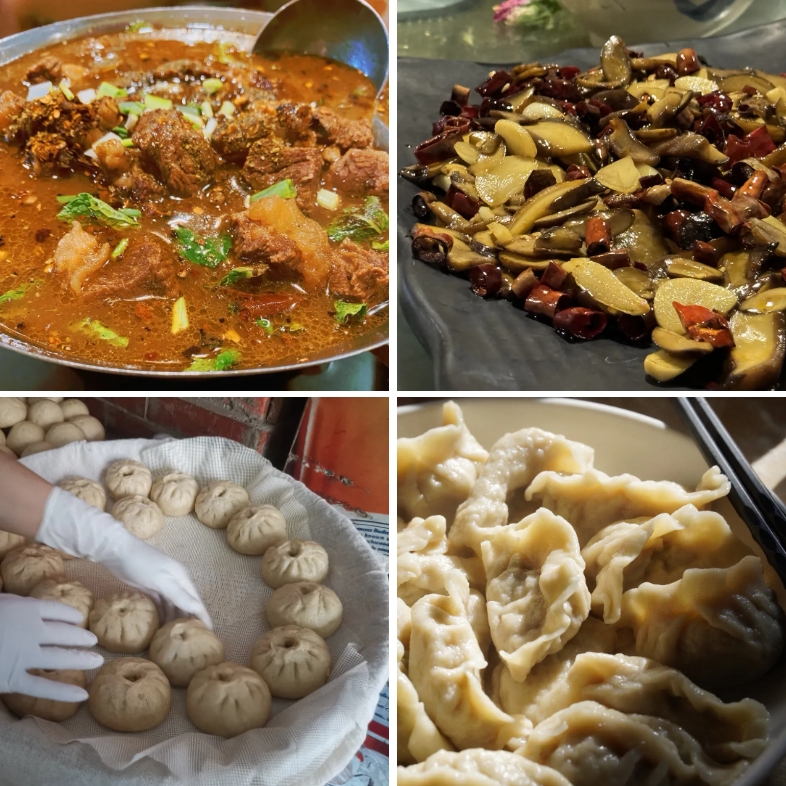
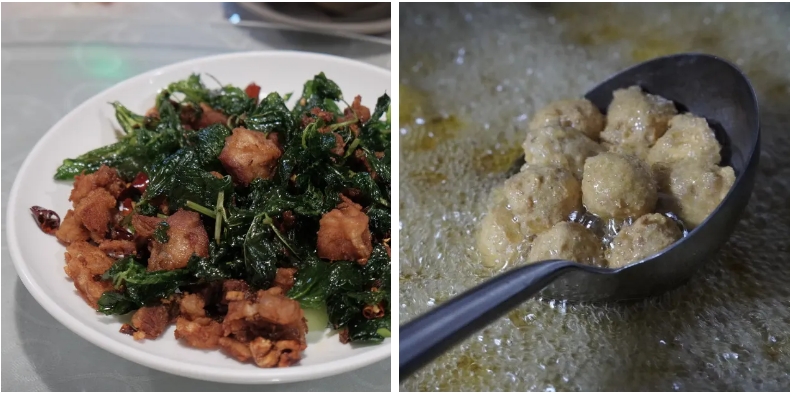
Truthfully, it is hard to put into words exactly how remarkable dishes made from fully ecological ingredients can be, but they are certainly fragrant—especially the simpler dishes that rely on the natural flavour of the ingredients.
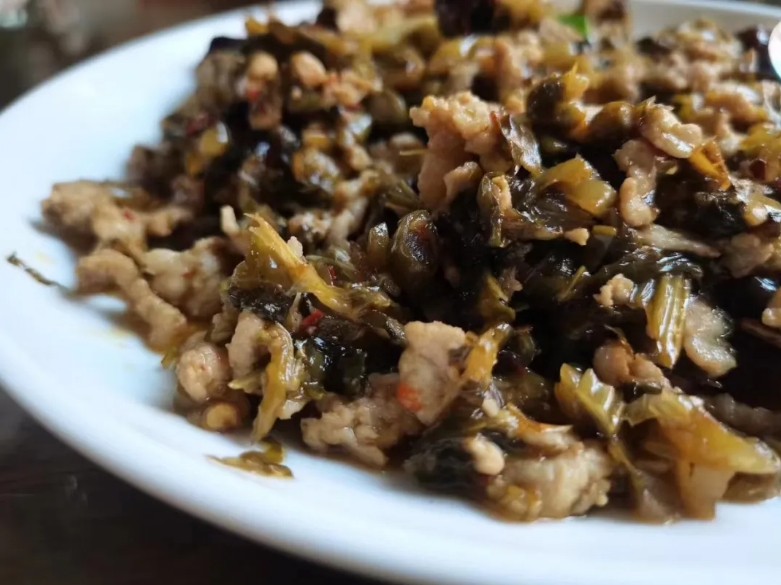
During this year’s mushroom season, a friend from Nanning made a special trip to Kunming, and we visited Tusheng Shiguan again. She is someone with a discerning palate, and she was immediately impressed by the first dish to arrive: the sautéed pork with pickled vegetables.
‘Delicious! You must pickle these vegetables yourselves; I can tell. It’s completely different from the industrial stuff.’
Out of habit, I questioned her certainty. ‘How can you tell?’
‘Of course! The acidity and aroma of industrially produced pickles have a certain industrial sharpness. But with this dish, the sourness is very soft and the aroma is well-rounded.’ Hearing this, I took another bite.
The chef came out toward the sound of the conversation. There weren’t many guests that day, and only the proprietress’s brother was in the kitchen. Hearing the praise, he became quite enthusiastic and pulled a photo album from the private room to share his experience of attending the International Arts Festival in Zurich with his sister in 2017. During that trip, they visited local eco-farms and shared Yunnan cuisine with foreign friends.
A year before the European exchange, Lifen had hosted the self-taught American fermentation enthusiast Sandor Katz. That winter, Katz and his companions came to Tusheng Shiguan, drawn by its reputation, and hosted a feast blending East and West using fermented foods and ecological ingredients—a perfect conclusion to his ‘fermentation journey’ through Yunnan, Guizhou, and Sichuan.
II.“From Farm to Table”
Later, Lifen joined the Yunnan office of PCD. During this time, she came into contact with ecological agriculture and farmers from various regions. Gradually, Yang Lifen persuaded her parents, who farmed back in her hometown of Qujing, to adopt ecological farming methods.
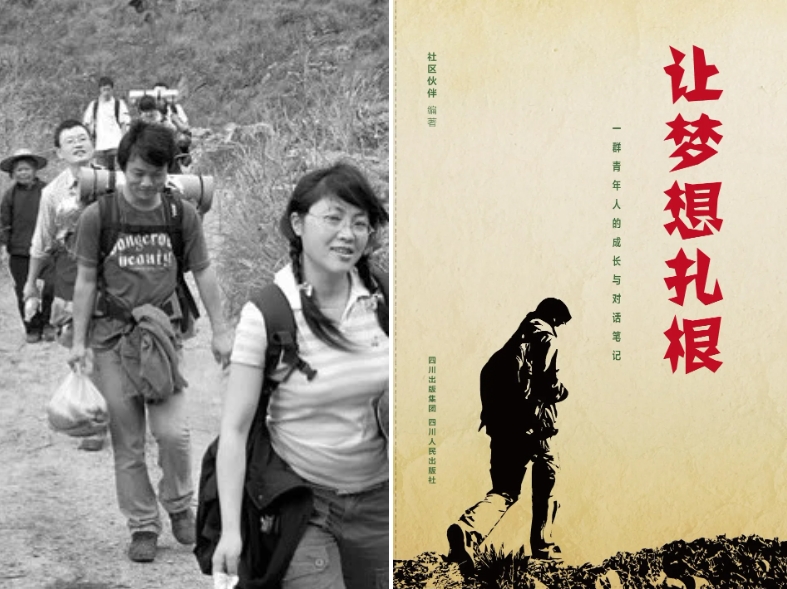
When she became pregnant, her parents began growing more organic vegetables specifically for her, delivering them to Kunming on a weekly basis. Any surplus was shared with friends. As more and more friends expressed an interest in these organic vegetables, her parents dedicated a specific plot of land to cultivation and began sourcing free-range chickens and eggs from remote villages.
Initially, the couple had no intention of opening a restaurant; they simply sold organic produce from their hometown to friends through group buying schemes. After several successful rounds, and to meet the growing demand for healthy ingredients, Tusheng Shiguan was officially established in 2011 with the financial support of their friends.
Following the opening of the restaurant, Yang Lifen’s family took over almost the entire vegetable supply to ensure that no chemical fertilisers or pesticides were used. By swapping land with their neighbours, they managed to acquire nearly 10 mu.
The vegetable garden itself covered roughly three to four mu. It followed the traditional planting methods of the older generation, maintaining a degree of biodiversity. “For example, we wouldn’t just plant a field of cabbage; we’d always plant some garlic sprouts, spring onions, and the like, with fruit trees filling the remaining gaps.”
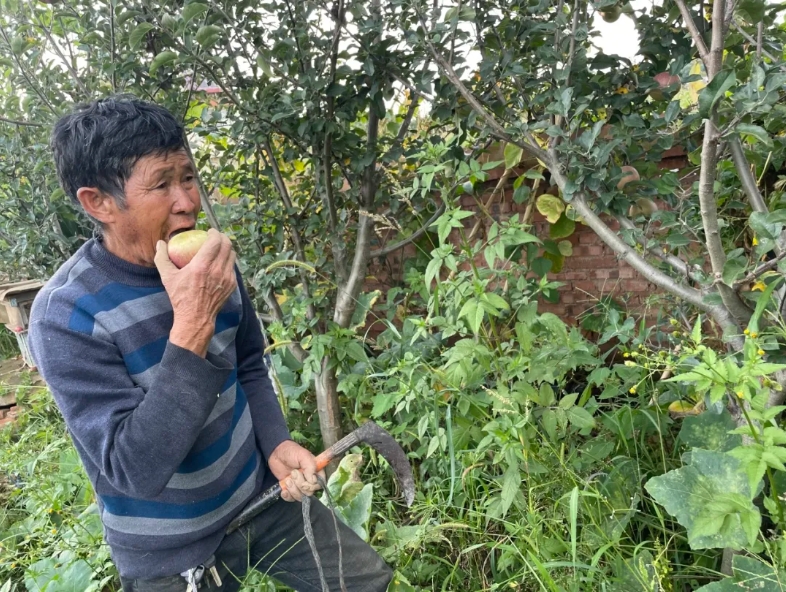
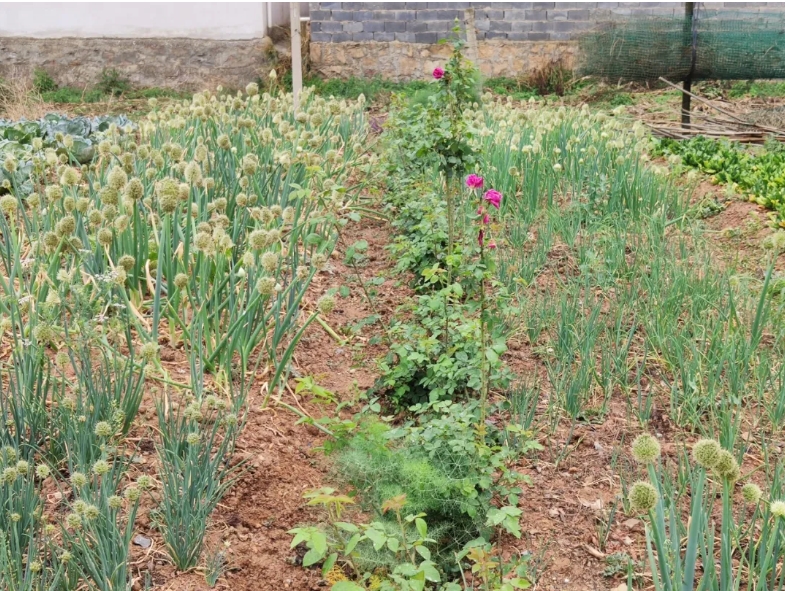
Old Cui mentioned that at his most frequent, he would return once a week. Having grown up in the countryside in Shandong, he finds the land to be the most comforting of all. “The farm’s ecosystem is improving; even the bees are rushing to build their nests here,” Lifen added.
In addition, they have a half-mu fish pond and a small plot of less than half a mu used for composting. Located on the periphery of the vegetable garden, this plot was acquired from a neighbour several years ago. It was previously used for rice cultivation, but after the transition, they raised the ground by over a metre with fill soil to prevent flooding. Through years of cultivation and improvement, the soil has become incredibly fertile.
The farm sends produce into the city once or twice a week. The vegetables are transported via the passenger bus from Qujing to downtown Kunming, where restaurant staff collect them from a petrol station next to the bus station. “It was very cheap, only twenty or thirty yuan a trip,” Old Cui recalls, adding that in the years before they bought a car, he had to collect the produce on an electric scooter.
III. A Small Shop’s Evolution Amidst a Changing Landscape
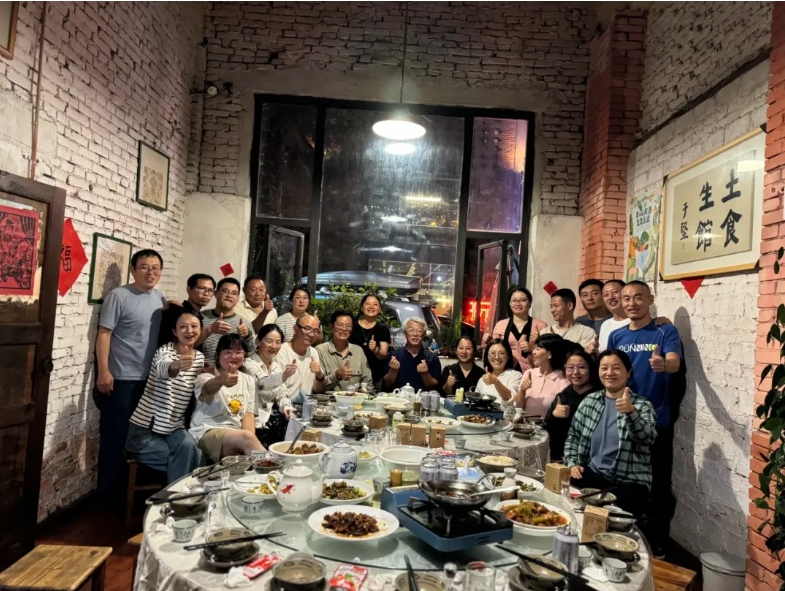
The vibrant atmosphere of public welfare organisations in Kunming provided the fertile consumer ground for Tusheng Shiguan’s early growth.
Since the early 1980s, Yunnan has been one of the first regions in China where international NGOs became active. As the provincial capital, Kunming became a hub for various domestic and international public welfare organisations to establish offices. A large number of practitioners focused on public issues and shared values gathered here, and their presence brought initial attention to Tusheng Shiguan. Even today, the restaurant remains a popular gathering spot for local organisations dedicated to public welfare and organic agriculture.
With the support of friends, the restaurant’s reputation grew. By 2017, business reached its peak. Lao Cui recalls that during the busiest times, the second-floor loft would be completely full. At its height, the staff grew to over ten people, most of whom were young people from his hometown in Qujing.
Their regular clientele eventually expanded beyond friends to include passers-by and employees from nearby industrial parks. “You can’t rely solely on friends to run a business; they can’t come to eat every day,” says Lao Cui. He believes that most of their long-term regulars were accumulated gradually through word-of-mouth.
In recent years, the restaurant has become much quieter, with footfall declining year by year, and this year has been particularly difficult. The staff has shrunk from a peak of twelve down to three. The kitchen is now managed by Yang Lifen and her brother; when his wife is away, Lao Cui joins his brother-in-law in the kitchen, leaving only one lady from Jiangsu to manage the front of house.
This downsizing began in 2020. There have also been changes in the kitchen; they replaced manual labour with a dishwasher, moving away from the environmentally friendly but labour-intensive method of using tea seed powder to wash dishes. “I believe technology should be utilised where appropriate,” Lao Cui reflects.
Lao Cui’s own role shifted from serving in the front to working in the kitchen, where he began learning to cook, starting with the preparation of side dishes. With four years of kitchen experience under his belt, he has begun to reflect on the many problems encountered during his early management. “We had no prior experience in catering; we took many detours.”
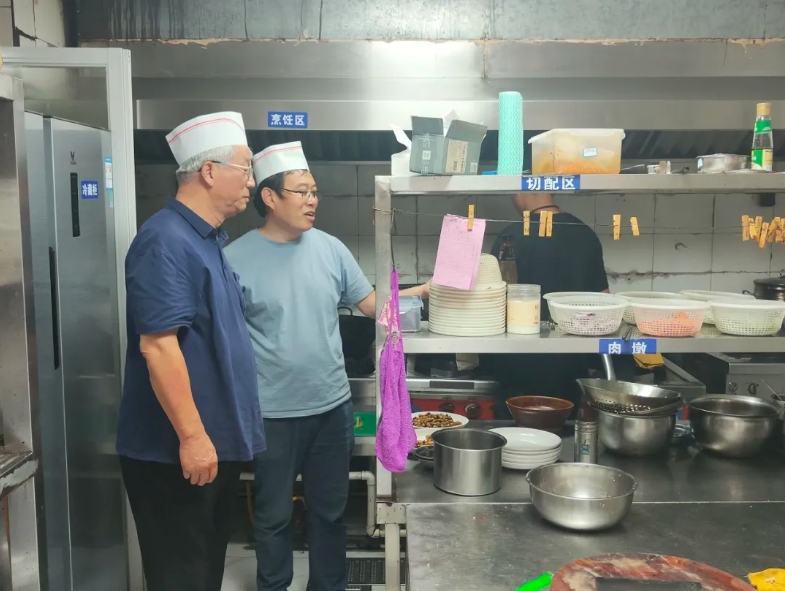
First was the blind increase in staff numbers. Lao Cui now feels that even during their best years, they never truly needed ten people.
The young people hired from his hometown in Qujing had high turnover rates, and the chefs were difficult to manage. The peak years of business were also the years with the most complaints, as the quality of the dishes was inconsistent. Poor handling of ingredients by the chefs also led to waste and unnecessary loss—such as with the organic peanut oil used for cooking.
This type of oil is expensive, costing nearly 200 yuan per drum. Whenever the oil was running low, employees would simply throw the drum away. “But if you just let it drain, you can still salvage a good amount of oil. I mentioned this many times, but it still wasn’t done right.”
The somewhat remote location also affected business to some extent.
At the start, the couple looked at various locations but passed on them for various reasons. Later, they found a Western restaurant for transfer at a reasonable price and decided to take it. “At the time, we were ambitious; we believed that ‘good wine needs no bush’ and didn’t worry that the location would affect business.” Now, under the influence of the broader economic climate, the disadvantages of this location have gradually become apparent.
Looking ahead, Tusheng Shiguan faces greater uncertainty, yet it perseveres.
In April this year, Lao Cui met a customer who had frequently eaten at the restaurant since junior high school. She is now studying at university and made a special trip back during her holidays to visit. “I trust people’s palates. If you grew up eating clean ingredients at home, you will still miss those natural flavours once you leave. I’ve met many consumers who care deeply about this.”
Now in its fourteenth year, the eco-restaurant has seen many changes, but its slow food philosophy remains unchanged: “Eat slowly, wait patiently; we raise and grow slowly at home; all in harmony with the laws of nature.”
These are the words of Yang Lifen’s father, and they have always been displayed at the entrance of the restaurant.
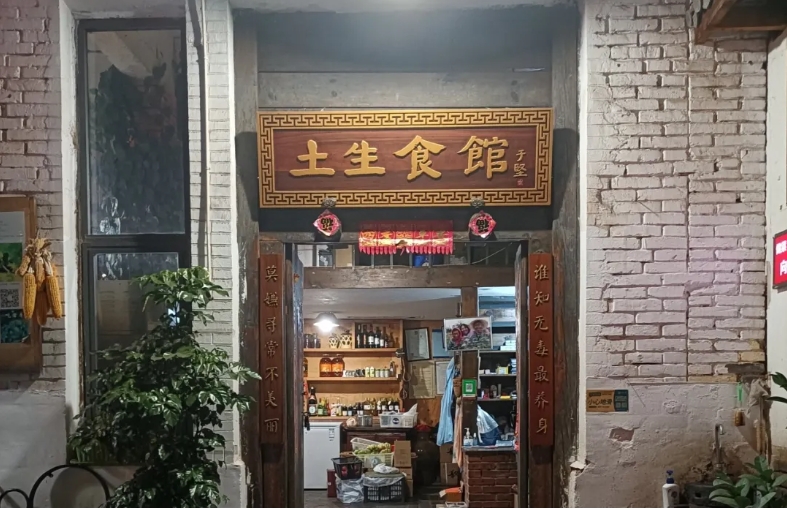

About Tusheng Shiguan
Unless otherwise stated, images in this article
are provided by the author and Tusheng Shiguan
Editor: Ze En