
The Tragedy of American Nutritional Science
Foodthink Perspective
In a modern society where science is equated with progress, this should not even be a question. Yet one of the greatest tragedies of our era is that science—which could be used to help humanity solve poverty, hunger, disease, and environmental destruction—has been irrevocably corrupted by big capital. It now threatens the air we breathe, the water we drink, and the food and medicine we consume.
The book *The Tragedy of American Science: From the Cold War to the Forever War* analyses and explores this process: how American science, through an extreme dependence on corporate and military funding, has been transformed from a creative force for human progress into a destructive, anti-human force. The author argues that replacing the current profit-driven scientific system with one dedicated to the wellbeing of humanity is not an unattainable utopian dream. However, the prerequisite is that we must first see the reality of what is happening right now.
Foodthink has excerpted parts of the first chapter of this book, which focuses on a reflection and critique of nutritional science. It prompts us to ask: can human diet be reduced simply to the intake of nutrients? Can nutritional science, manipulated by the interests of food companies, actually make us eat healthier? And what price do ordinary people pay for this?
Published with the permission of the Commercial Press!

I. Is ‘Nutritional Science’ a Contradiction in Terms?
In September 2018, as reported by Anahad O’Connor in *The New York Times*, the career of Professor Brian Wansink—head of the Food and Brand Lab at Cornell University and one of America’s most respected food research experts—came to a disgraceful end. Wansink resigned after Cornell University publicly confirmed findings of academic misconduct, including the falsification of research data.
Some experts believe this scandal indicates deeper, more serious problems within the field of food and health research. Critics argue that “a considerable amount of food research is misleading. It is not scientific, but rather consists of dubious conclusions arrived at through manipulation”.
Dr Wansink’s lab was notorious for data mining, or more accurately, ‘P-hacking’. P-hacking involves an exhaustive analysis of a dataset to fish out conclusions from inflated data that should otherwise have been ignored. Critics say this is equivalent to casting a wide net and then constructing a hypothesis to support whatever data looks interesting—an approach that is the antithesis of the scientific method.
Regrettably, the exposure of Wansink’s misconduct is unlikely to significantly improve the current state of nutritional science. The following examples demonstrate that research based on unreliable statistical data is common, and the phenomenon of data mining will not disappear quickly.
II. To What Extent are Government Dietary Guidelines Scientific?
The federal government publishes and revises the *Dietary Guidelines for Americans* every five years. Whether or not a vast number of Americans actually pay attention to these guidelines, they undoubtedly exert a significant influence on American eating habits. These guidelines serve not only as the foundation for US nutrition education, food labelling laws, and food assistance programmes, but are also a primary focus of research for the National Institutes of Health.
Incidentally, these food assistance programmes directly affect a quarter of the US population. School breakfast and lunch programmes, as well as the food stamp programme—now the Supplemental Nutrition Assistance Program (SNAP)—cost over 100 billion dollars annually to provide food that meets federal nutritional requirements.

US law mandates that dietary guidelines should incorporate scientific and medical knowledge regarding nutrition and diet. Before the 2015 guidelines were released, the government appointed experts to the Dietary Guidelines Advisory Committee and tasked them with drafting an initial report. The *Dietary Guidelines for Americans* are then revised based on this report and jointly produced by the US Department of Agriculture and the Department of Health and Human Services.
When the report was released in February 2015, it drew unprecedented public attention. Compared to the previous report, which received around 2,000 public comments, this one received 29,000. These figures represent only the first round of fierce debate among consumer protection groups and lobbyists regarding issues such as sugar, red meat, sustainable agriculture, and science. *The BMJ* (formerly the *British Medical Journal*) conducted an in-depth analysis and offered sharp criticism, arguing that the content lacked sufficient scientific rigour.
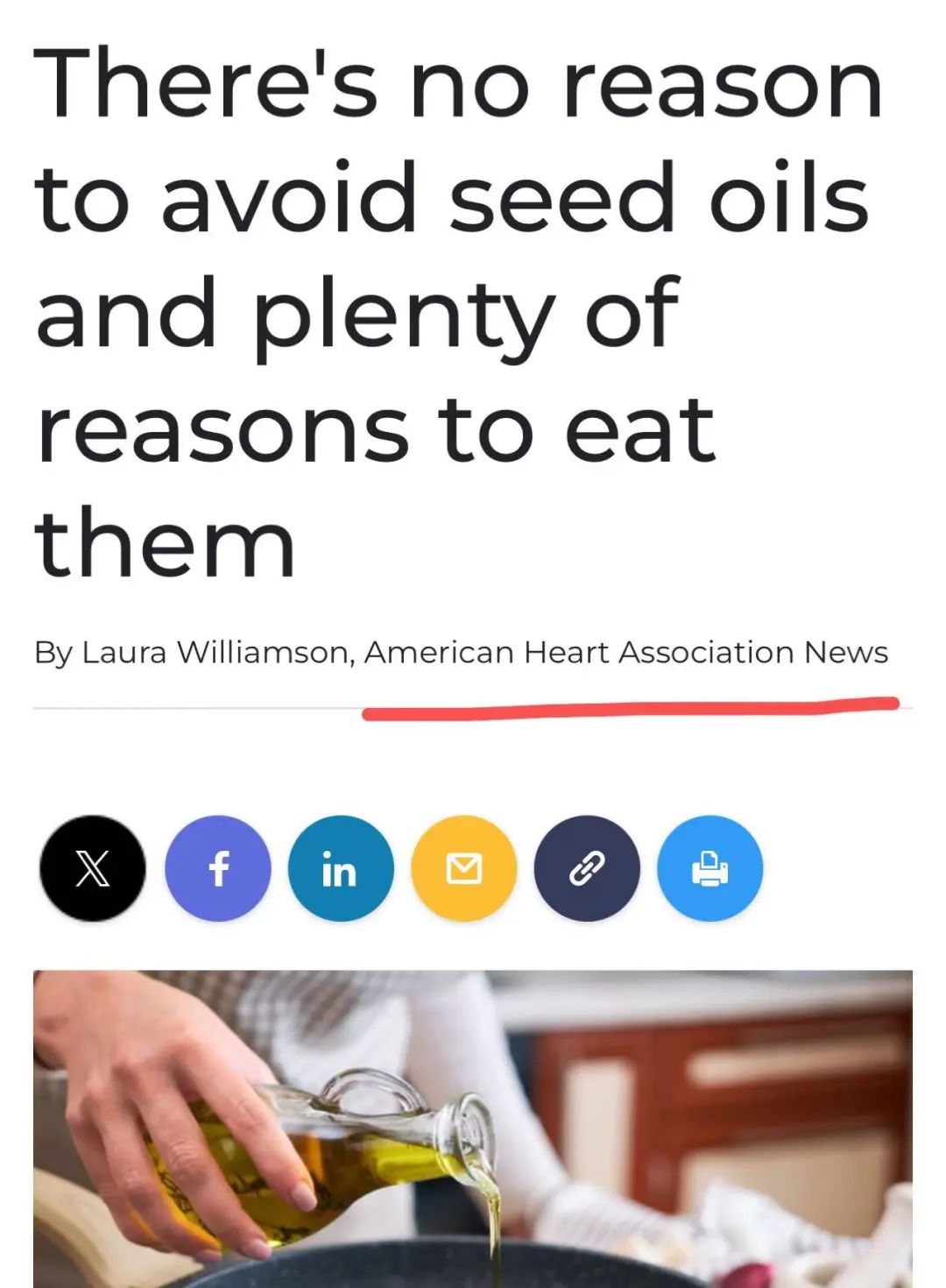
The crux of *The BMJ*’s criticism was the discovery that the scientific basis supporting the report had been influenced by conflicts of interest. The expert committee admitted that the report relied heavily on data provided by certain health advocacy organisations funded by food and pharmaceutical companies. For example, the American Heart Association (AHA) had received “decades of funding from vegetable oil manufacturers. In return, the association has long promoted vegetable oil products, claiming they promote cardiovascular health”.
III. A Severe Addiction to Sugar within Nutritional Science
The Sugar Research Foundation also paid off three Harvard professors to provide commentary on research specified by the organisation. Their commentary was published in July 1967 in the prestigious New England Journal of Medicine. They downplayed the effect of sugar on heart disease while implying that saturated fats were the true culprits. Without a doubt, the thousands of pages of exposed archival documents reveal the tacit collusion between these Harvard scientists and the sugar industry.
In 1964, sugar industry executive John Hickson discussed a plan with other industry insiders to shift public opinion “through our own research, information and legislative programmes”. Given that nutrition research at the time had begun to point to a link between high-sugar diets and a high incidence of heart disease, Hickson proposed fighting back against these worrying conclusions through sugar-industry-funded research. He wrote in the documents, “then we can release data to refute those who disparage our industry”. In 1965, Hickson recruited researchers from Harvard. They wrote a commentary to rebut accusations from anti-sugar research. He paid the researchers $6,500, equivalent to $49,000 today. Hickson selected the articles for them to comment on and explicitly stated his hope that the results would exonerate sugar. Dr Hegsted of Harvard University reassured the sugar industry executives, allaying their concerns.

IV. Sugary Drinks and Confectionery Science
And this proportion continues to climb. How rapidly has overweight and obesity progressed in the US? In 1980, fewer than 15% of Americans were obese; now, more than two-thirds of adults and one-third of children and adolescents are overweight or obese. In 1980, type 2 diabetes in children was rare. According to current data projections, an increasing number of adolescents and half of all adults now suffer from the disease or are in a pre-diabetic state.
The now-defunct Global Energy Balance Network claimed to be the “voice of science” in obesity research. According to its scientific premise, children became obese not because they consumed too many calories, but because of a lack of physical exercise. The organisation further supported this false scientific premise by designing studies and screening data.
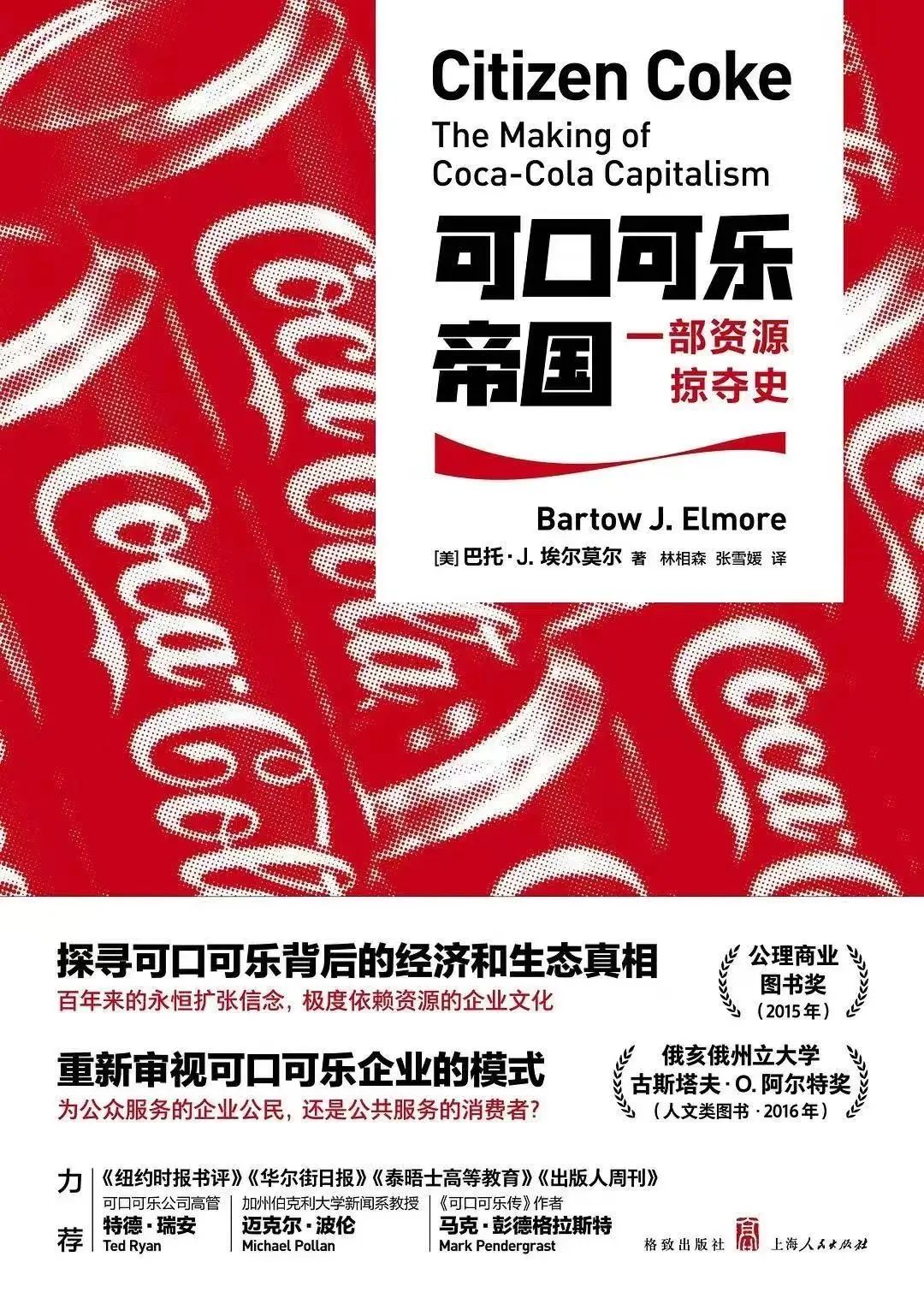
Another investigative report by Anahad O’Connor showed that the Coca-Cola Company “has been collaborating with influential scientists on research projects. The latter have spared no effort in promoting false scientific concepts in medical journals, conferences, and on social media”.
When the Global Energy Balance Network was exposed as a puppet of the Coca-Cola Company, the organisation immediately ceased operations. Simultaneously, the Coca-Cola Company approved the “retirement” application of Dr Rhona Applebaum, the Chief Scientific Officer responsible for managing the company’s PR crises.
James O. Hill, a professor at the University of Colorado School of Medicine and an obesity research expert, had worked with Dr Applebaum. In an email recommending a research project to Coca-Cola executives, Hill sounded more like a salesman than a discerning scientist.
My view is as follows. This research could provide a powerful argument for why companies selling sugary drinks should vigorously promote physical activity. This would be a large-scale and expensive study, but it could be a game-changer. We need to complete this research.
In a subsequent email, Hill added, “I want to help your company shake the image of being a troublemaker and return to being a company that brings meaning and joy to people”. The proposal was made on 9 November 2015, and just six weeks later, the Denver Post reported that Hill had received $550,000 in funding from the Coca-Cola Company for “obesity research”.
Dr Steven N. Blair, an obesity research expert at the University of South Carolina, received $3.5 million in research funding from the Coca-Cola Company between 2008 and 2015, shifting the attribution of obesity from sugary sodas to a lack of physical exercise. Blair’s highly influential research findings “formed a significant part of the basis for US physical activity guidelines”. However, scholars from the Harvard Department of Nutrition and 36 other scientists co-signed an opposition to Blair’s views, calling them “scientific nonsense”.
A deeper investigation into the matter revealed that the International Life Sciences Institute (ILSI) was the real puppet master. The ILSI is a US-based “mysterious organisation” that exerts influence over global food policy. Funded by more than 400 companies, including Coca-Cola, PepsiCo, General Mills, and DuPont, it has branches in 17 countries and holds significant sway in China, India, and Brazil.
Meanwhile, in the United States, Dr Brenda Fitzgerald—a scholar who had received substantial research funding from Coca-Cola—was appointed by the Trump administration in July 2017 as the director of the Centres for Disease Control and Prevention (CDC). This is a federal science position of immense significance. Prior to this, while serving as the Georgia Health Commissioner, Fitzgerald had accepted $1 million in funding from Coca-Cola to study childhood obesity. In early 2018, she was forced to resign from the CDC following another conflict-of-interest scandal involving investments in the tobacco industry.
Coca-Cola is not the only company attempting to cloak its commercial interests in a veneer of science. According to an Associated Press investigation into the food industry’s influence on food policy, thousands of emails revealing potentially criminal behaviour were exposed in records provided by public universities under the Freedom of Information Act.
One such so-called scientific conclusion claimed that “children who eat sugar tend to weigh less than those who do not”. This farcical argument was produced by a research project funded by the National Confectioners Association, whose members include manufacturers of shortbread, Hershey’s chocolate, and Skittles.
The study had three authors: two were nutrition professors—Carol O’Neil from Louisiana State University and Theresa Nicklas from Baylor College of Medicine—and the third was Victor Fulgoni, a former executive at Kellogg’s. According to the Associated Press, Fulgoni now works to help companies implement “proactive, science-based product promotion”. The three authors have been prolific; since 2009, they have “authored more than 20 papers funded by Kellogg’s and industry groups for beef, milk, and juice”.
V.Nutritional Science and ‘Nutritionism’
“For 150 years,” commented science historian David Singerman, the sugar industry “has been influencing government policy to keep people addicted to sugar”. In the 19th century, the US sugar industry adopted a two-pronged strategy to protect the domestic market from foreign competition. On one hand, they lobbied the government to increase import tariffs on sugar; “the government’s willingness to act as a proxy for the industry meant that by 1880, expenditure on sugar accounted for one-sixth of the federal budget”. On the other hand, they pushed for legislative reforms that established the legal status of “refined sugar” based on sucrose measurements, thereby disadvantaging competitors from the Caribbean. Singerman notes that this seemingly reasonable appeal to scientific objectivity “masked a sinister motive”:
Much like the tobacco industry in the 1960s, these refined sugar manufacturers knew that scientific questions are difficult for outsiders to judge, making them easier for insiders to manipulate for industry gain.
To this day, the US sugar industry continues to use tricks to divert attention from ‘sugar’ as a food to ‘sucrose’ as a molecule, ensuring that nutritional research tilts in favour of large food corporations.
Looking back at the process by which the sugar industry transformed sugar (an edible substance extracted from plants) into sucrose (a molecule), we can see the essence of “nutritionism” within American health policy. This perspective suggests that human health is influenced not by food itself, but by a set of separable biochemical factors.
“Nutritionism,” explains public food critic and author Michael Pollan, “is not entirely synonymous with nutritional science. As the suffix ‘-ism’ suggests, it is not a scientific subject, but an ideology.” The guiding premise of nutritionism is that the legitimate focus of food science should be nutrients. Furthermore, because “invisible nutrients are somewhat more mysterious than food”, we are told we need scientists to “explain to us the hidden truth behind the food”.

Michael Pollan points out that it is noteworthy how such phrasing erases the distinctions between different entities like fish, beef, and chicken. These three foods represent entirely different categories, yet they are now conflated and collectively categorised as delivery systems for a specific nutrient. One must also notice how this new mode of expression exonerates the food itself; in this context, the culprit is an obscure, invisible, tasteless, and apolitical substance called “saturated fat”. This substance may or may not be present in the food.
Since then, government dietary guidelines have begun “discussing nutrients under the guise of scientific euphemisms”. In 1982, the National Academy of Sciences published a landmark report on cancer and nutrition,
which ushered in a new official vocabulary for consumption. Corporations and the media quickly followed suit, and terms such as polyunsaturated, cholesterol, monounsaturated, carbohydrates, fibre, polyphenols, amino acids, and carotene soon occupied much of the cultural lexicon. Prior to this, people spoke of tangible substances known as food. The era of nutritionism had arrived.
Reducing food to mere nutrients is a reductionist fallacy, a notion which Pollan deconstructs. “Even the simplest food,” he explains, “is extremely complex to study. Food is actually composed of a combination of many compounds, and there are complex and dynamic relationships between many of these compounds. All compounds are in a process of transforming from one state to another.”
A primary issue with reductionist science is its tendency toward mechanical interpretations: “adding a certain nutrient will produce a certain physiological outcome.” This mode of interpretation ignores not only the physiological differences between individuals but also the differences between various cultures and societies.
Some populations have higher metabolic rates for sugar than others; evolutionary and genetic factors determine whether an individual can digest lactose in milk; the specific ecology of the gut determines the efficiency of food digestion. Consequently, different individuals may derive different amounts of energy from the same 100 calories, depending on the ratio of Firmicutes to Bacteroidetes in their gut. Human eating is not like fuelling a machine. The body is not a machine, so the view that equates food simply with fuel for the body is incorrect.
The academic development of nutritionism demonstrates how corporations have influenced and hindered holistic research into food categories. This is merely one means of undermining food science as an integrated whole. Alongside various other methods, it threatens the physical health of the American public. Be warned: corrupt science will ultimately jeopardise public health.
– Notes and references have been omitted for brevity –

Editor: Yuyang