The oppressive summer heat is finally drawing to a close, but the autumn rains can be just as chilling.
This year’s summer has been extraordinary. Extreme rainfall and heatwaves have struck across the country: surface temperatures in Shaanxi peaked at 72.9°C, air conditioner installations surged in Harbin in the northeast, and Beijing saw a year’s worth of rain fall in just four days.
Whenever the rain falls in thick, white sheets outside the window, a thought often occurs to people: rain is fair, falling equally upon everyone in the world. Yet we overlook the truth pointed out by Lao She in Rickshaw Boy: “Actually, rain is not fair, because it falls on an unfair world.”
Not long ago, an article in Nature Cities explored how consumers shift exposure risks onto delivery riders during extreme weather. Rather than reaching some innovative conclusion, it served more to bring a fact that people generally sense but are unwilling to face into the open, albeit under the guise of “science.”
Foodthink subsequently published an article titled The Commercial War in the Rain: The Bitter Summer of Delivery Riders, documenting the hidden struggles of several riders during severe weather—struggles unknown to the public. Unexpectedly, this sparked a heated debate in the comments section over whether one should order delivery on a rainy day.
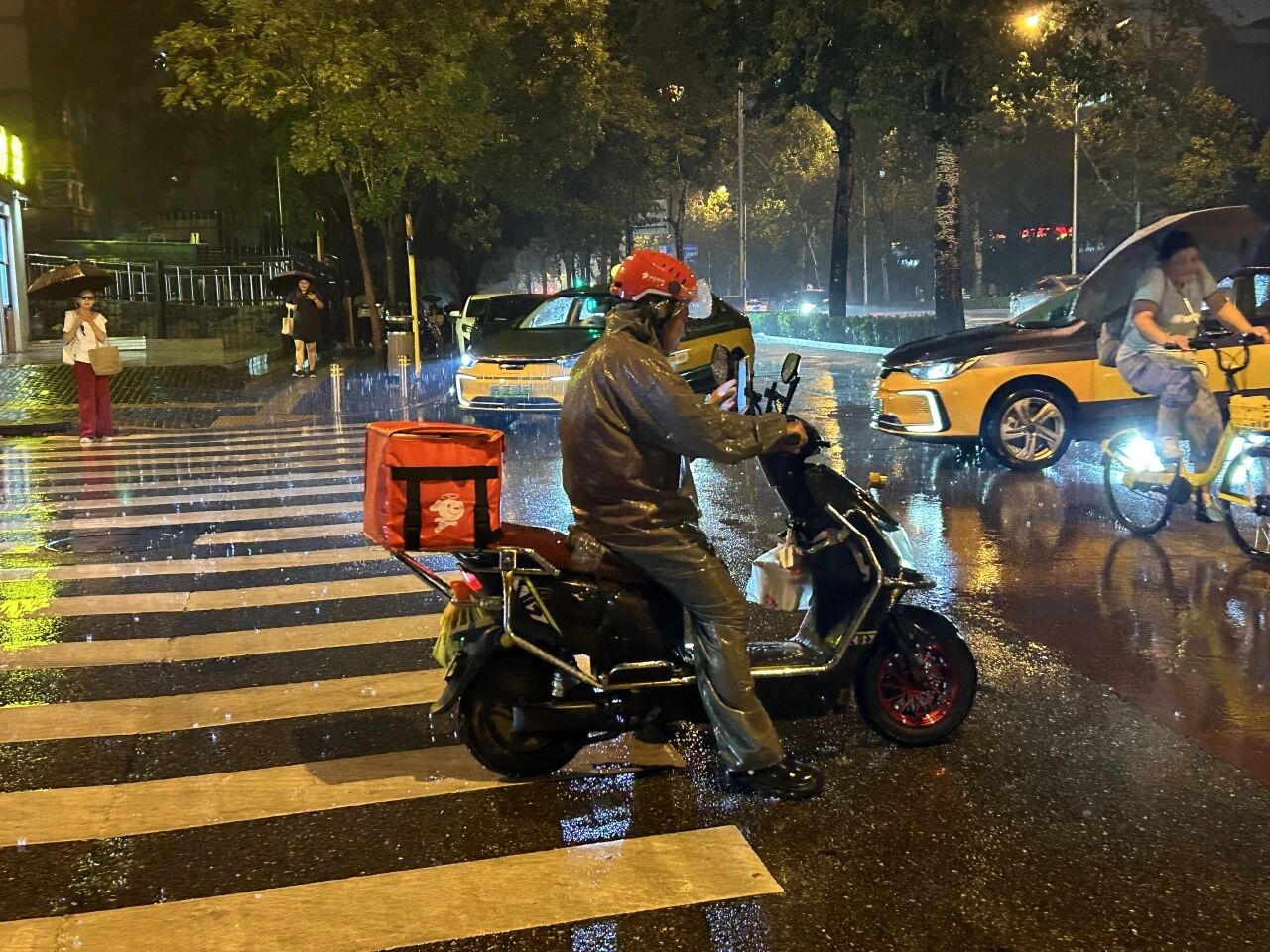
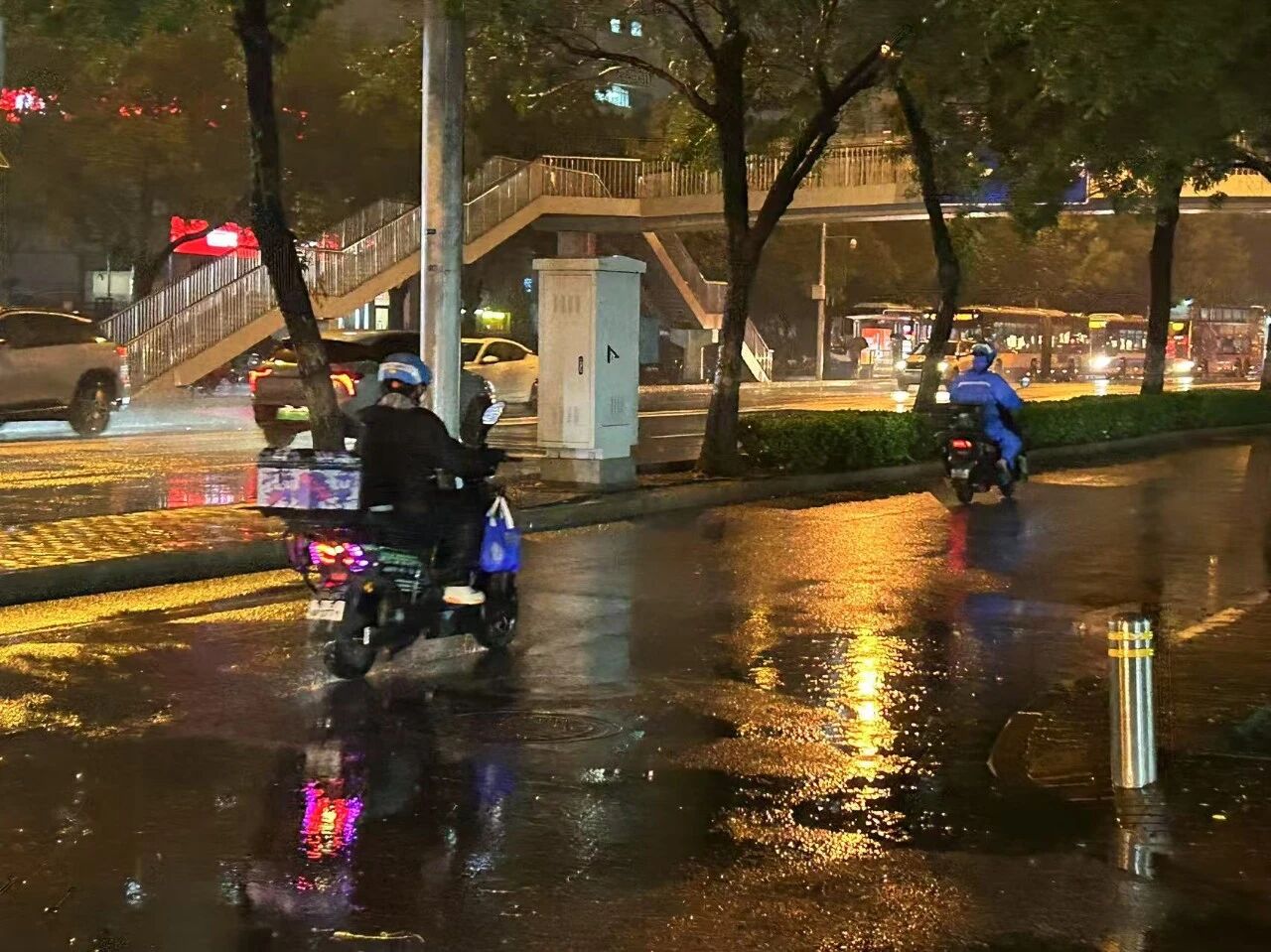
● A delivery rider waiting anxiously at a junction in the rain. Photo: Yu Yang
Similarly, in the comments of another Foodthink article, “Is Food Delivery a Form of ‘Life-Shortening Labour’?”, a dispute emerged over “whether we should care if delivery riders eat well”. Unfortunately, due to the violation of some unknown regulation, this article has since been deleted.
As one user pointed out, similar topics have been debated several times over the last decade, but they usually end up in a binary deadlock: “Order food; the rider gets wet, but they make money” vs “Don’t order; the rider stays dry, but they lose their income”.
However, after carefully gathering and organising these discussions, Foodthink found that even if the conversation inevitably devolved into an emotional dichotomy, readers still offered many complex perspectives and facts throughout the process.
For example, while everyone claimed to be considering the issue from the rider’s perspective, they arrived at different conclusions—so who is truly concerned for the riders? Furthermore, while there was general agreement that the platforms should bear the primary responsibility, attitudes towards the relationship between consumers and workers were diametrically opposed. Some also questioned whether consumers, who seem to be the “beneficiaries”, have actually succeeded in transferring the cost.
These complex questions were explored to some extent during this discussion. Although disagreements remain, by bringing both the points of consensus and the contradictions to light, we now have a clearer understanding of what exactly we are supporting or opposing when it comes to the question of whether to order food delivery in severe weather.
Discussion1:Earnings or Dignity: What do workers actually want?
Making money does not mean that delivery riders only care about cash; behind the money is the responsibility of supporting a family and the aspiration for a better life. Similarly, dignity is not an “unrealistic” demand. It is not just about a worker’s self-identity and social recognition; a lack of dignity means riders must pay a similarly “realistic” price—their health, safety, and very lives.@好梦连连: I don’t order delivery very often, but if nobody orders, how are they supposed to earn a living and support their families?@Clémence: This article explains that ordering delivery during a rainstorm isn’t actually “helping them make money”; it’s encouraging platforms to use algorithms to force them to “trade their lives for cash”.@lynnovoland: It’s not just delivery riders; low-wage workers across all industries find it hard to “earn a living with dignity”. For a worker, dignity is a luxury; having a relatively healthy working environment (both physically and mentally) already puts one ahead of most. “Comfortable”? A part of the salary is essentially payment for the grievances endured on the job.@gogo: One weekday at noon, I went to the bank. The sun was so scorching that the ground felt as if it could ignite at any moment. From my car, I noticed that the only human beings still running outdoors in the city at that hour seemed to be the delivery riders.
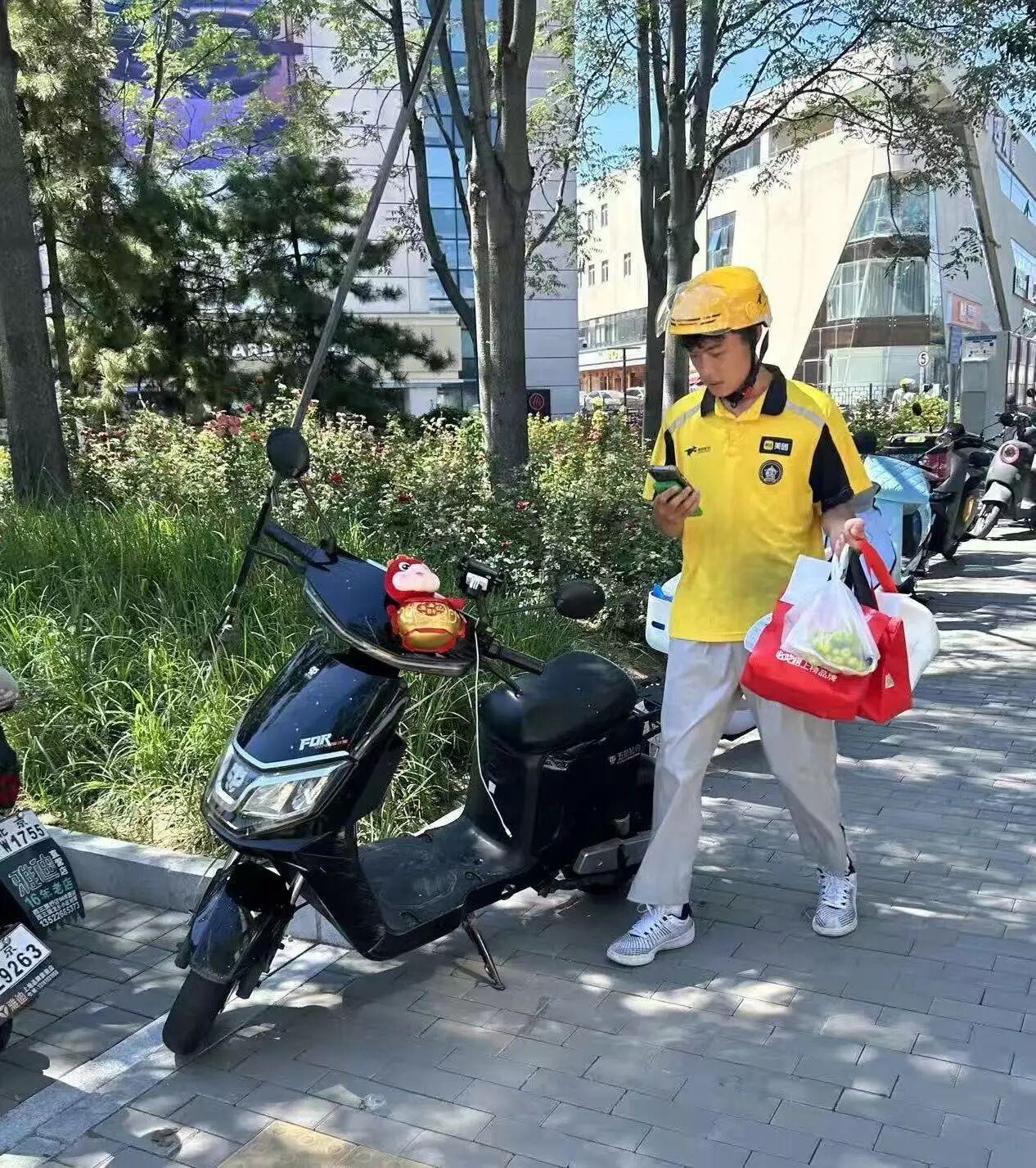
● A summer afternoon: a delivery rider jogging out of a shopping mall to find his electric bike. Photo: Yu Yang@Roo: Why are so many people unwilling to believe that delivery riders simply don’t want to take orders in severe weather? Even if that feeling is only a tiny speck hidden deep in their hearts, compared to the pressure of making a living. In truth, everyone wants more dignity in their labour; it’s just been suppressed.@衣襟溶绿: I just want to know, should we order delivery in hot, cold, or rainy weather? If we don’t, will the riders have any income?@俞黛眉: My takeaway from the article is that the extra income riders earn in extreme weather is far outweighed by the suffering they endure. Most importantly, working in extreme weather is mandatory; riders cannot avoid it.@木匠锯子: Then if no one orders in bad weather, who pays the riders? To some extent, that’s throwing the baby out with the bathwater.@寺: Have you read the article? When the rain is knee-deep, which rider actually wants to risk their life to earn a few hundred yuan?@HE (Delivery Rider): Last year when it rained, the water rose incredibly high. I wanted to slack off and decided not to go out. Shortly after, the station manager posted a notice in the group chat about others being fined. A five-hundred-yuan deduction for one day of absence—that’s enough for a day and a half of riding. I was terrified and rushed back out. If there’s a pothole on the road or a manhole cover floats up, I’d be completely done for. Oh, and last time I asked the manager for leave, I used the excuse of taking my wife for a medical check-up; in reality, I’m not even married. I really had no other choice but to make something up.
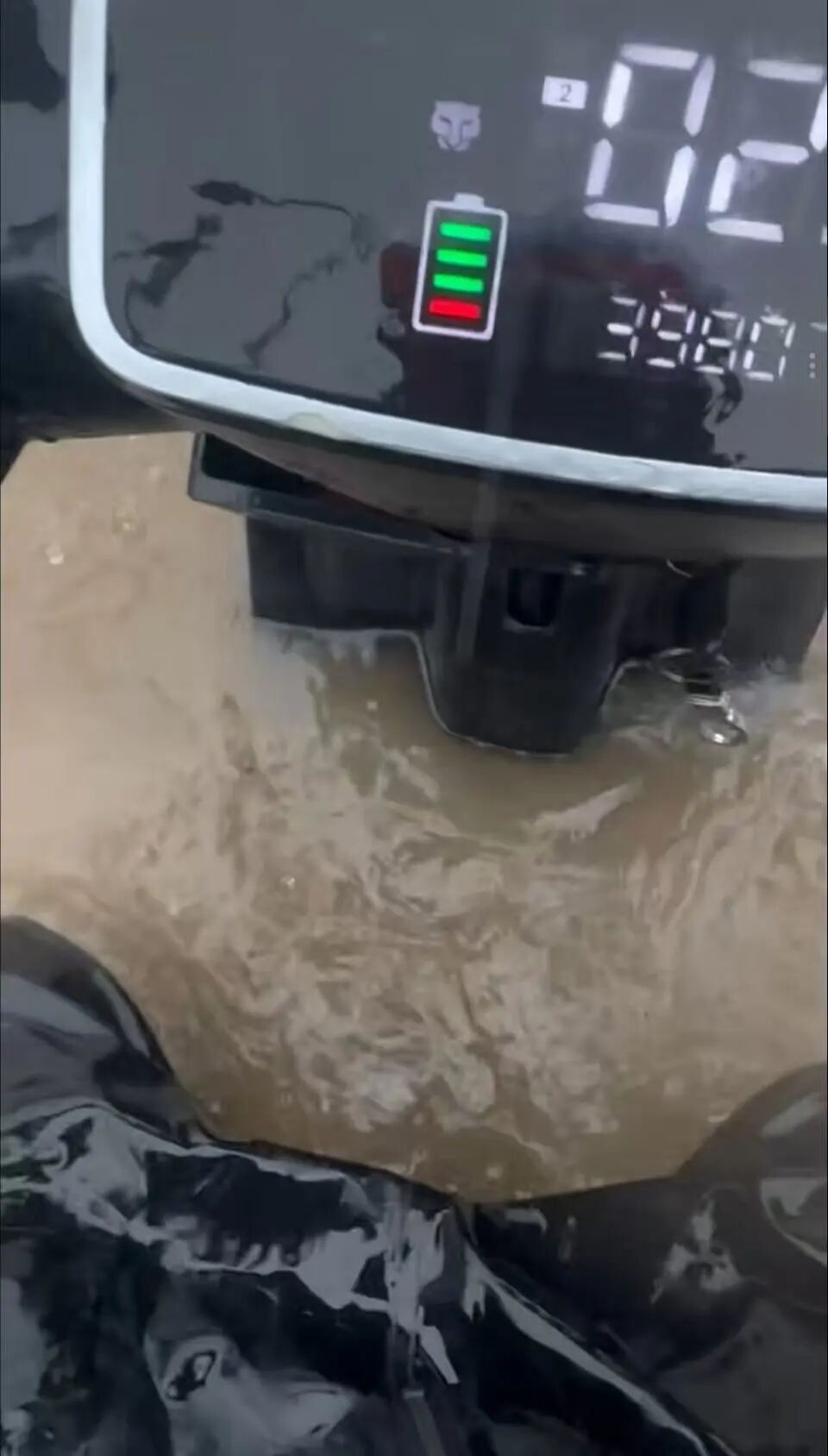
● On a day of torrential rain, the floodwaters rose above the delivery driver’s knees. Image source: HE@Shendu Jun: In truth, it is life that forces them; they have no choice but to press on in extreme weather, risking their lives. If they could afford to take a break, they would be resting at home during such storms.@Jane Tian Xiuzhen: For those who earn their living delivering food, simply being able to eat is enough; they don’t care whether the food is nutritious or healthy. Cutting through traffic and cursing in lifts—many of these delivery drivers are running and working desperately to earn money; everything else is irrelevant.@Anonymous (Delivery Driver): I’m still young, but the grind has left me with occasional heart pains. I tried taking a long break to avoid the high intensity, and guess what happened this month? I’ve almost run out of money for food. So you have to work; if you don’t, you starve. And you have to work hard—but what did my body ever do to deserve this?@IKe: This is a ‘let them eat cake’ kind of study. Eating irregularly can at least keep you going for decades, but eating regularly means not being able to pick up enough jobs, and you’d starve within two days. Who doesn’t know that regular meals are beneficial? Is that really the crux of the matter?@Everton (Championship Club): ‘Regular eating means starvation’—what a bold claim. Have you ever worked as a delivery driver? Isn’t it better to encourage riders to focus on their health? Your own misunderstanding shouldn’t be allowed to mislead others.@Irritable A Pan (Delivery Driver): Delivering food is essentially trading your life for money. I’ve been in the industry for eight years. At first, like the newcomers, I’d eat at set times, even if it was pushed back by an hour or two. But later, my habits changed; I switched to things that are quick to eat and won’t delay me when a sudden order comes in. There was even a period where I bought military compressed biscuits, popping a couple in my mouth while waiting at traffic lights. Eventually, I just stopped eating properly to save time and avoid unnecessary toilet breaks. As everyone knows, eating inevitably means needing the loo. For a rider, if we have a choice, we try to avoid it—even a quick trip can mean missing out on one or two ‘golden’ orders.@Wie (Delivery Driver): The descriptions in the article really resonate with me. I hope the state and the platforms can improve the system so that our working conditions get better and better.Discussion 2: Unity or Confrontation? Today’s consumer, tomorrow’s workerFaced with the hardships delivery drivers endure in extreme weather, there are two main perspectives: some believe that workers earn money by delivering, and consumers pay to satisfy their own needs. Moreover, many consumers are also employees who have a legitimate need for delivery during busy work hours and should not be burdened by moral guilt; others believe that the safety and dignity of workers must be upheld. Precisely because consumers are also workers, they need to unite and care for one another. Some have stepped outside the debate entirely, expressing direct concern for the drivers’ injuries, or empathising with them by recalling their own or their family’s experience of delivering food.@Veteran Bystander: People who order delivery during torrential rain, blizzards, or gales are mostly heartless.@Aogu Kailin: People seeking medical help in the middle of the night are mostly heartless because they disturb the doctor’s rest! People shopping online during Double 11 are mostly heartless because couriers work around the clock without rest! People calling 999 in an emergency are mostly heartless for making innocent police officers and firefighters risk their lives!@I Just Want to Scan: Comparing the safety of a human life to whether someone gets a delivery meal on a rainy day—how noble.@Aogu Kailin: If there are potential risks in delivery during heavy rain, do you think these are imposed by the consumer or the platform? Who sets the delivery times and the reward/punishment systems—the consumers? Do consumers have a say in those decisions? Does the pressure on delivery drivers come from the orders themselves or the platform? Why is everyone condemning the consumers instead of denouncing the capitalists counting money in their offices?@I Just Want to Scan: Is the mindset ‘someone else will order anyway, even if I don’t’ during a storm? As an adult, is it really that hard to cook for yourself, go to a little restaurant downstairs, or just make do with a bowl of instant noodles?@Clémence: This is essentially a justification based on a sense of privilege. The crux of the matter isn’t whether ‘one can order delivery’, but rather—knowing that a rider is braving a typhoon or a rainstorm to deliver your order, are you willing to exercise a bit of restraint and avoid making someone else take risks on your behalf in such extreme conditions? Pushing for systemic improvements to the platform is certainly important, but before that, every consumer can start by not increasing the rider’s risk during the most dangerous moments. This is the bare minimum of empathy and propriety.● A delivery driver still speeding along a slippery road. Photography: Yu Yang@momo: Ordinary consumers shouldn’t be guilt-tripped. Just do what you need to do. My daily commute is a nightmare—why does nobody feel sorry for me? Delivery riders only make money when orders are placed; if they don’t want to do it, they shouldn’t. You’ve spoiled them. If you hate the rain and sun, go work in a factory. Who’s job isn’t hard?@福团: Is it that hard to treat yourself and others as human beings? Here we go again with the logic that those at the bottom must prey on each other. Being able to empathise with others, having a conscience and a moral compass—that’s what makes someone a functioning human being.@momo: I can’t even treat myself as a human because I can’t escape the 996 grind, so I can’t afford the energy to treat others as humans. Don’t you get it? You ‘saints’ can’t stand to see riders working in the rain, but why is it okay for people like us to be starving on a 996 schedule?@福团: It is precisely because of people like you that this toxic logic finds fertile ground to grow, creating this chain of indifference. All I can say is you deserve to be stuck in 996 for the rest of your life, because you don’t deserve a better life or to be treated with kindness. Any rights that modern people have fought for are wasted on someone like you.@momo: If you actually had any humanity, you’d be calling for the platforms to change their rules instead of guilt-tripping ordinary consumers. People like me are just scrambling to survive; we don’t have the spare energy or altruism to decide which days are ‘too rainy’ to order food.@寺: The ‘heavy rain’ being discussed here clearly isn’t just a normal shower. In Guangdong, this means typhoons and torrential storms. Are people really saying we must order delivery even during a typhoon? People survived just fine before delivery platforms existed. Why is suggesting we stop ordering during a typhoon now framed as ‘blaming the workers’?@等石灰石: There’s someone in the comments trying very hard to justify ordering delivery in torrential rain and extreme heat. Consumers shouldn’t be blamed, of course, but the argument shouldn’t be used to deny the hardships of the riders. There isn’t a shred of empathy for those at the bottom. Instead, they’re complaining, ‘I work hard too, why does nobody feel sorry for me?’@KNT: Ordering delivery is a legal right for consumers and shouldn’t be condemned. Injuries suffered by riders during work are primarily due to the platform and the system. At most, you can encourage people to be empathetic during extreme weather, but it isn’t an obligation. Condemning consumers is simply stirring up trouble based on a flawed understanding of the situation.@Roo: I understand that life is hard for everyone. But if we all act as ‘pure consumers’ and believe that the labour of others exists solely to satisfy our own needs, lacking the most basic human empathy for the worker, does ‘dignified labour’ even exist anymore? Think about it: how would you feel if someone viewed you or your family members as mere service tools to satisfy a whim? Furthermore, those who always say we should condemn capital and algorithms should think seriously: if the way we view other workers is just as cold as the way capital views them, why do we think we have any power to change anything?@Waiting: When we buy things or order food, the default assumption should be that the goods and services aren’t provided by people being exploited and suffering. Why has it become the default that labour can be exploited, leaving the consumer to spend extra energy and cost to make an ‘ethical’ choice? Delivery platforms push risk, cost, and moral pressure down through the layers, landing them squarely on the riders and the consumers. The platform takes the profit, while the workers trade their lives for money and the consumers are left with a guilty conscience. A few people choosing not to order won’t stop the system from running. What actually works is for riders to organise unions, unite to sue platforms for labour law violations, and push for the legislation and implementation of rider protection laws.@蟲: Ask yourselves why the people ordering food no longer have time to cook. Capital is like a piece of sugarcane—sweet for many. The working hours for the corporate drones in their cubicles have been stretched, and from that, the ‘delivery camels’ were born.● A rider waiting in an office building for workers to collect their delivery. Photography: Yu Yang@梅诗金公爵:In a climate of economic depression, it isn’t just capital becoming more ruthless; ordinary people are also becoming increasingly hostile. I can’t believe so many people are making life difficult for delivery riders who brave the wind and rain just to earn a few quid per order. Humans really need to cultivate more empathy and compassion. We are all human; if we don’t unite against these corporate algorithms, the consequences will eventually come back to haunt us.@昆虫海岛:The recent story about the DingTalk CEO discovering the office was empty in the early hours and berating everyone for leaving early was quite telling. We’re all just corporate drones, all grinding away. Even delivering food in a tier-one city or working in tech is considered relatively high-paying now; the suffering of many others goes unseen, and their pain doesn’t bring them enough money or attention. These days, just having a job is like eating shit, and there are plenty of starving people fighting over that same piece of shit. Who is actually living a good life?@多吃肉蛋奶:One summer, my younger brother did food delivery. The exhaustion and haggardness were visible to the naked eye. He told me the platform was brutal; although he earned some money, he felt like his blood was being slowly drained from him.@野鼠芭比:I did delivery for a few days in early summer before it got too hot, and I ended up with prickly heat on my backside—it was itchy and painful and took ages to clear up. It’s truly miserable; everyone’s struggling. There are more female riders now. Because of the nature of the female reproductive system, they’re more prone to infections, and with limited access to toilets, inflammation is a real risk. I truly wish we were all born with an iron constitution, immune to extreme heat and cold. I once delivered an order in driving rain and was one minute late, and they docked 70% of my pay! It was after 11 pm. The customer hadn’t written their address clearly and wouldn’t answer the phone. I appealed, but it was rejected. I was absolutely livid.@evak2040:My younger brother is like me—he can’t sit still and always needs something to do. He did food delivery last summer, and the combination of overwork, a cold, and altitude sickness triggered a pneumothorax. He had to have lung surgery recently.@厌翩浊:Just a reminder: Huoxiang Zhengqi Water only works to some extent for mild cases. In this current climate, if you actually have heatstroke, go to the hospital. Carry a few more bottles of cold water and ice packs in your thermal box.@法外葡挞: The parts of the skin that have turned white from soaking are not breathable, which easily leads to bacterial or fungal infections. You can buy some erythromycin eye ointment to apply before wearing more breathable shoes. If the author has a way to contact Old Cai, please let him know.
● After a full day of delivering in the rain, Old Cai found blood seeping around the white, water-logged skin of his soles; yet the next day, he still had to rely on those feet to work for 14 hours. Photography: Old Cai
Discussion Three: Has the cost really been transferred?
When discussing the topic of “ordering delivery on rainy days”—which seems to be about protecting consumer interests—we must ask: has the cost really shifted? Or is it simply circulating within this dangerous system? Merchants facing high commission rates, unhealthy cheap food, and various traffic accidents caused by delivery riders—these consequences may still affect everyone in various ways.@理查德帕克: I believe that when delivery riders are forced to bear such an immense labour burden, something will inevitably impact the consumer in the long run. None of us are bystanders.@轻松熊嗷:The way platforms slash delivery times has truly cost people dearly. Not only is the safety of riders compromised—with the risk of road accidents skyrocketing due to the haste—but ordinary people are put at risk too. When I’m on my own e-bike, I’m terrified of encountering delivery riders; they go far too fast, ignore traffic lights, stare at their phones while riding, and suddenly dart out of blind spots.
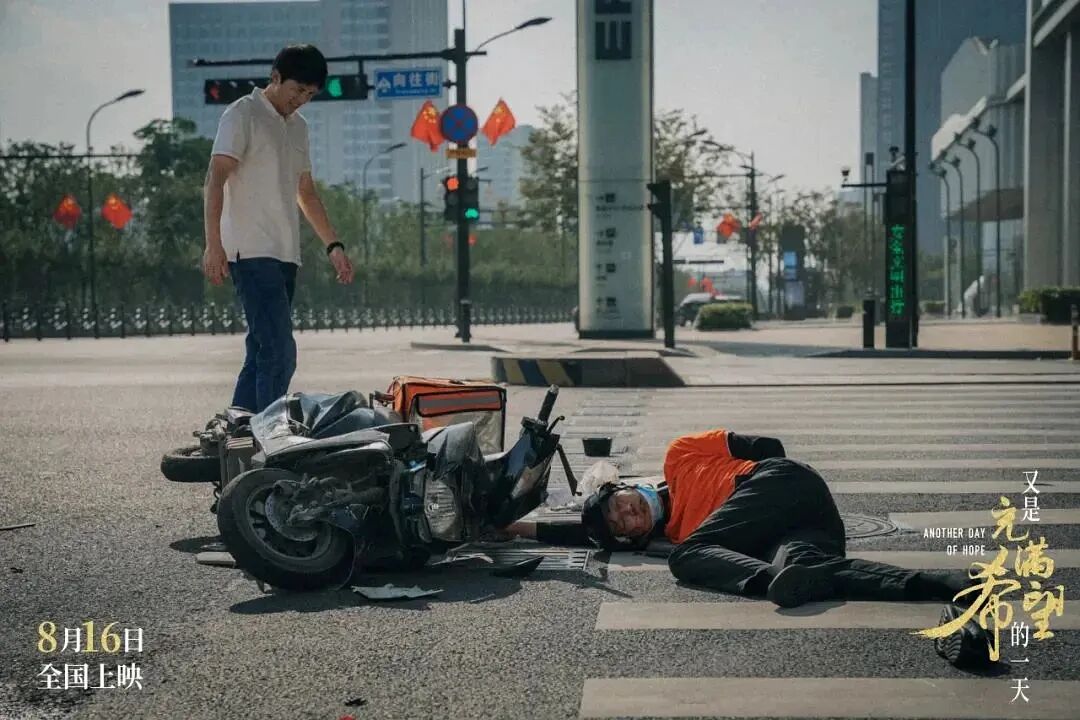
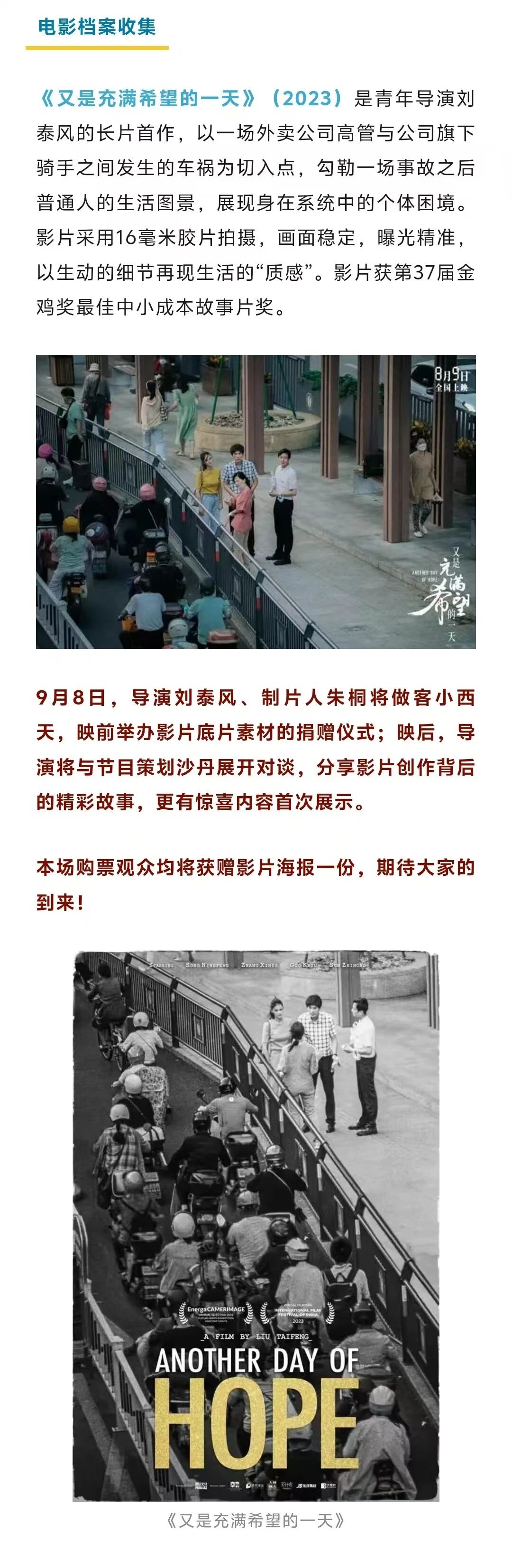
● A still from the film “Another Hopeful Day”. The story begins with a car accident where a platform’s algorithm engineer hits one of their own riders, triggering crises in two families from vastly different social classes. The film won the Best Small-to-Medium Budget Story Film at the 37th Golden Rooster Awards. On 8 September (next Monday), director Liu Taifeng and producer Zhu Tong will visit the China Film Archive (Xiaoxitian branch) for a donation ceremony of the film’s negative materials before the screening; afterwards, the director will engage in a conversation with programme planner Sha Dan to share the fascinating stories behind the film’s creation.@青扬:I once saw a Sam’s Club delivery rider in Beijing with seven, eight, or even more oversized shopping bags stuffed with goods, along with crates of milk, rice, flour, and oil hanging off the front, back, left, and right of his e-bike, speeding along the main motorways of the ring roads or through narrow, cramped old neighbourhoods. It was incredibly impractical and dangerous. In many cities, e-bikes have no dedicated lanes, creating safety hazards for pedestrians, motorists, and the riders themselves. Therefore, operating a takeaway service during torrential rain or snow is simply inhumane. It is no different from Li Shande transporting lychees in “The Lychees of Chang’an”, where the Lin-yi slaves ran themselves to death. This current “platform war” has squeezed the living space of riders and small merchants to almost nothing, ignoring economic laws and natural limits. It is inevitable that there will be a backlash, but who will bear these costs?@Yi:I listened to a business podcast yesterday about the takeaway wars; all I heard were terms like “fulfillment costs” and “user mindset”. JD.com’s Q2 report just came out, and while revenue from new business sectors like JD Delivery has surged, profits have plummeted, and investors aren’t buying it. The way these platforms burn through cash is staggering, and they spare no effort in their PR wars. In this battle, the riders are essentially just ammunition and consumables, while the mountains of disposable packaging and wasted milk tea are the scars left upon the earth as payment.@Roo:I’ve seen some say that as long as the consumer pays, there’s nothing wrong with ordering milk tea at 2 am. But is it possible that instead of obsessing over the issues facing the riders, consumers should first consider the impact of drinking milk tea at 2 am on their own health?Discussion 4: Is platform gig work our safety net?According to the “2024 Gig Economy Interpretation Report”, the number of flexible workers in China exceeded 265 million in 2024, with 175 million of them being platform gig workers. The gig economy is effectively a prism reflecting the overall state of the economy; any unemployed person could potentially slide into it. In this sense, while we worry about the working conditions of gig workers like delivery riders and ride-hailing drivers, perhaps we are actually worrying about ourselves. Is platform gig work our “safety net”? As workers, can we hope for a more dignified future?@闸蟹大拿:This is the kind of “safety net” those kids on Douyin are talking about when they say, “If it doesn’t work out, I can always just deliver food.”@阿梅奥耶:Takeaways, couriers, designated drivers, ride-hailing, freight—it’s all the same. They are all trapped and bled dry by the platforms. Take DiDi, for example. Sometimes a customer places a standard real-time order, but by the time it reaches the driver, it’s been passed through several hands and turned into a fixed-price bid. You end up with situations where the user pays 100 yuan, but the driver only gets 50—a commission rate as high as 50%.@刍狗:When I was moving out after graduation, I had a long chat with a Blue Rhino driver in the van. I was surprised that no matter when I booked my move, a driver would accept the order and contact me almost immediately. I originally thought this was just market demand, but I found out the system automatically forces orders onto the drivers, and they must call the customer within three minutes of accepting, or their performance rating is docked. It was a scorching morning, and torrential rain started after noon. The driver had already completed two jobs—moving is exhausting—but then he was forced into my job in the afternoon, ruining his plan to go back to the dormitory and rest. He told me that for a mover like him, a monthly income of 8,000 yuan, minus 900 for a shared room (living in Beijing), a 20% platform cut, and living expenses, leaves a net monthly income of only 4,000 yuan. And this was during the graduation season, when moving demand peaks for the entire year.@沉默是金:The platforms blindly squeeze and lower the price per order, dropping from seven or eight yuan initially to just two or three yuan now. They provide the platform and take a cut from the rider, the merchant, and the customer. If the average price per order for riders were increased, they wouldn’t need to complete so many deliveries a day. They would have more time for choices: rest, entertainment, and caring for their families. But in reality, it’s hard to have it both ways.@茶餐廳老娘:Don’t think of delivering food as a safety net. I only hope that fewer people do it, so that the treatment of those who remain can improve and the exploitation can decrease. I once saw a rider’s clothes that had faded in the sun; the yellow Meituan uniform had turned white, and it was all torn. Many riders don’t look particularly healthy.@tree:There’s now a trend of “everyone delivering food”; some young women have joined the ranks. You can tell the economic environment is mediocre. No matter how bad it gets, there’s still a shortage of riders.
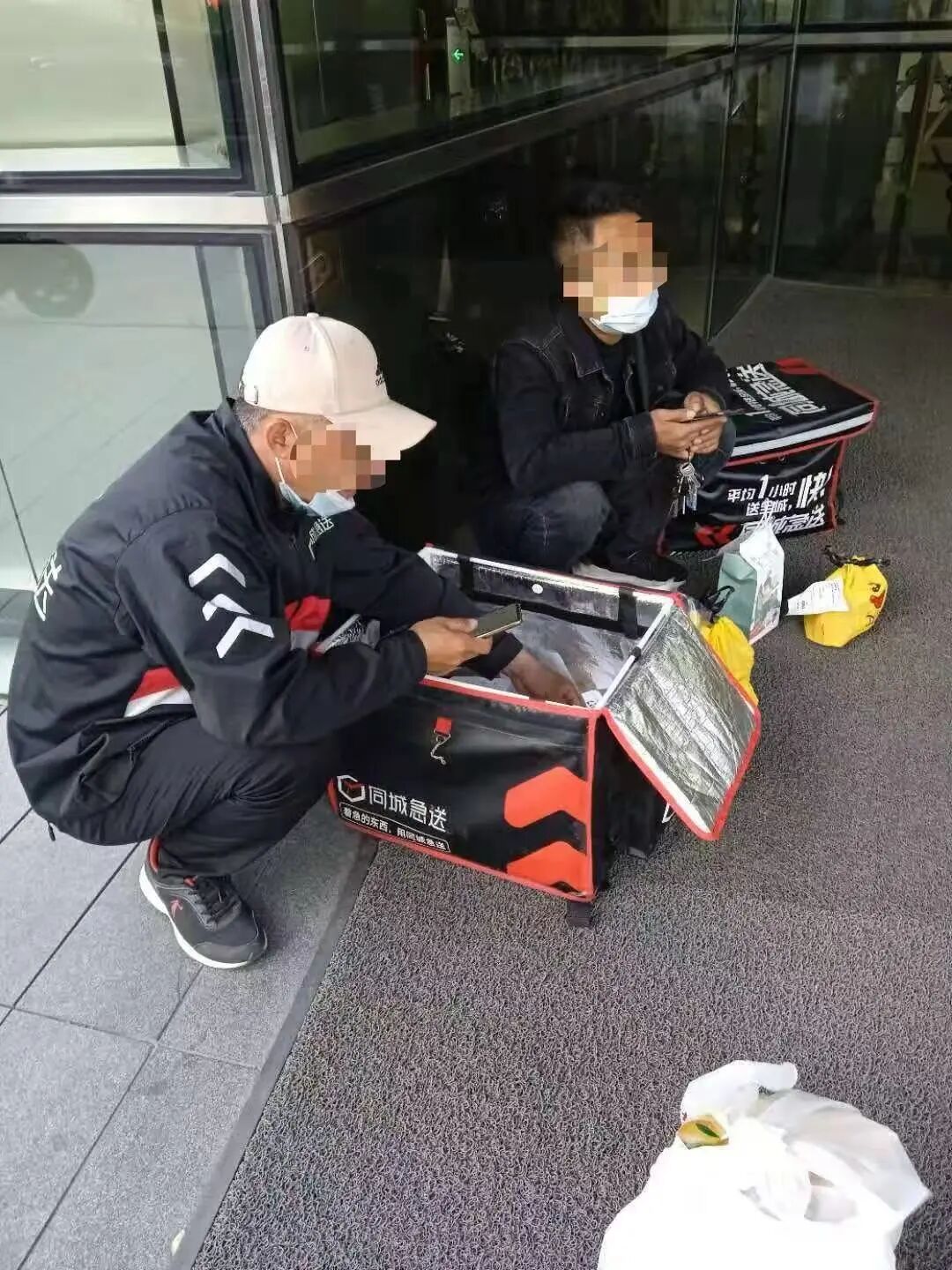
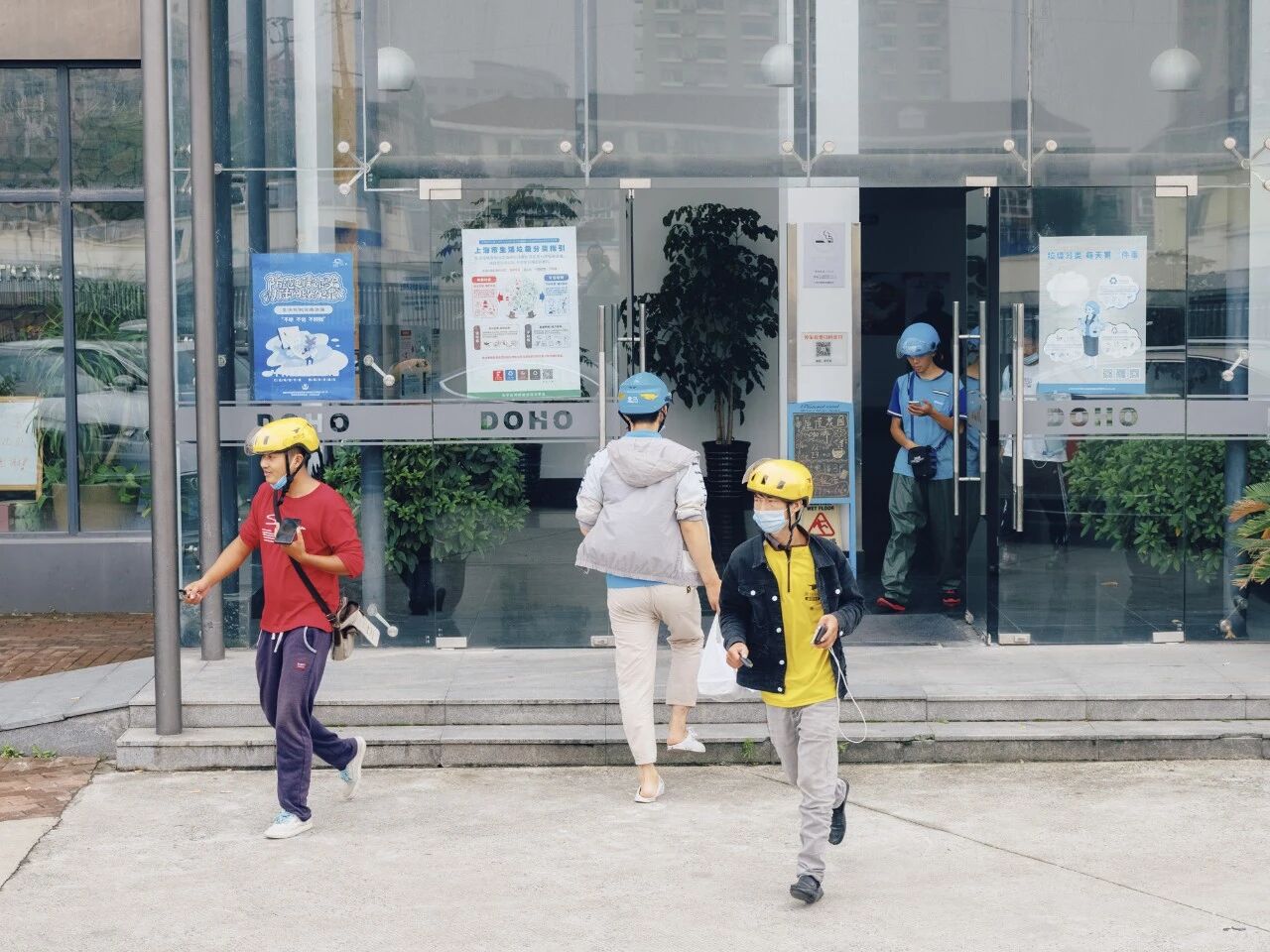
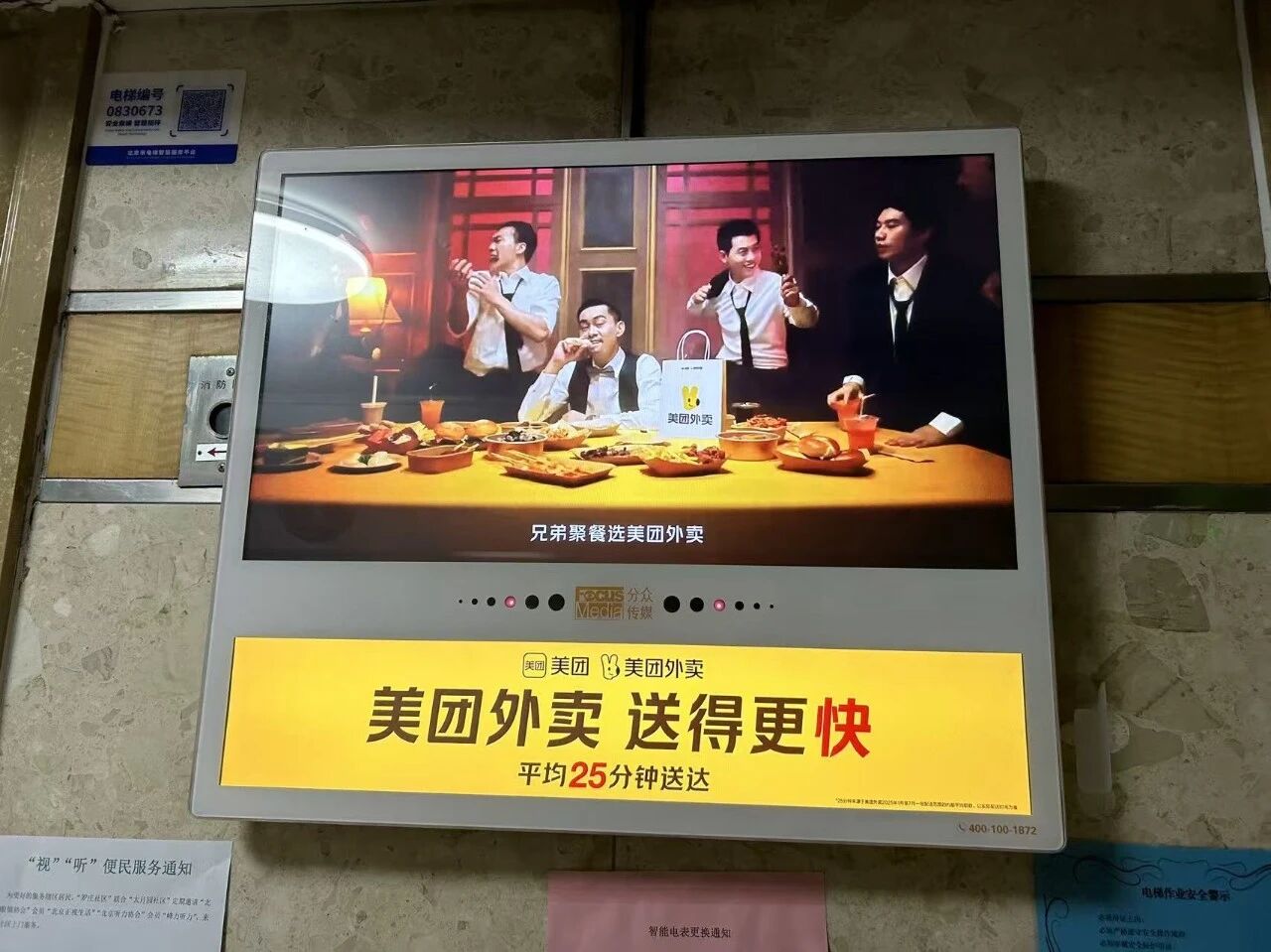
● In recent years, the faces of delivery riders have become increasingly young. Photography: Zhou Pinglang@momo:The problem isn’t “the poor preying on the poor”—that exists, but it’s absolutely not the main point. It is completely irrational that such massive platform issues end up being framed as the individual problems of those at the bottom. Until the algorithm changes, no one in the system will ever find peace.@哥伦布的蛋:I used to think, “So what if I’m laid off? At worst, I’ll just deliver food.” After reading this article, I’ve realised I definitely couldn’t stomach that kind of hardship. I’ll just keep scraping by for as long as I can.@_littleshuh:Meanwhile, the trashiest, most obnoxious ad of the year has appeared. In a spacious, luxurious room, an elite man raises a champagne flute and says, “When my mates and I have a get-together, I choose Meituan.” The scene cuts to a row of beaming delivery riders holding up takeaway bags: “Because Meituan is faster, more…” then it cuts back to a group of privileged old guard in suits and waistcoats, lounging on sofas and tables, enjoying themselves. I really don’t know what Meituan’s branding and PR teams are thinking. Is their heads filled with filth, or are they doing this on purpose so they can sabotage their leaders once the backlash hits?
● Cheapness and convenience are the core marketing elements used by platform economies like Meituan to increase consumer stickiness. Photography: Yu Yang@Shasha: As a child, I read Ye Yonglie’s *Xiao Lingtong’s Journey to the Future World*. There was a part describing how people would eat in the future: you’d simply press a button at home, and piping hot meals would be delivered through a small door in the wall.At the time, I never could have imagined that the beautiful visions in that book would ultimately be realised through the devaluation of human labour and the exploitation of blood, sweat, and tears.