
When Farmers Fall Victim to Low Tariffs
“It’s all political games!”
During a visit to Mindanao in the south of the Philippines in April, this was the near-universal response whenever I asked about the government’s rice trade policies. These voices belonged to mayors, government agricultural technicians, and ordinary smallholders who lived off the land.
Indeed, in the months leading up to the official start of the Philippine mid-term elections on 12 May, eye-catching campaign stunts were rampant, many of which revolved around the country’s staple food: rice.
For instance, in April, the Department of Agriculture announced a pilot scheme to sell subsidised rice at 20 pesos per kilogram (approximately 2.62 yuan). However, this was quickly halted by the Commission on Elections to ensure the fairness of the polls.
At 20 pesos per kilogram, the price was less than half the current market rate in the Philippines. The move was clearly intended to address public anger over soaring food prices, particularly after the Philippines declared a state of food security emergency earlier in the year. While appearing to benefit the people, the move was criticised by opposing political camps as mere theatre, exposing a deeper food security crisis.

The Duterte government enacted the Rice Tariffication Law, which abolished import quotas on rice and replaced them with a tariff system. This marked the point at which the last Philippine agricultural product protected by import quotas was fully exposed to the global market.
At the time, the government claimed that this law would both lower domestic rice prices and use tariff revenues to modernise agriculture and benefit farmers.
Since then, the Philippines has imported over 3 million tonnes of rice annually from countries such as Vietnam, Thailand, and Pakistan.
However, low tariffs and more “liberalised” international food trade have not benefited the Filipino people.
In 2023, this tropical island nation—despite being a rice producer—suddenly became the world’s largest rice importer, surpassing China for the first time, with its rice self-sufficiency rate falling below 80% for two consecutive years.
In September of that same year, rice prices in the Philippines surged by 17.9%, flatly contradicting the government’s promise to keep food inflation at 4%. Yet, farm-gate prices did not rise accordingly. On the contrary, the price volatility caused by imported rice has left Filipino smallholders as the primary victims.
I. The Burden of Cheap Grain
Kabacan, located in the south-central part of Mindanao, has a tropical marine climate and is a three-hour drive from Davao, the island’s largest city. With its low-lying terrain and sprawling rice fields, it is known as the local granary. Robin has worked for the Kabacan municipal government for over a decade; in addition to his role in rice value chain analysis, he manages his own rice fields covering over seven mu (approx. 0.46 hectares).
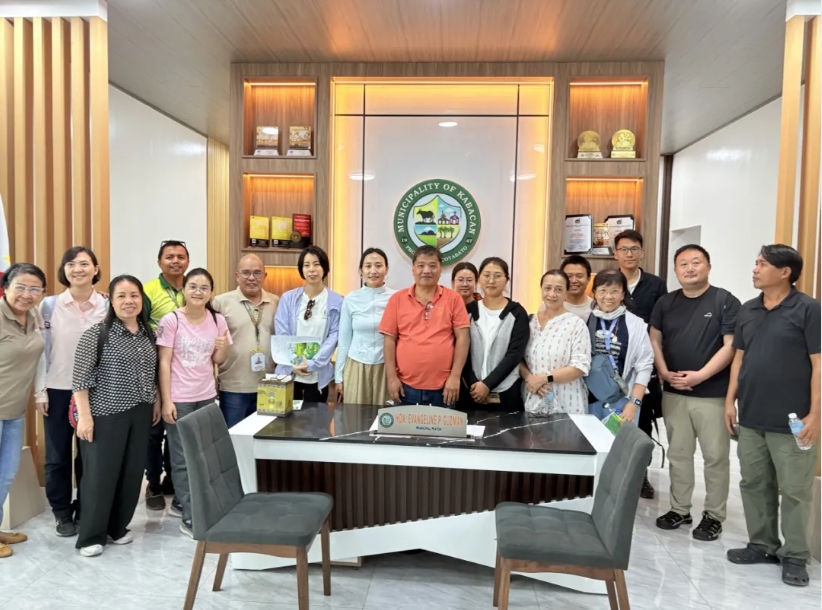
Last year, Robin harvested 47 bags of rice, totalling just over 3 tonnes. He kept 18 bags for family use and sold 29 to the National Food Authority. After deducting the costs of agricultural inputs, machinery, and labour, his net profit was 19,000 pesos (approximately 2,490 yuan). If farm-gate prices continue to fall, Robin’s income from selling rice this year will drop by at least a quarter.
For smallholders who rely solely on farming with no other stable source of income, the situation is even more dire. As early as 2020—just one year after the Rice Tariffication Law was enacted—the NGO Federation of Free Farmers estimated that falling farm-gate prices had cost Filipino farmers 5.2 billion yuan.
These low prices have dampened farmers’ enthusiasm for planting. To safeguard rice production, the provincial government of Cotabato, where Kabacan is located, began distributing free fertiliser in February 2025, hoping to lower production costs and help farmers increase yields to offset market volatility.
This approach mirrors the logic of the Rice Tariffication Law.
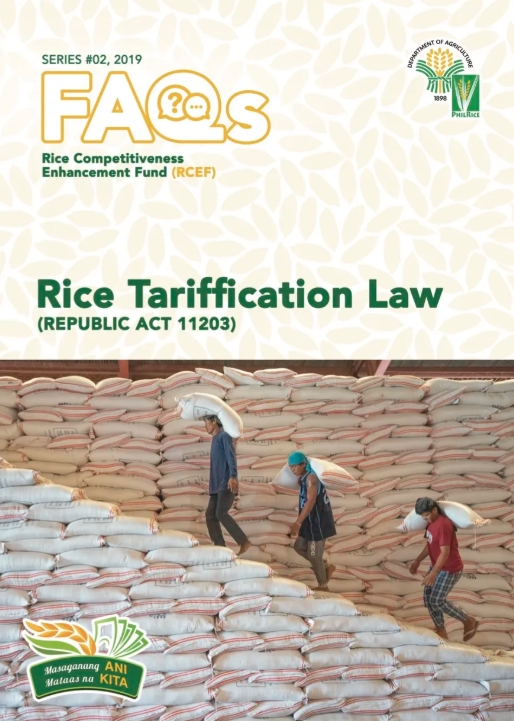
In 2019, the Philippine government used revenues from imported rice tariffs to establish the Rice Competitiveness Enhancement Fund (RCEF). The plan was to invest 10 billion pesos (approximately 1.3 billion yuan) annually to improve the modernisation and competitiveness of domestic rice farming, with half of the funds allocated to machinery subsidies. However, according to sources within the Department of Agriculture, much of the machinery provided was unsuitable for local conditions and has simply been left to gather dust in warehouses.
Other government measures include promoting new seed varieties, providing low-interest loans and training, and even issuing cash subsidies to farmers. In 2023, it was reported that 6,558 rice farmers on Negros Island in northern Mindanao each received 5,000 pesos (approximately 654 yuan).
I asked Robin if he had benefited from these policies.
“To be honest, ma’am, I don’t want these handouts,” he replied politely and cautiously, emphasising that this was his personal view and not that of the government. “What we truly need are stable farm-gate prices.”
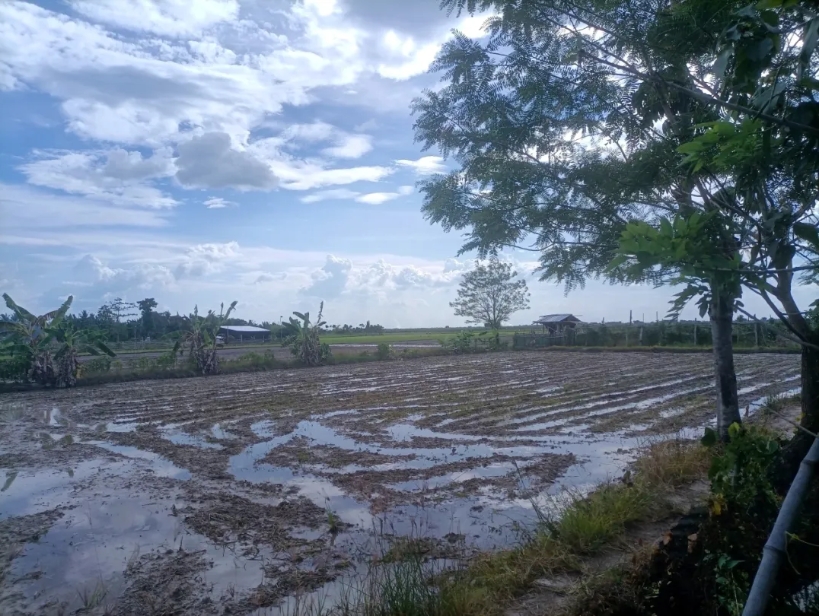
Cabacan, located in the Mindanao River basin, must contend with both drought and flooding. With its dense network of waterways and low-lying terrain, the area is prone to annual floods. Reports indicate that floods in July last year affected 5,185 families and over 15,000 mu of farmland in Cabacan.
After concluding our visit to the municipal government, Robin accompanied us to Barangay Cuyapon. He explained that the 15,000 mu of flooded land included parts of Cuyapon and neighbouring villages. The sharp drop in yields from waterlogged fields has become a major headache for the local government.
II. Who Profits from the Rising Price of a Staple?
I shook my head. Robin explained that ‘unli’ is short for ‘unlimited’, so ‘unli rice’ means unlimited servings of rice. “When we eat rice at a restaurant, we eat more than we do at home, just to make the meal feel worth the money. We Filipinos simply love rice; we never tire of eating it at every meal.”
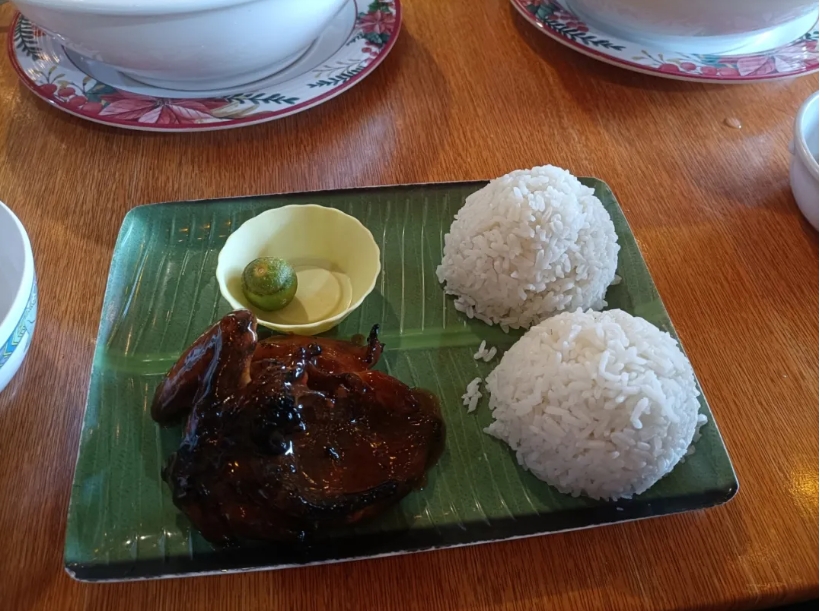
Data shows that in 2023, the average Filipino consumed 151.3 kg of rice, more than double the per capita consumption in China during the same period. Scholars such as Huang Zongzhi argue that China has undergone a “hidden agricultural revolution” since the 1980s, driven directly by a shift in food consumption patterns: as incomes rose, the proportion of grain, vegetables, and meat in the diet shifted from 8:1:1 to 4:3:3. Put simply, people are eating fewer staple grains.
In the Philippines, however, rice remains the primary choice for filling one’s stomach. According to data from the Philippine Department of Agriculture, spending on rice accounts for nearly 10% of the average household budget, a figure that can rise to 20% for impoverished families.
A report by the Philippine Rice Research Institute (PhilRice) analyses that lower-income groups consume an average of 7.1 kg more rice per person annually than higher-income groups, while rural residents consume 11.47 kg more than those in cities. The poorer a Filipino is, the more dependent they are on rice—perhaps this is the other meaning behind ‘unli rice’.
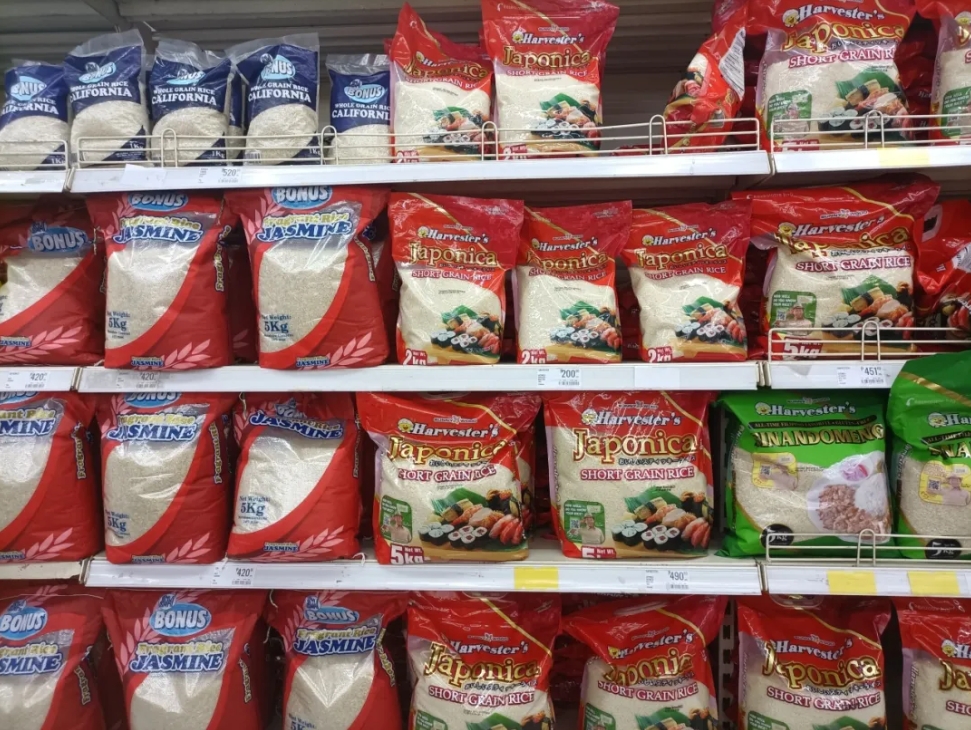
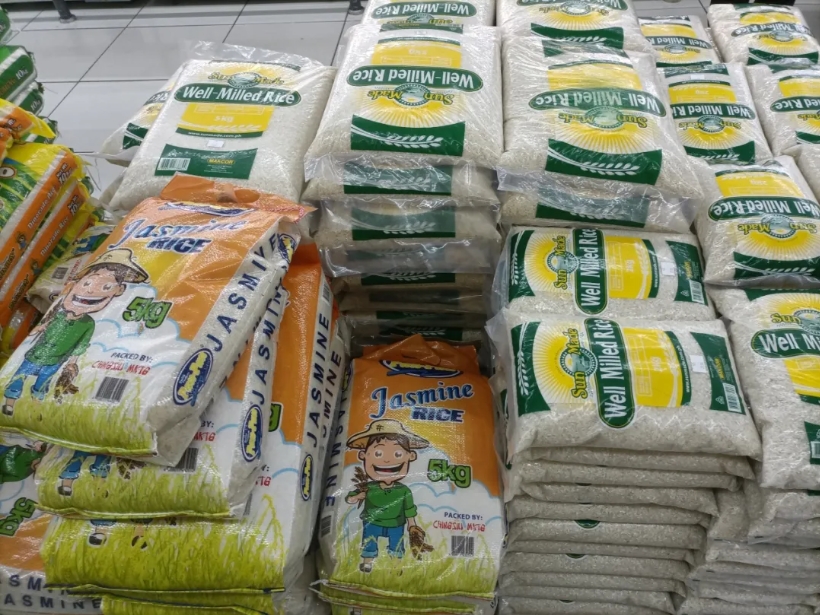
The situation has evolved in a direction completely opposite to the government’s projections. In January this year, the average price of both imported and local rice in the Metro Manila area exceeded 55 pesos per kg (approximately 7.2 yuan per kg). The Philippine Department of Agriculture declared a food security state of emergency, promising to release reserve rice into the market and passing a price cap on imported rice.
If supply has increased, why have prices risen instead of falling? It seems the economic supply-and-demand curve failed to account for the complexities of reality.
Middlemen serve as the bridge between farmers and consumers, but they also operate as market entities profiting from rice trades. The Federation of Free Farmers (FFF) points out that as the profit margins for wholesale and retail continue to grow, this group has become the biggest beneficiary of the Rice Tariffication Law, reaping most of the gains from cheap imported rice.
In February this year, a fraud case was exposed in Bulacan province, adjacent to Manila, where old rice was mixed with imported rice and sold under the label of ‘new rice’.
Beyond the lack of regulation, collusion between politicians and business interests has further exacerbated market chaos. In February 2024, the National Food Authority (NFA) sold off stock intended for national reserves to private companies at 25 pesos per kg. When the incident came to light, over 100 officials were suspended. Such incidents have left the NFA consistently ranked as one of the most corrupt government agencies in the Philippines.
III. Food Security and Food Sovereignty
Bello argues that the escalating drive toward rice trade liberalisation is the root cause of the food crisis. To him, the Rice Tariffication Law is effectively a death sentence for Philippine rice farming; local produce simply cannot compete fairly with imports from Vietnam and Thailand, which benefit from heavy subsidies. In the long run, he warns, this will deal a devastating blow to smallholders.
He has called on the Philippine government to restart trade negotiations to curb the dumping of foreign agricultural products. Simultaneously, he urges a deepening of land reform, increased agricultural investment, and improvements to rural infrastructure—such as irrigation and roads—to genuinely incentivise small-scale production.
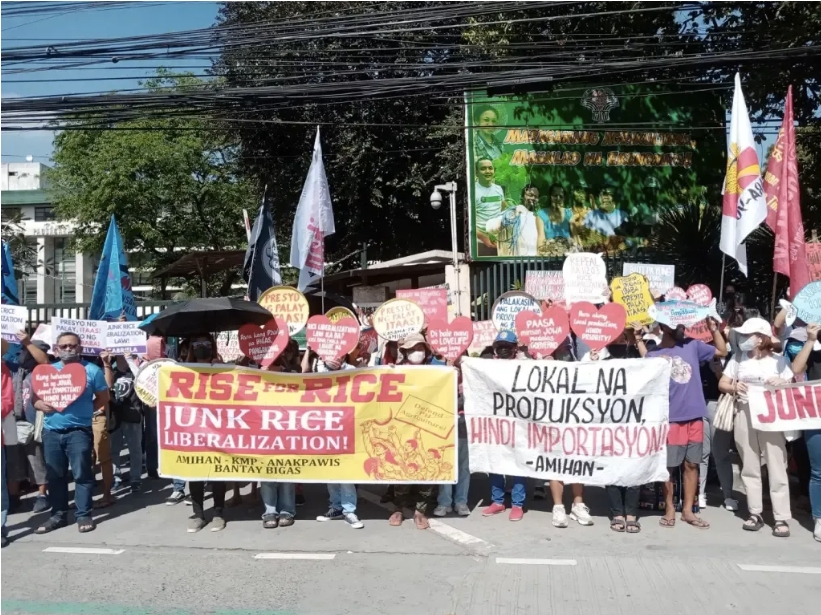
Long before this policy shift, various rural development organisations in the Philippines had already begun empowering smallholders, such as the Southeast Asian Regional Initiative for Community Empowerment (SEARICE).
Since its founding in 1977, SEARICE has supported farmers in collecting landraces and breeding new varieties. By promoting the exchange of agroecological techniques, they aim to reduce farmers’ reliance on commercial seeds and inputs, allowing them to regain fundamental autonomy over production.
On 8 April, we had the privilege of visiting Eddie Sasi, a farmer-breeder who has collaborated with SEARICE for 22 years. Now 65, Eddie and his family live in the countryside of Pres Roxas, Mindanao, where they manage approximately 2 hectares of paddy fields without using any chemical inputs. His rice fields, fruit trees, vegetables, and a fish pond are arranged in a balanced layout, forming a self-sustaining closed-loop system.
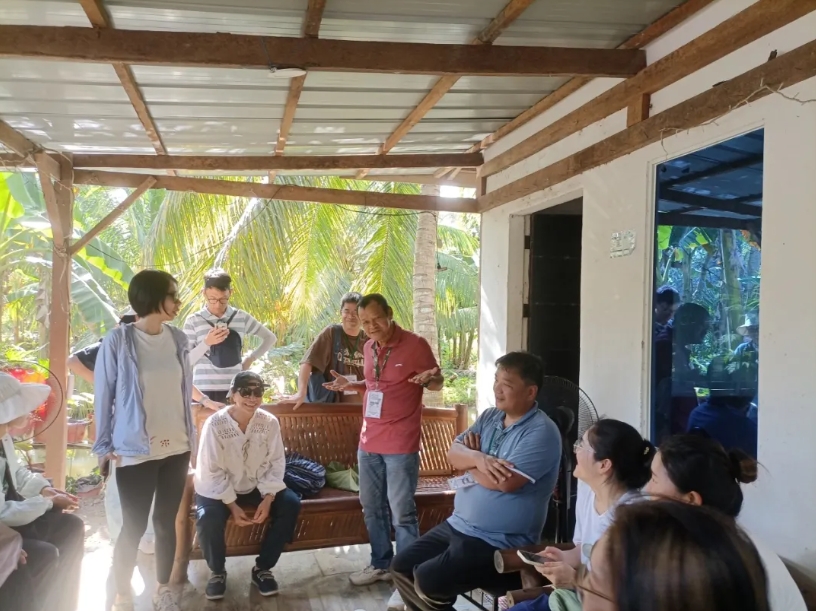
“When the summer fruits are ripe, come visit me and eat for free! But if you want to take some away, you’ll have to pay,” Eddie invited us warmly. His diversified planting across 2 hectares provides his family with healthy food, eliminating the need for external purchases and allowing him to sell surplus produce to his neighbours. This state of food sovereignty is deeply envied by our colleagues.
However, this is far from the norm for Philippine smallholders. Taking rice as an example: the Philippines has 1.1 million small-scale rice farmers and agricultural workers with plots of less than one hectare, most of whom are “net consumers” of rice. I learned from Robin that some farmers choose to grow high-yield varieties, selling the new harvest only to buy rice with a better taste and texture from the market. For them, the fluctuations in rice prices over the past year have been nothing short of a fatal blow.
For Eddie, choosing which variety to plant is not a binary choice. Through training at SEARICE field schools, he has mastered breeding skills. Whether he wants high yield, superior taste, early maturity, or disease resistance, he can experiment with breeding the specific traits he desires rather than relying on commercial market varieties.
SEARICE’s seed bank, located a few kilometres away, provides essential support for Eddie. It houses over 800 traditional rice varieties and more than 300 new varieties developed by farmer-breeders. Any farmer collaborating with SEARICE can apply to test or breed these varieties. This year, Eddie’s farm is testing the adaptability of 11 upland rice varieties. If they perform well, they will be fully planted or used for further breeding.
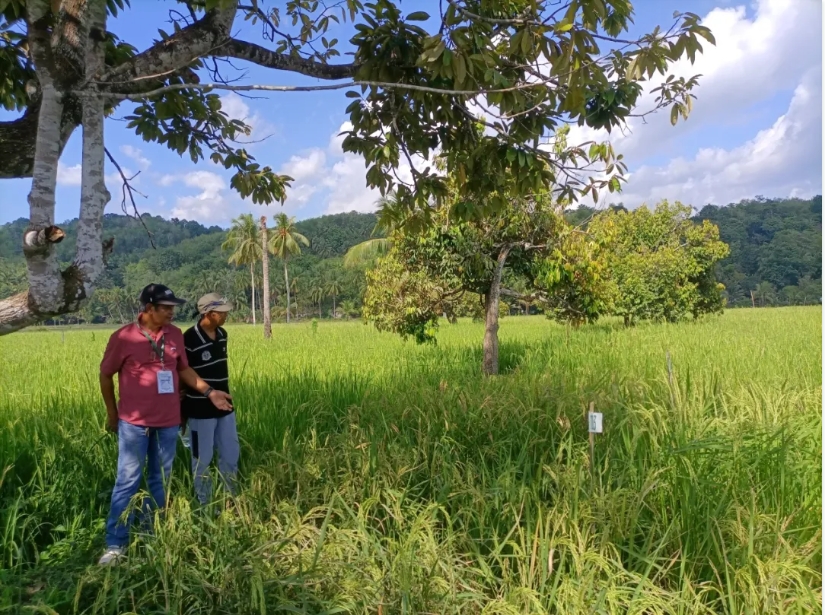
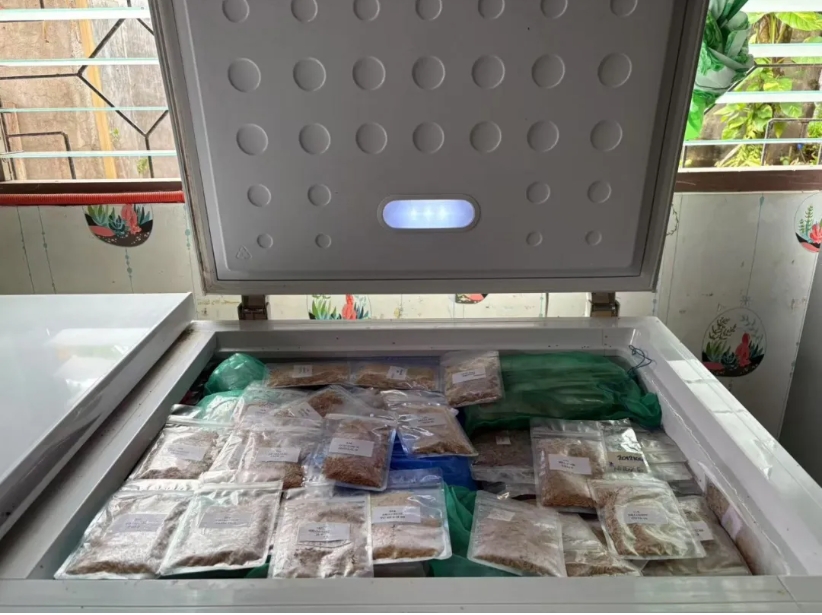
Eddie also takes pride in the high yields of his organic farming. After 25 years of transition, his farm consistently produces 60 bags of paddy per year, equivalent to approximately 5.2 tonnes per hectare—over 1.3 tonnes per hectare higher than the Philippine average.
Now, Eddie has become a farmer-mentor within the SEARICE network. Through field schools, he provides breeding and cultivation training to other farmers, inspiring confidence in neighbouring villagers to transition toward agroecology.
In a position paper released in February, the non-governmental organisation MASIPAG (Farmers and Scientists for Alternative Agriculture) described the Department of Agriculture’s interventions as mere “sticking-plaster” remedies. They fear that states of emergency regarding food security could become tools for political manipulation; while releasing reserve rice may solve immediate problems, it does not address the root of the crisis.
The results of the midterm elections will be announced soon, and the Philippine central and local governments will face a new reshuffling of power. Before the next rice crisis hits, will the Philippine government and society be ready?
https://opinion.inquirer.net/104928/unli-rice-rice-trade
https://mb.com.ph/2025/2/20/cotabato-kicks-off-rice-revolution-program
https://www.philstar.com/opinion/2015/10/30/1516822/big-plantations-create-big-problems-mindanao

Editor: Tianle