
When 996 Workers Meet the Work Ethic of an Eco-Farm
I. The Work Ethic of Baicao Garden
The Yirun Planting Farm in the Gangbei District of Guigang, Guangxi, where Baicao Garden is located, was originally leased in 2017 by Sister Yan Ping, her husband, and two other families—her niece and nephew. Initially, the three families farmed together, but the partnership eventually collapsed. For the niece and nephew, avoiding herbicides and chemical fertilisers made annual yields too unpredictable. For Sister Yan Ping, however, the destruction caused to the work and living environment was intolerable. Moreover, she felt that the use of herbicides and chemical fertilisers implied a work ethic that alienated the mind and body.
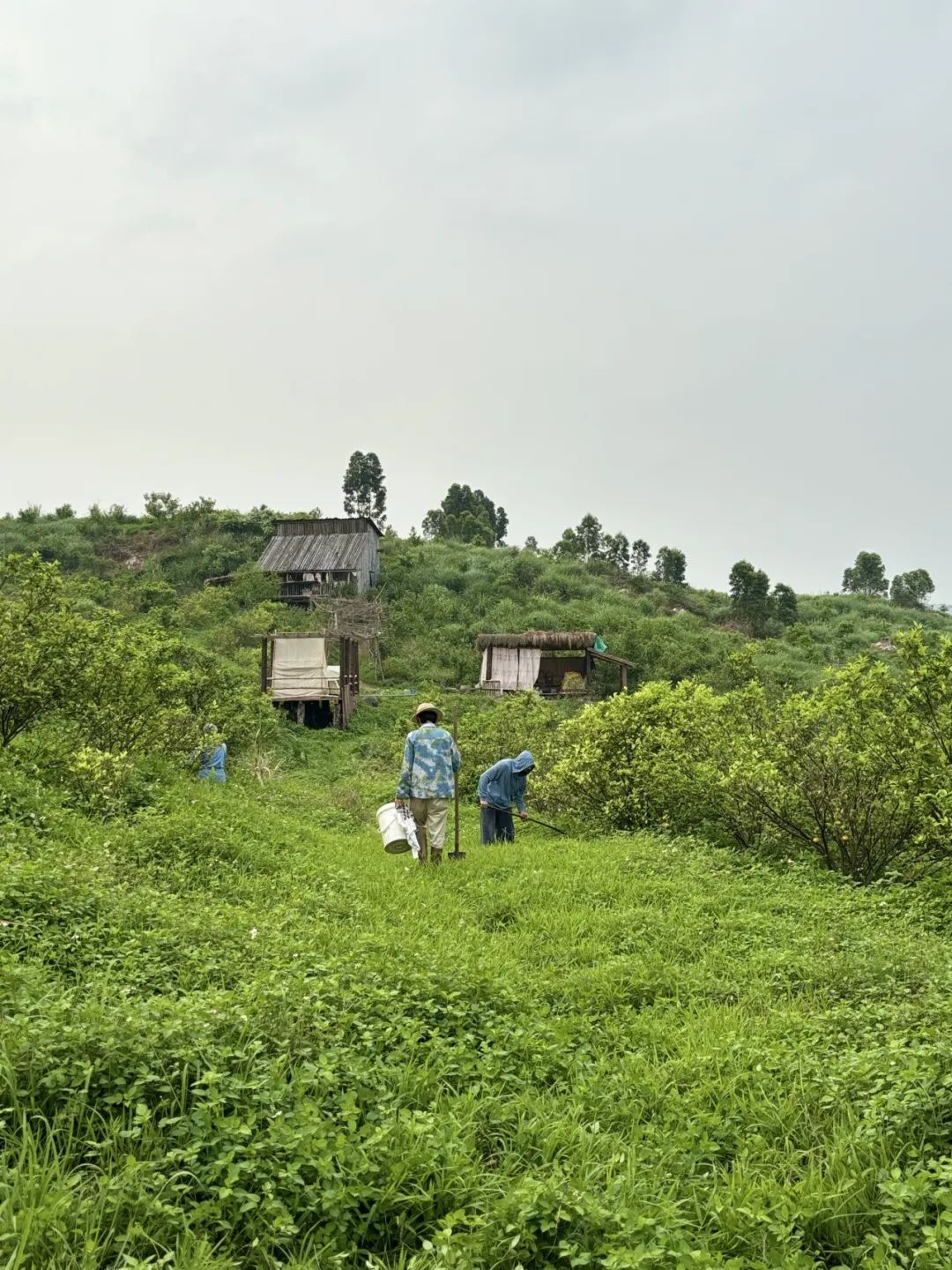
Today, Baicao Garden has become an independent sanctuary, clearly demarcated from the land owned by her niece and nephew. Baicao Garden is fragrant with flowers and fruit, lush with wild grass, and alive with fireflies at night. In contrast, the neighbouring plots of her nephew and niece appear desolate and withered.
Most of Sister Yan Ping’s 50 mu of land is planted with Wogan oranges, with an average annual harvest of around 30,000 jin. She feels no loss over the many fruits that fall prematurely; though they hit the ground, they increase the fertility of the soil. Likewise, the weeds and insects that seem to obstruct the fruit trees possess their own value in nourishing the land and increasing biodiversity. This attitude towards the earth and its crops is mirrored in Sister Yan Ping’s approach to work.
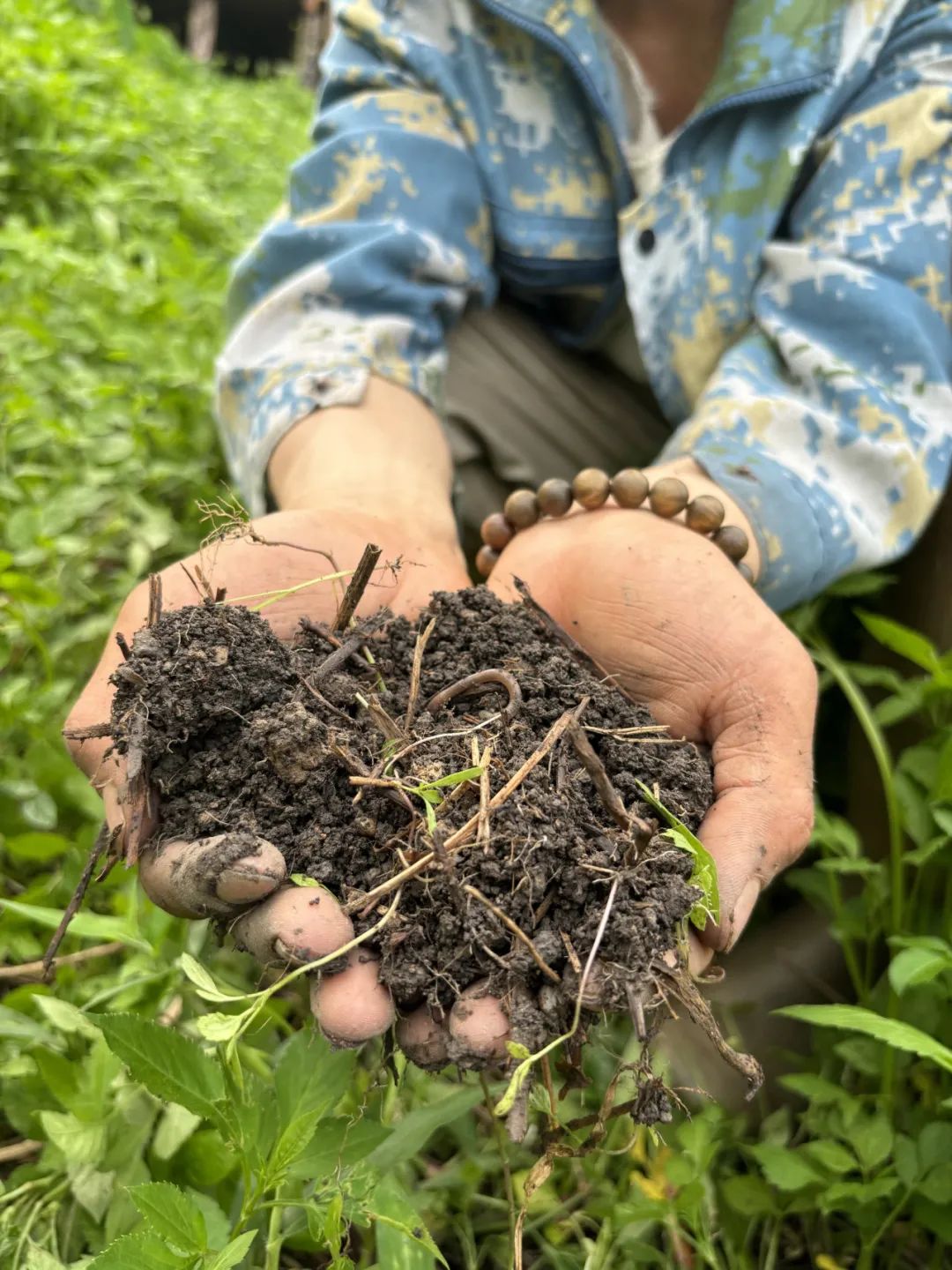
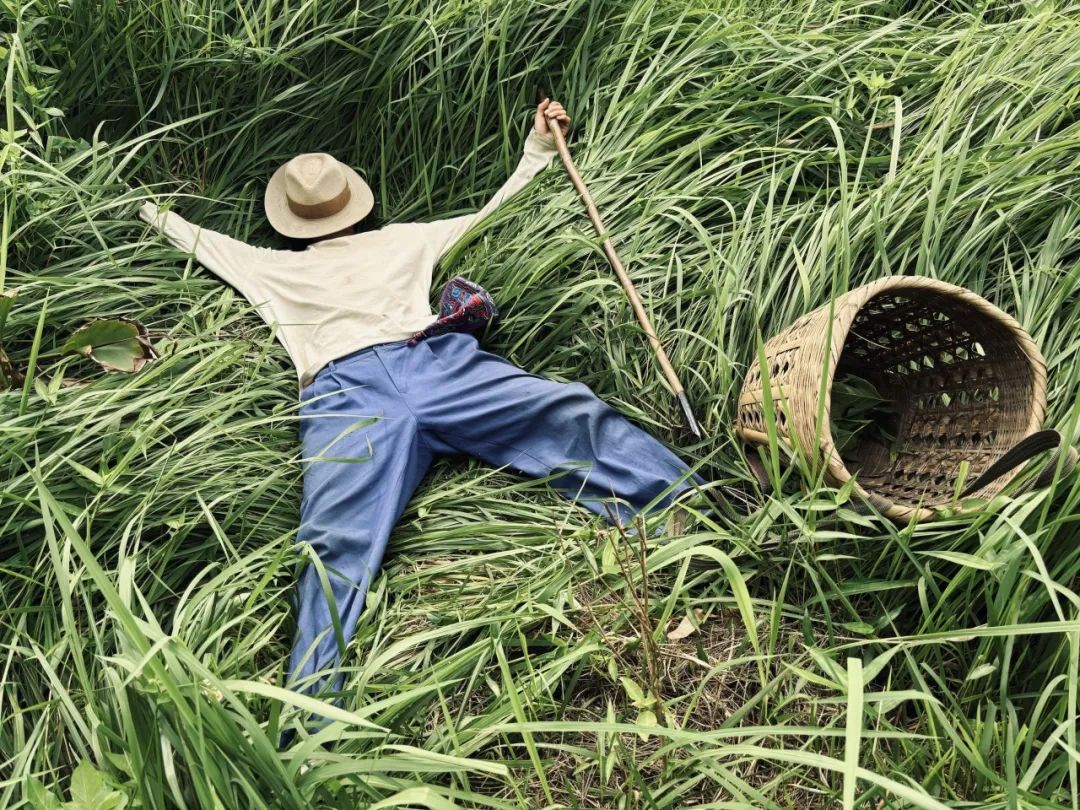
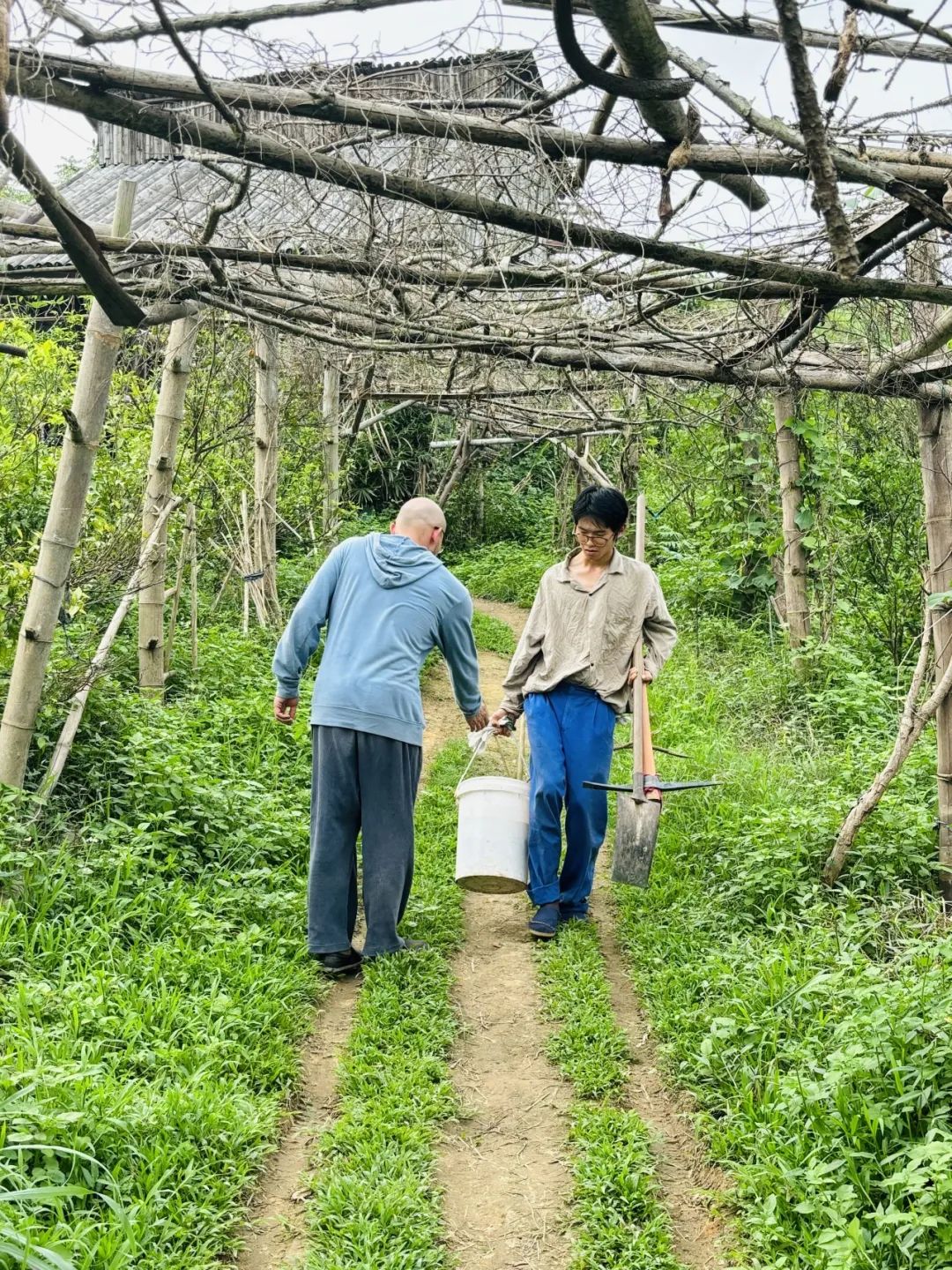
“I don’t rush when I work; when I’m tired, I just lie on the grass and rest, playing as I work.” For Sister Yan Ping and those of us studying at Baicao Garden, our work treats the mind and body as the “subject”. Work does not take over to crush us; instead, it nourishes and fulfils us. Liu Heng, a partner at Baicao Garden, spends his days observing and recording the changes in various plants; this practice feeds his curiosity and compassion. Sanmu, another intern, often becomes so absorbed in mowing the grass that he enters a state of “flow”, to the point where I have to go out onto the balcony at noon to call him and Linda—who is meditating on the grass—for lunch.
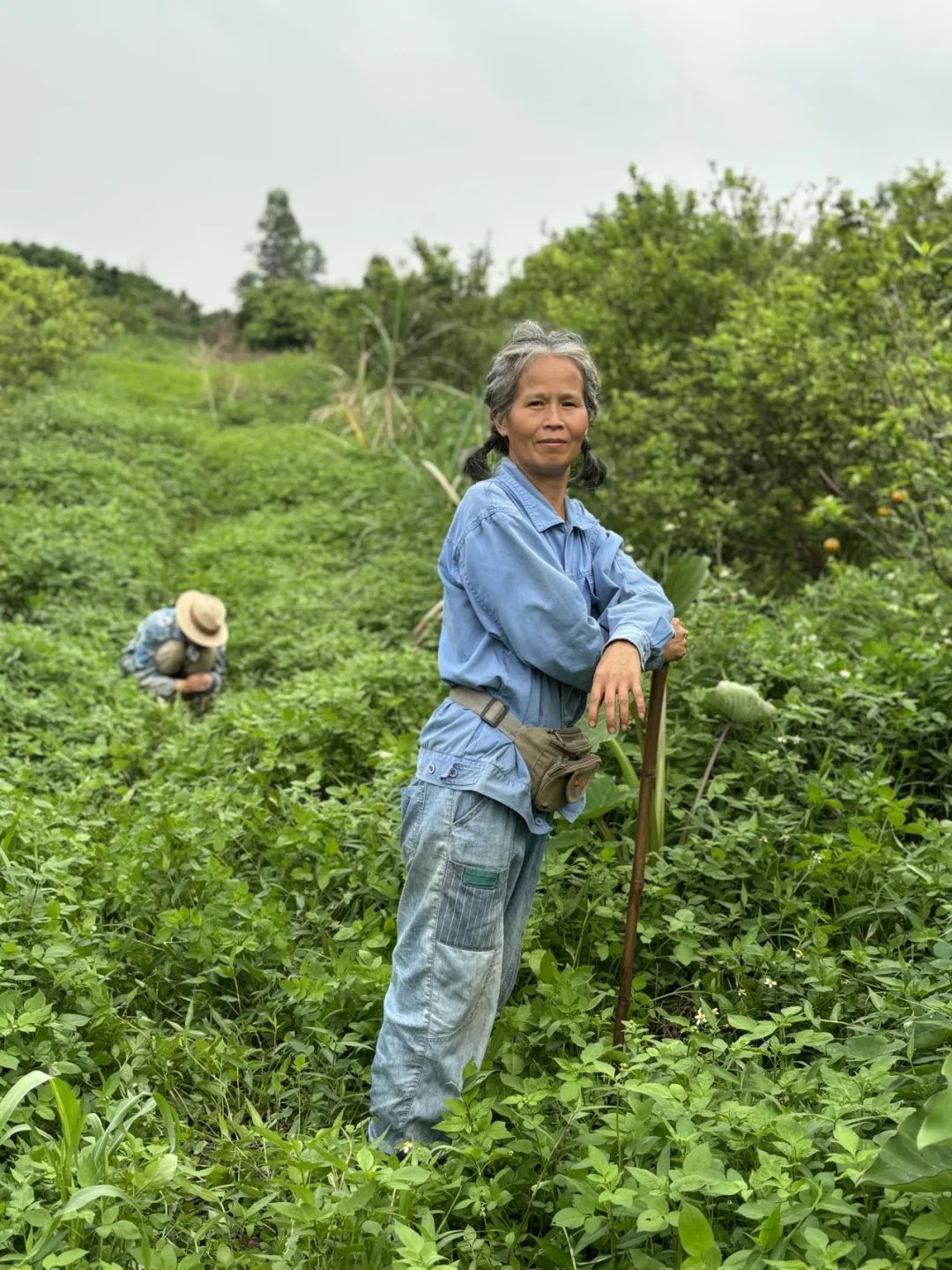
Sister Yan Ping treats simple farm chores, such as weeding, as a form of spiritual practice—a way to exercise both body and mind. She finds true contentment in this labour and hopes others can lead such a simple life; for her, practice consists of “doing simple things repeatedly”. Moreover, we only labour for half a day, leaving the other half for our own arrangements: some practise martial arts, some meditate, some drink tea, and some read poetry… Later, Sister Yan Ping bought calligraphy supplies, and we began learning the art of writing.
Among our learning partners at Baicao Garden, some previously earned high salaries at consultancy firms, while others held relaxed technical roles. Yet, the former found their work physically and mentally exhausting, leaving them spiritually drained, while the latter sank into a prolonged sense of void. In those roles, one feels like a cog in a machine—devoid of autonomy and subject to the will of others. The paradox of this work ethic is that if you wish to participate in the social division of labour and be a “useful” person, you must accept the fact that you have become a cog.
For us workers, including the industrial farmers in Wule Town, this paradox is obvious. I believe the farmers in Wule Town also dislike the smell of herbicides and feel exhausted by work that alienates their mind and body, but they lack an understanding of ecological agriculture and have no power over the market. Naturally, they can only operate by the rules of the market, falling into a state of unconscious inertia.
Mencius said, “The people’s inclination towards benevolence is like water flowing downwards.” This suggests that “benevolence” is our innate nature, as natural as water flowing downhill; what we call “lack of benevolence” is simply a state of numbness—hence the phrase “numb and callous”. Today’s society, dominated by capital, technology, and consumption, encourages us to be numb. Those who refuse to be numb are seen as obstacles to the continued expansion of capital, technology, and consumerism.
II. Old Seeds, New Hopes
The Bai-ku Yao village where Uncle Youming lives is a place where gods and humans coexist; for them, divine miracles are a concrete and unquestionable reality. This village once possessed a highly complete and self-sufficient cultural system, encompassing medicine, education, diet, farming, festivals, dress, family values, and organisational systems. The Bai-ku Yao people living there shaped their own character and coexisted for generations with all things in nature, forming a community of mutual affection and righteousness between heaven, earth, and humanity.
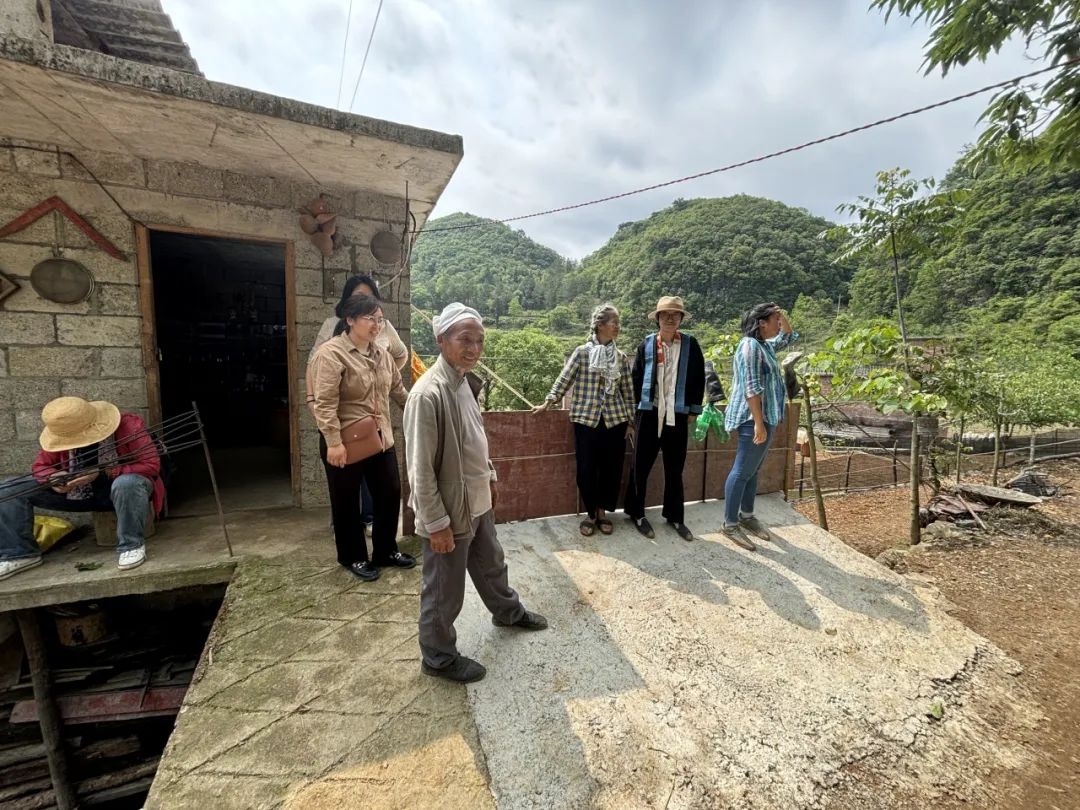
Like Sister Yan Ping, Uncle Youming left his hometown in his early years to find work in the city. He, too, failed to find a sense of belonging; he felt only loneliness, and as a manual labourer, he saw no promising future. After eight years of such work, Uncle Youming returned home in 2008, only to find that his village had changed profoundly. Due to the excessive use of herbicides, the fields were barren, and the soil had become compacted.
Beyond this, the village’s traditional ethnic culture was eroding. When Uncle Youming was young, they grew only one crop of grain a year; aside from the peak farming season, they only had to work for two or three months. What did they do during the other months? They enjoyed leisure—hunting together, travelling, and participating in folk festivals. “Then why not continue living like that?” I asked. “Because everyone wanted to make money,” Uncle Youming sighed.
“In the past, people were happy to help one another and were close. Now, as soon as you mention needing help with something, they ask about wages. Most young people go to the cities to work, abandoning their ethnic identity; the words of the elders no longer hold any sway over them.” Uncle Youming often feels a sense of loss as the village people gradually lose their spirit of friendship and mutual aid.
Does surviving in a modern society through work necessarily mean becoming alienated from, or even destroying, the land and way of life passed down through generations? Driven by these concerns, Uncle Youming embarked on a path of self-rescue through ecological cultivation.
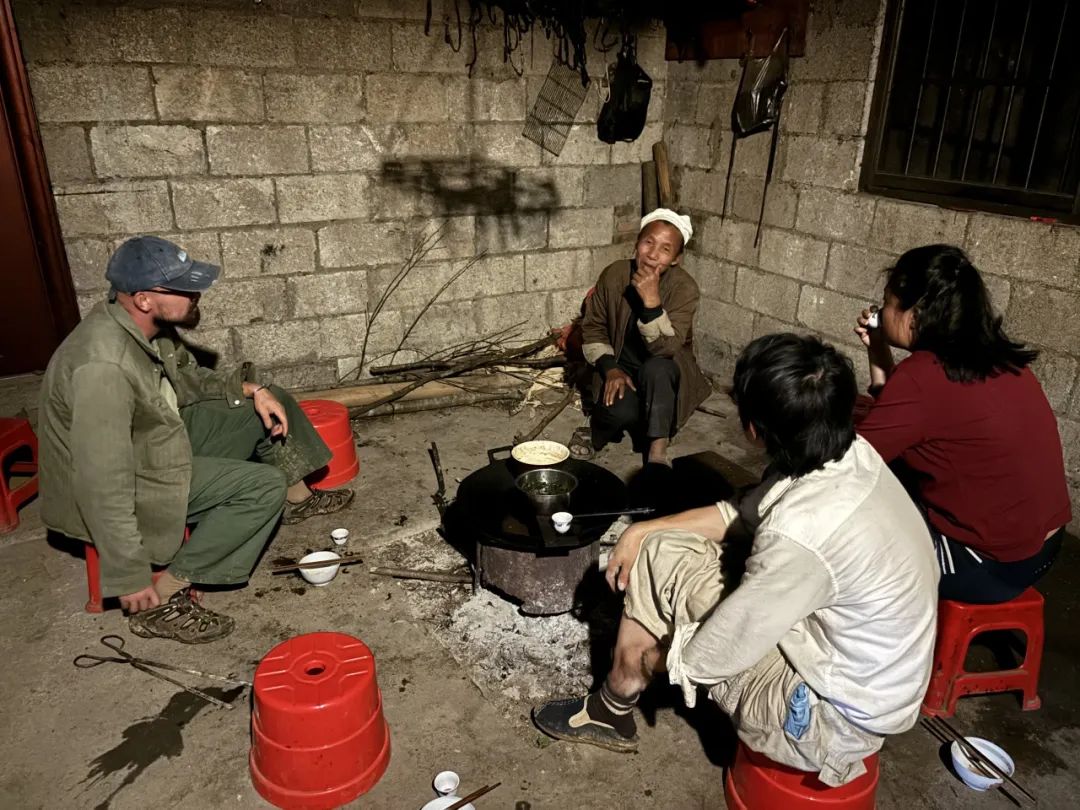
With the help of a non-profit organisation, Uncle Youming first conducted planting trials using hybrid seeds. His plan was to reduce the use of pesticides and chemical fertilisers year by year until they were completely abandoned, but the harvests were dismal. In the second year, the organisation brought in an expert from Yunnan who provided heirloom seeds, but this too failed. Uncle Youming realised that the choice of heirloom seeds required precision—the principle of matching the seed to the specific land. He applied himself to finding heirloom seeds local to Guangxi, and finally achieved success.
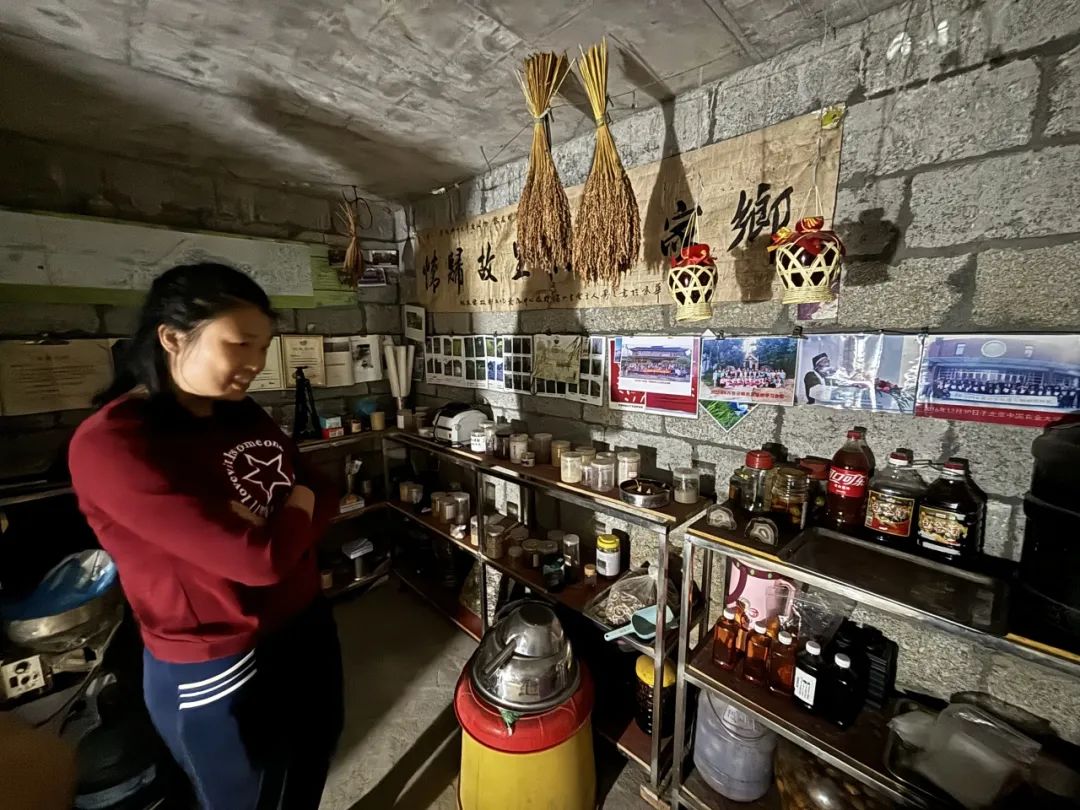
From then on, Uncle Youming became convinced that to develop ecological agriculture, one must preserve these heirloom seeds—seeds that evolved naturally alongside the local ecosystem and can be saved for future planting. The hybrid or GMO seeds most common and widely used today cannot be saved. “If farmers only use these market seeds, they are effectively stripped of control over a portion of their means of production.” Recognising this, Uncle Youming’s commitment to preserving heirloom seeds grew even stronger.
He seeks out heirloom seeds at every opportunity—whether in his own village, elsewhere in China, or even abroad. He collects as many as possible, eventually establishing his own active ecological seed bank. He preserves rice seeds in stages across dry lands, balconies, experimental plots, and large fields. His notebooks, filled with learning and sowing records, reveal a true practitioner of ecological agricultural experimentation.
Old production methods and old cultures were thus discarded. People were swept into this new world, only to discover that they were not the masters of it, but rather disoriented passers-by, rootless and unable to take root. Looking back, they found that the sanctuary of the old world had been destroyed by their own hands. Much like the fate of the heirloom seeds: once people grew accustomed to using new seeds bought from the market, the heirloom seeds—lacking long-term selection and breeding—became frail and prone to disease, losing all competitive advantage against the new market varieties.
III. “A Vast World with Endless Possibilities”
In truth, this longing for a new work ethic and a humanist tradition that can truly take root is shared by many of us among the youth. Even those who may not consciously realise it express this impulse to change the status quo through their complaints and criticisms of unreasonable work and lifestyles on Xiaohongshu.
Today, many discuss ‘rural revitalisation’ in the context of ecological agriculture. However, I believe that if rural revitalisation is discussed solely in terms of ecological planting, the ‘revitalisation’ will still lack a certain vitality. But if we look at it like Sister Yan Ping, who places her hopes for a new work ethic in Baicaoyuan, or like Uncle Youming, who views ecological agriculture as a safeguard for his people’s cultural autonomy—that is, understanding the relationship between ecological agriculture and rural revitalisation through the hopes of the people and their longing for a new way of living and being—then I believe we can truly embrace the saying, “A vast world with endless possibilities.”
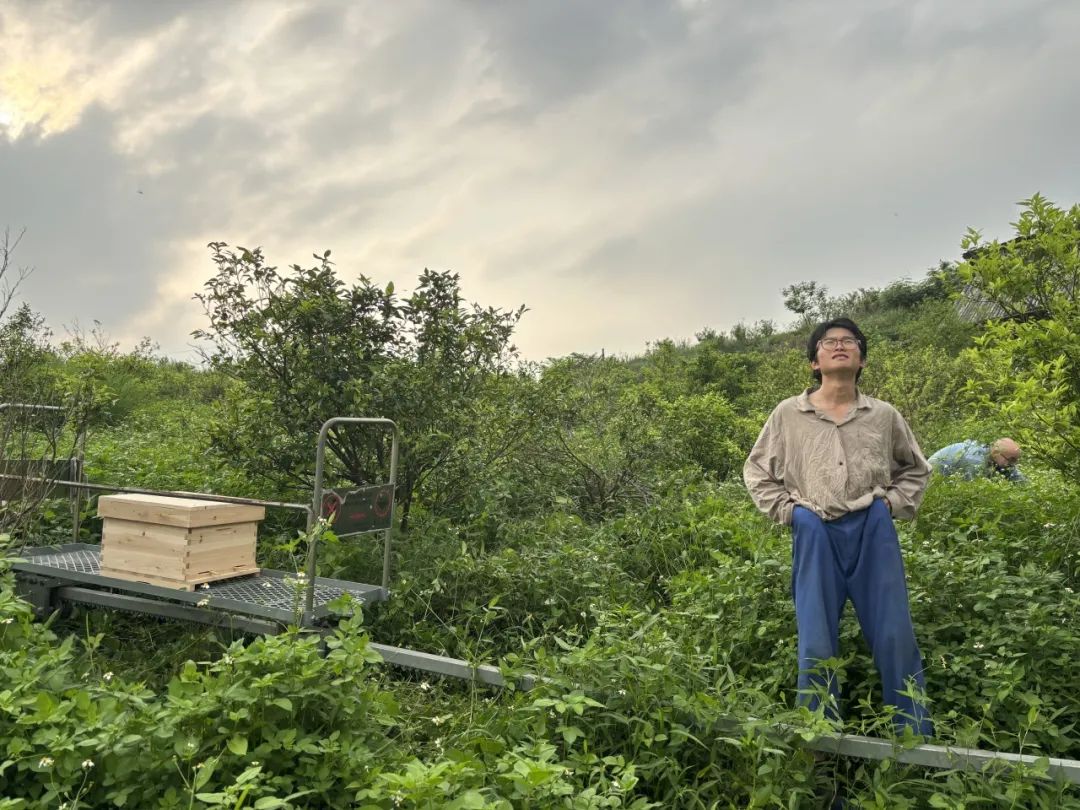
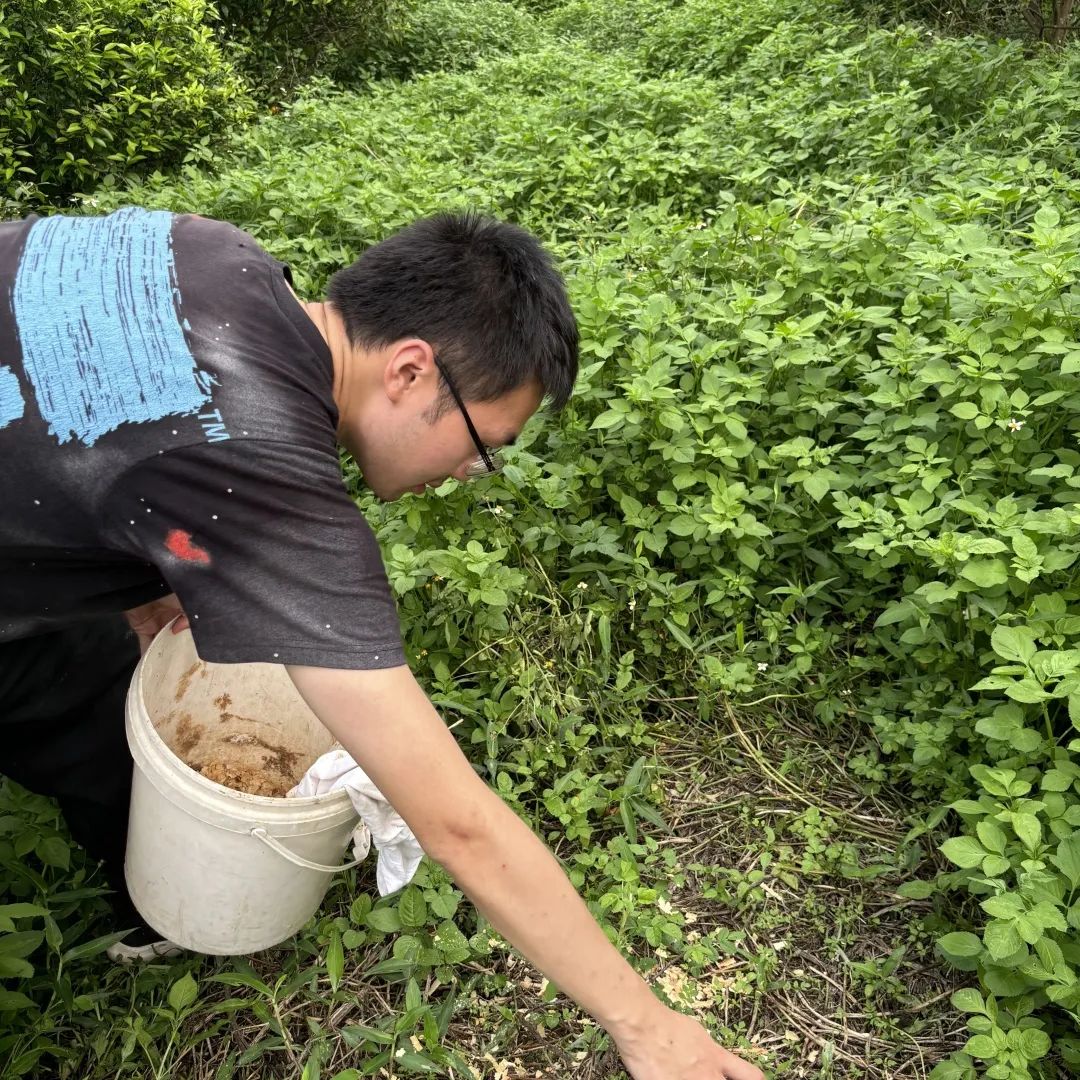
To date, three recruitment cycles have been completed, supporting over 60 partners in entering more than ten ecological farms across the country for internships lasting from three months to one year.
Editor: Zheng Yuyang