
An Introvert’s 106 Days on the Farm
I first came across ecological agriculture around 2016. Through my involvement in nature education, I naturally connected with people practising it and realised that many were farming for the sake of healthy food and a sustainable environment and lifestyle.
At the time, I was growing plants and flowers on a city balcony and experimenting with composting. Because space was so limited, the composting process couldn’t keep pace with the amount of food waste I produced; I remember thinking how wonderful it would be to have a plot of land of my own.
It wasn’t until this April, when I arrived at the Zhiliangtian Ecological Farm in Alxa, Inner Mongolia, as an intern for the third cohort of Foodthink’s ‘Ecological Agriculture Internship Programme’, that I truly realised that farming is a high-risk venture.
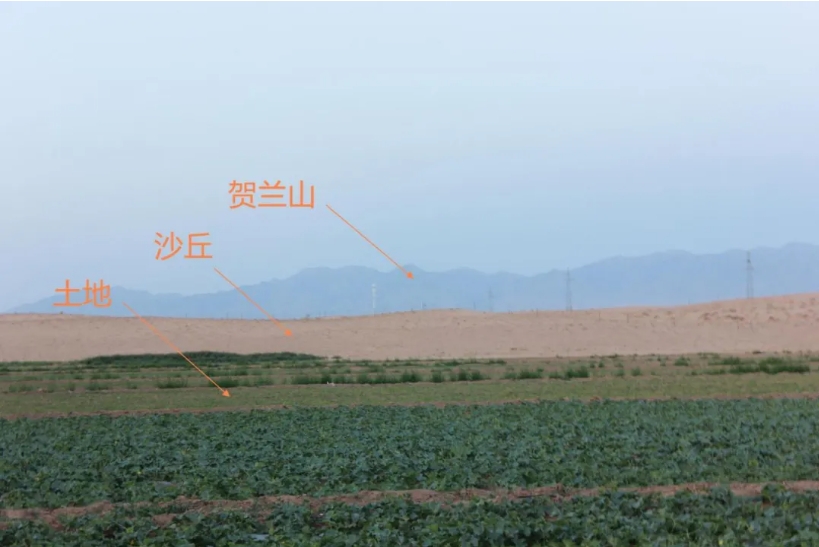
The land here is a gift from the Helan Mountains, having been used for cultivation for only a few decades. Once Zhiliangtian established itself here, it began nourishing the soil with sheep manure and green manure. If the soil became too clayey, the solution was simply to shovel in some of the nearby sand and mix it in. Both the sand and the soil were brought here by wind and water; while there is no distinct boundary between them, there is a marked difference, and it is this very distinction that nurtures the bursts of life across the desert farmland.
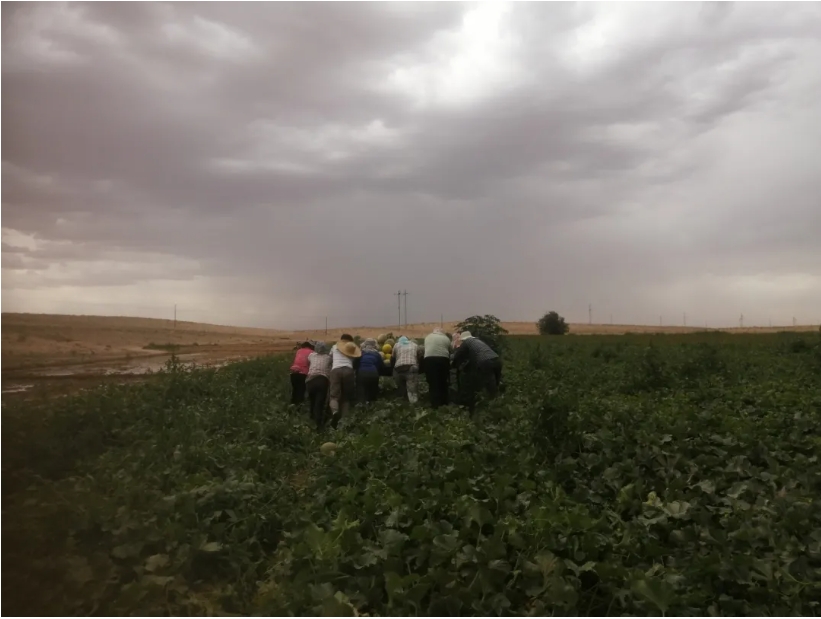
Rainfall is sparse, but after several years of improving the soil, low-water, short-cycle crops such as honeydew melons, onions, and millet have thrived. At the farm, the precariousness of ‘relying on the heavens for one’s livelihood’ is played out in full: sowing must be timed perfectly with the temperature; unpredictable gales make the seedlings’ growth a struggle; and the rainy season during harvest is a ticking time bomb—a single downpour can cause the melons to split, ruining their market value or reducing their sweetness. Against the backdrop of increasingly volatile climate change, the losses from animals like magpies stealing crops seem minor by comparison.
I. A Steady Stream of Young People
Farm mentor Ma Yanwei, sharing his entrepreneurial journey, said that his initial hope was to protect Alashan’s groundwater, lakes, and ecological environment through eco-friendly, water-saving cultivation methods and crop selection. Building on this, he aimed to use study tours to help more people understand this land and support the promotion of ecological agriculture.
The farm’s Zhang Bin was an intern in the first cohort of Foodthink’s ‘Ecological Agriculture Internship Programme’. After completing his internship at Zhiliangtian, he returned to his hometown in Gansu to start a sheep-farming business. At 19, his lack of experience meant he encountered obstacles at every turn; after a year, realising how much he still had to learn, he decided to return to the farm to study. Describing himself as a person of Qin, Zhang Bin had already determined his future career path at a young age: breeding high-quality cattle, sheep, and horses suited to the plateau regions.
At a cultivation-focused farm like Zhiliangtian, he often missed his livestock back in Gansu. He had been planning to buy a horse and was contemplating how to create a sustainable cycle of traditional Chinese medicine cultivation and livestock farming between his family’s winter and summer pastures. Cattle, sheep, and horses are an inseparable part of him; by the age of 20, he had become one with the mountains and the wild, devoted entirely to his own path.
Later, I met more ecological farmers who, for various reasons, were engaged in the act of nurturing the land and, in turn, nurturing themselves. This brought to mind the words of another farm mentor—Yan Ping from the Happy Herb Garden in Guangxi: ‘Farming isn’t hard. As long as you see it as a way of nourishing yourself, it doesn’t feel like a difficult task.’
II. The Farm’s Ecological Wisdom
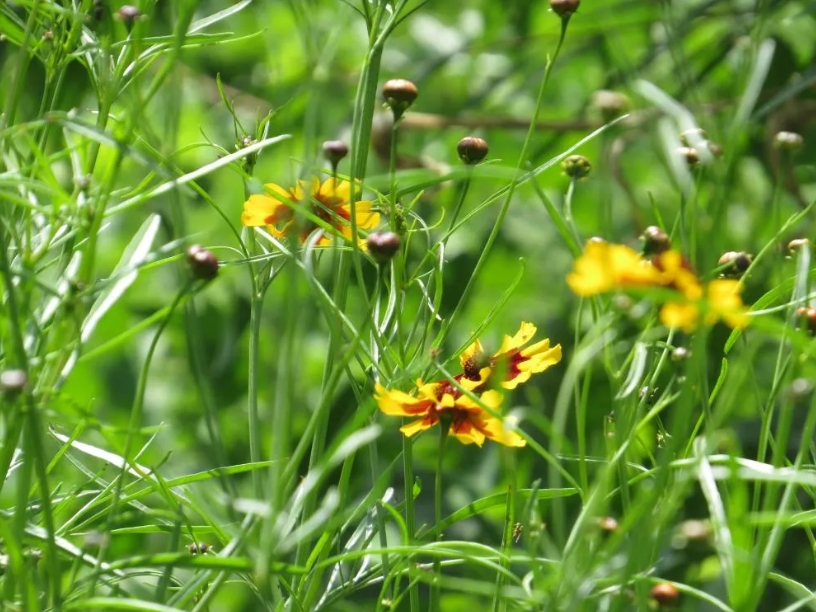
After the onset of summer, the farm ordered a batch of snow chrysanthemum seedlings online; they were planted at the end of May and bloomed by the end of June. Initially, weeds, including morning glories, competed for space; the morning glories were particularly troublesome, clinging to the slender stems and leaves of the snow chrysanthemums. While the plants were still short, we did our best to clear all the weeds. Eventually, as they became impossible to fully eradicate, we focused only on removing the clinging morning glories and let the other weeds grow. Unexpectedly, we found that this not only reduced the encroachment of the morning glories, but that the other weeds actually provided sturdy support for the snow chrysanthemums, preventing them from being easily blown over by the wind. In planting snow chrysanthemums, we inadvertently used weeds to defeat weeds. (PS: I have recently learned that the snow chrysanthemum may be an invasive species under observation, “Plains Coreopsis [Coreopsis tinctoria]“; please consider this carefully if you plan to plant it~).
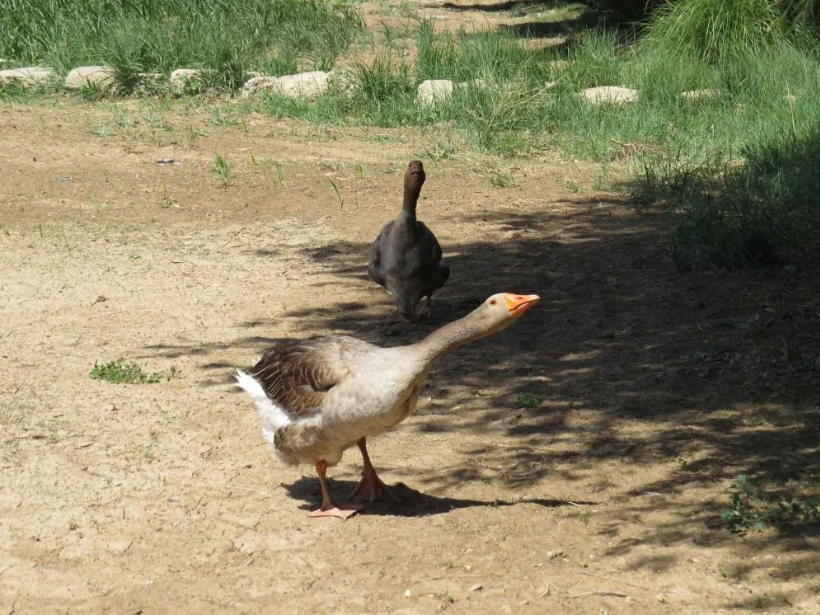
The sheep and geese roaming the fields never mess with the cultivated crops, eating only the various weeds. According to Captain Zhao, who is responsible for planting management, this is because weeds are more nutritious for them than the crops.
Sister Yan Ping’s “Hundred Herb Garden” retains its weeds, provided that stepping on them doesn’t hinder the growth of the citrus trees. At Zhi Liang Tian, because they grow herbaceous crops like muskmelons and millet, some weeds are removed by hand. How to effectively control weeds while still allowing them to retain water, protect the soil, and enhance the diversity and resilience of the farmland ecosystem is a matter that warrants further exploration and practice.
III. Farm Life: Different from the Imagination
106 days as an introvert on a farm meant that, for the most part, it was 106 days of having to get along with others. It was a perfect illustration of “how much a person can overestimate themselves”—overestimating one’s energy, one’s tolerance for communal living…
This year, Zhi Liang Tian had as many as ten volunteers during the same period. For the first time, the farm attempted to manage such a group with such varied backgrounds, ages, and expectations, leading to many unexpected occurrences: friction caused by different work and communication styles, and chaos as people split into small cliques… Out of over 80 applications, more than ten volunteers were selected for Zhi Liang Tian this year, but seven or eight were eventually encouraged to leave. Some left after a few days, others after several months. There was no shortage of volunteers with an over-idealised image of farm life, nor, perhaps, a lack of the farm overestimating its own management capabilities.
This led me to wonder: What exactly is the allure of ecological agriculture, that so many people (including the mentors) are willing to find out just how exhausting it is, even knowing they will hit a brick wall, just to see how hard that wall is?
IV. Probably because nature still exists[1]
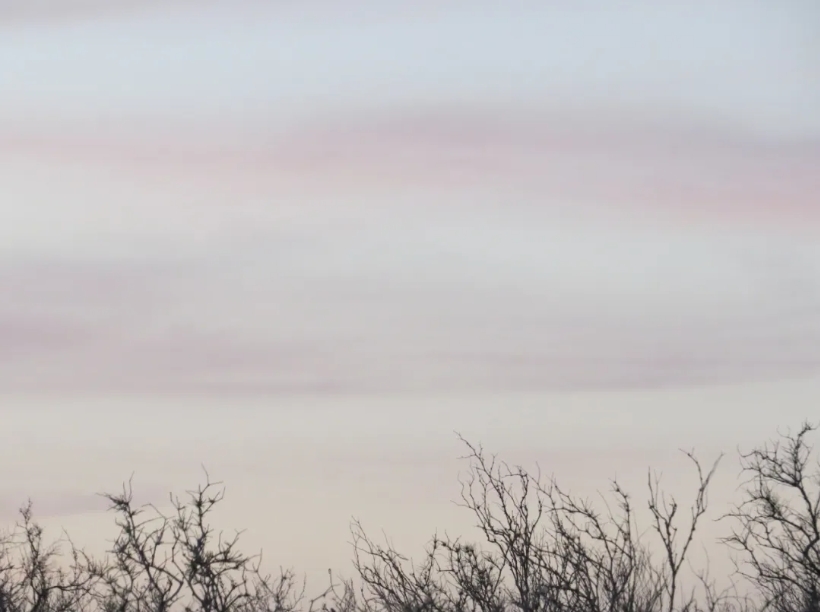
There were also the occasional shooting stars, the sprawling Milky Way, and sunset skies that were different every day, yet always spectacular; even the occasional dusty day had its own kind of beauty.
Rainy days were like a festival; that feeling of comfort when the whole earth is cleansed can only be understood by being there. The farm companions would immediately begin kneading dough, preparing fillings, and wrapping dumplings—everyone was adept at Northwest wheat-based dishes, and sand leeks, which can grow lushly until August, were always a staple delicacy on the table.
In these moments, the warmth of spending time with my farm companions flickered before my eyes: chatting under the veranda on a rainy day with Uncle Qian, Zhang Bin, Muge, and Bai Ling-er; watching the artist-in-residence, Li Dan, lead everyone in releasing balloons to capture the trajectory of the wind; unconsciously relaxing my body by the bonfire, singing along out of tune with the children; the wonderful voices of everyone under the starlit sky; Zhang Bin taking us to the town for BBQ on his tricycle; gazing together at the Milky Way and the full moon hanging over the Helan Mountains; visiting Little Sheep at Sister Bai’s; Captain Zhao, who was in charge of production management, cooking for everyone…
Perhaps it is because of this nature and this particular space that over 80 people wanted to come to this land in Alashan to volunteer. Even though the farm faced many issues with operation and management, and plenty of chaos—and despite the uncertainties of the site, climate, market, and personnel—the farm still chose to persist with ecological planting, and everyone who came here did their part.
V. If just supporting oneself
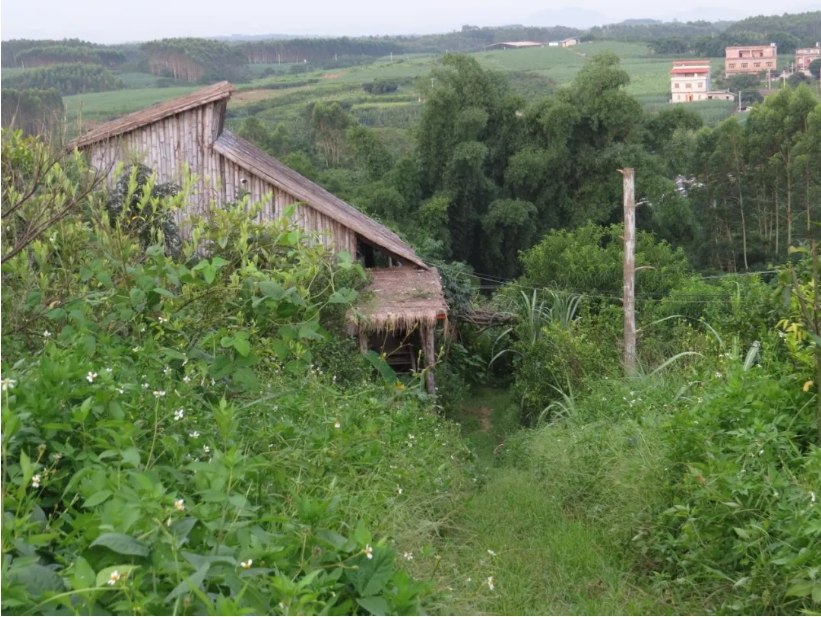
The intern programme fulfilled my hope of staying in Alashan for three months. At the time, I thought: if I can survive in a place so dry, so sandy, so scorching and freezing, and so unsuitable for a Southerner, then I should be able to manage in most farms; I should be able to endure the hardships of agriculture. Later, I realised this thought was too naive. Farms under different climatic conditions each have their own strengths and struggles. For instance, after three months in Alashan, returning to the South felt too humid. For someone like me, who is not built for heavy lifting, the sandy soil of Alashan is actually quite easy to plant in.
In the two months after my internship, besides recovering, I visited various places to constantly confirm whether my desire to enter agriculture was merely a whim. For the first half of my life, I had always lived step-by-step, looking at most two steps ahead. After the farm internship, based on the idea of “having a piece of land”, I began to frequently think about what I wanted to do and could achieve within the next five or ten years.
What having a farm or being a farmer actually means to me is perhaps only slightly clearer now than it was at the start of the year; there is still much to be understood through practice (hitting a brick wall). I only know that I love being on a farm. However, can farming support me?
Furthermore, for me, what is the actual difference between the countryside and the city? Why am I drawn to the countryside but afraid to take root, and unable to leave the city but always longing to escape?
Sister Xixi from Muyunpo said, even for work concerning the environment or rural development, one doesn’t necessarily have to be rooted in the village; one can also provide support from within urban systems.
Nowadays, my answer might be: I hope the countryside becomes a part, or perhaps the majority, of my life; I hope to create a sustainable “half-farming, half-X” lifestyle for myself.
Since my first encounter with nature education in 2016, the wheels of fate have brought me many things. I have been lucky to see so many pioneers in the field walking their own paths. Whether it is nature education, community support, biodiversity conservation, environmental protection, rural education, or ecological agriculture, everyone persists in things that the world considers naive. What is wrong with being naive? It is all a way of nourishing oneself.
[1] “Perhaps because there is still nature” is from a series of WeChat Moments posts titled “But there is still nature” by Sister Meizi, borrowed here to express the theme of this chapter.
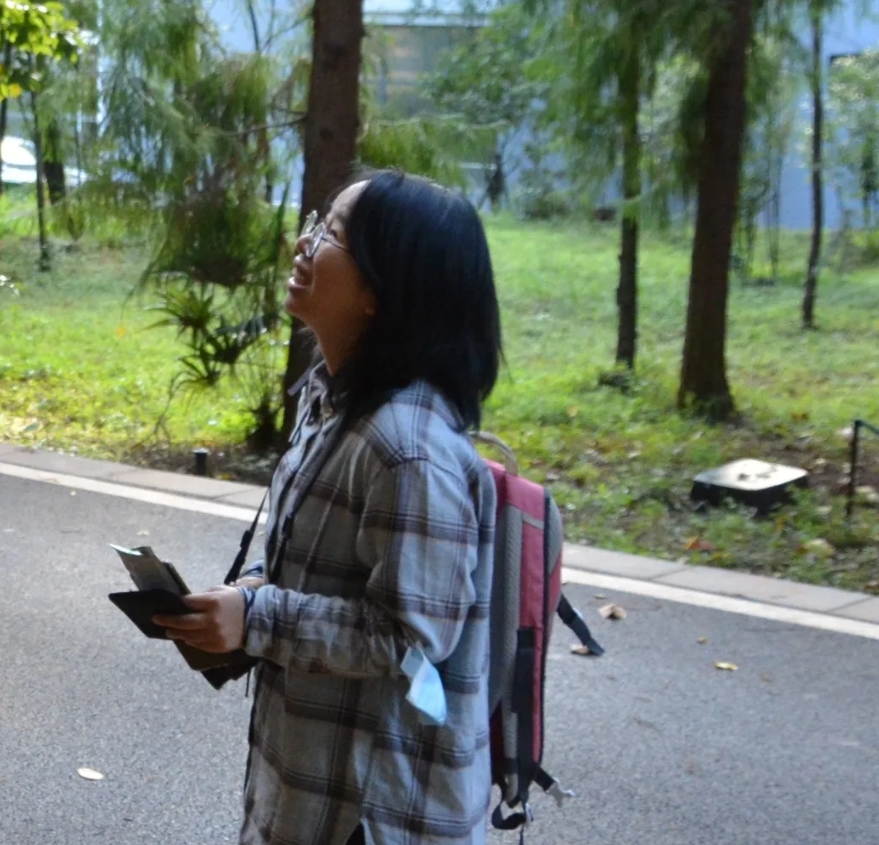
To date, three recruitment cycles have been completed, supporting over 60 partners in entering more than ten ecological farms across the country for internships ranging from three months to one year.
Editor: Mei Ying