
Double Typhoon Hit Devastates Farmers in the ‘Free Shipping Zone’
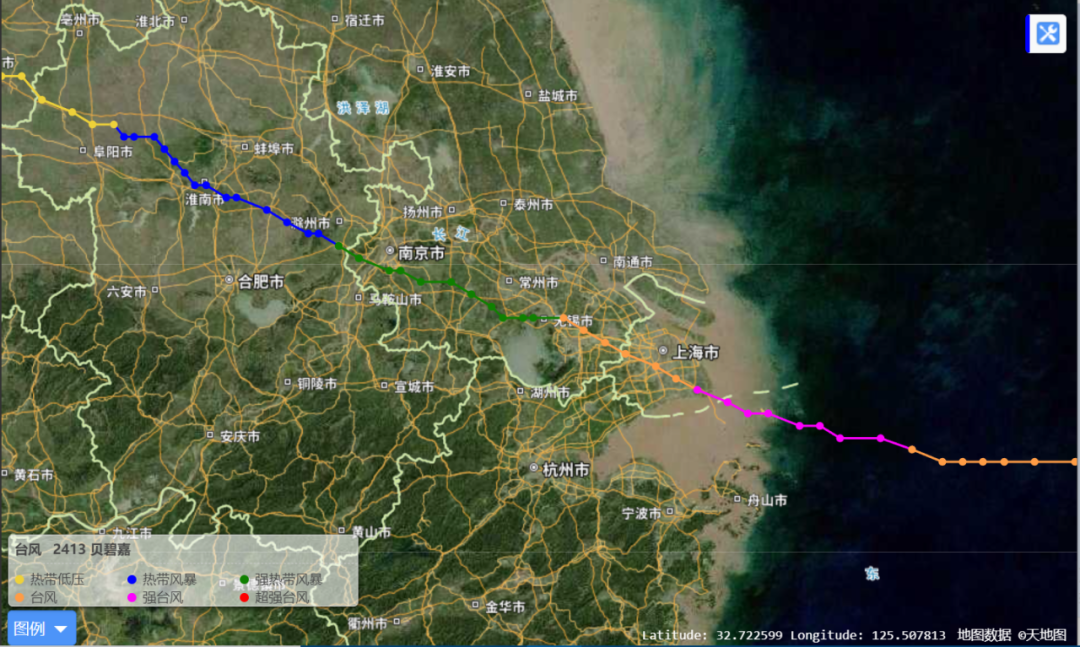
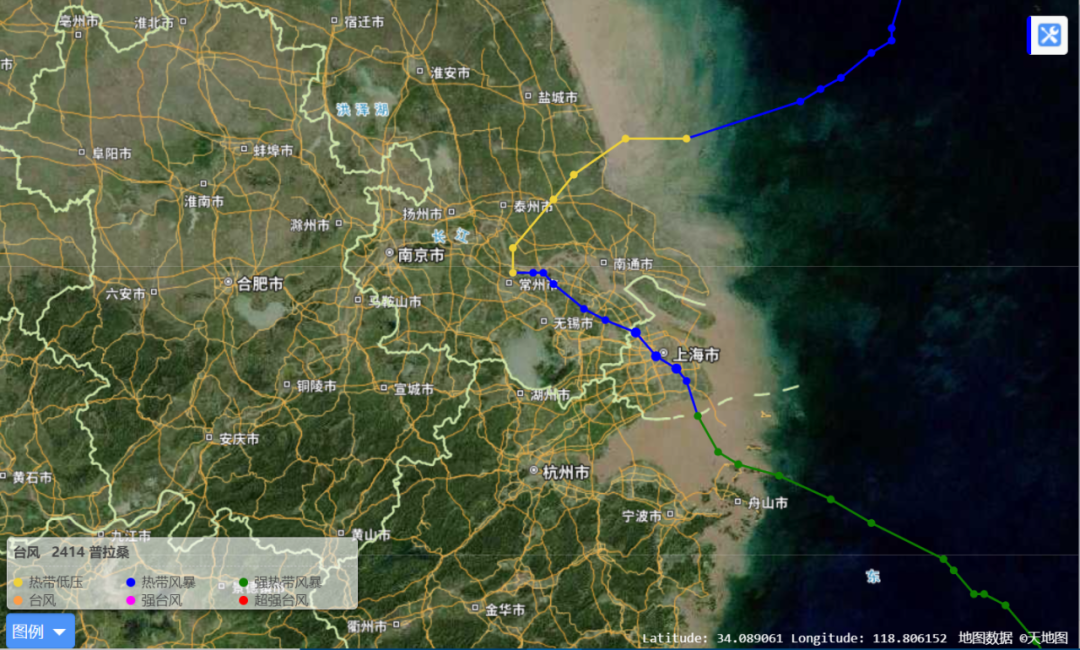
Last week, the Jiangsu, Zhejiang, and Shanghai region suffered a historically rare series of blows, being hit by two consecutive typhoons of Force 10 or higher within just four days.
Around 7:30 am on 16 September 2024, Typhoon Bebinca made landfall along the coast of the Lin-gang Special Area in Pudong, Shanghai. With maximum sustained winds near the centre reaching Force 14 and gusts of 42 metres per second, it was the most powerful typhoon to strike Shanghai and its surrounding areas since 1949.
In the early hours of 19 September, barely two days after Bebinca had departed, Typhoon Pulasan rushed in at 60 kilometres per hour, battering the region with Force 10 to 11 tropical storm-strength winds. Due to the impact of Pulasan’s intense precipitation cells hitting the coast, torrential rain fell across Pudong, Fengxian, and eastern Minhang, with some areas of Pudong and Fengxian experiencing extremely heavy rainfall (over 300mm), leading to severe regional waterlogging and secondary disasters.
As typhoons swept through one after another, how did the farms at the centre of the storms cope? What were the conditions on the ground? To find out, the author contacted several affected ecological farms immediately after the storms passed.
I. Shanghai Lexiangu Community Farm: Frequent Visitors, Defence is Key
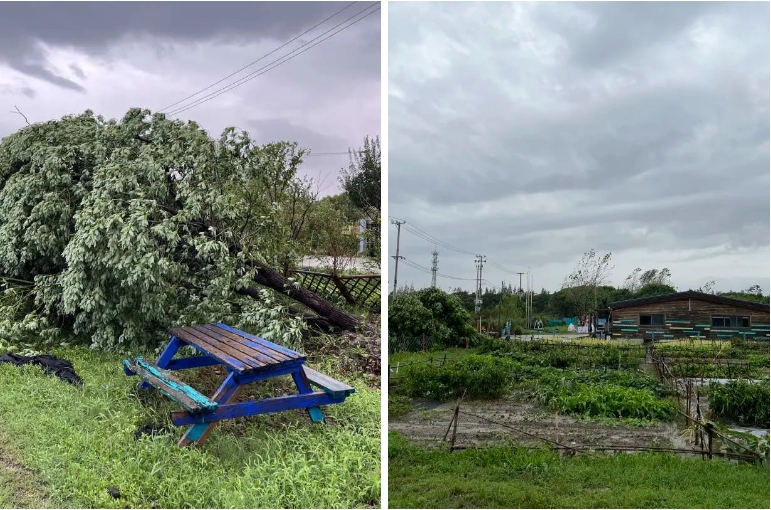
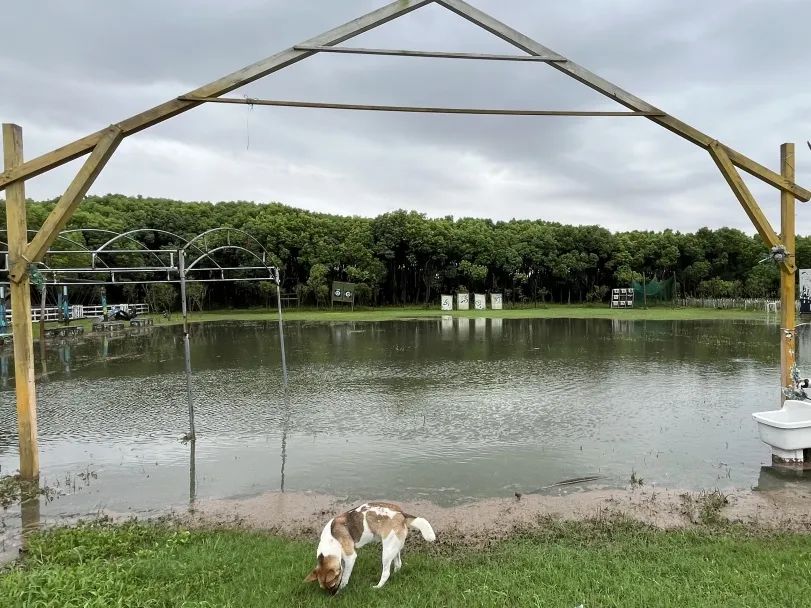
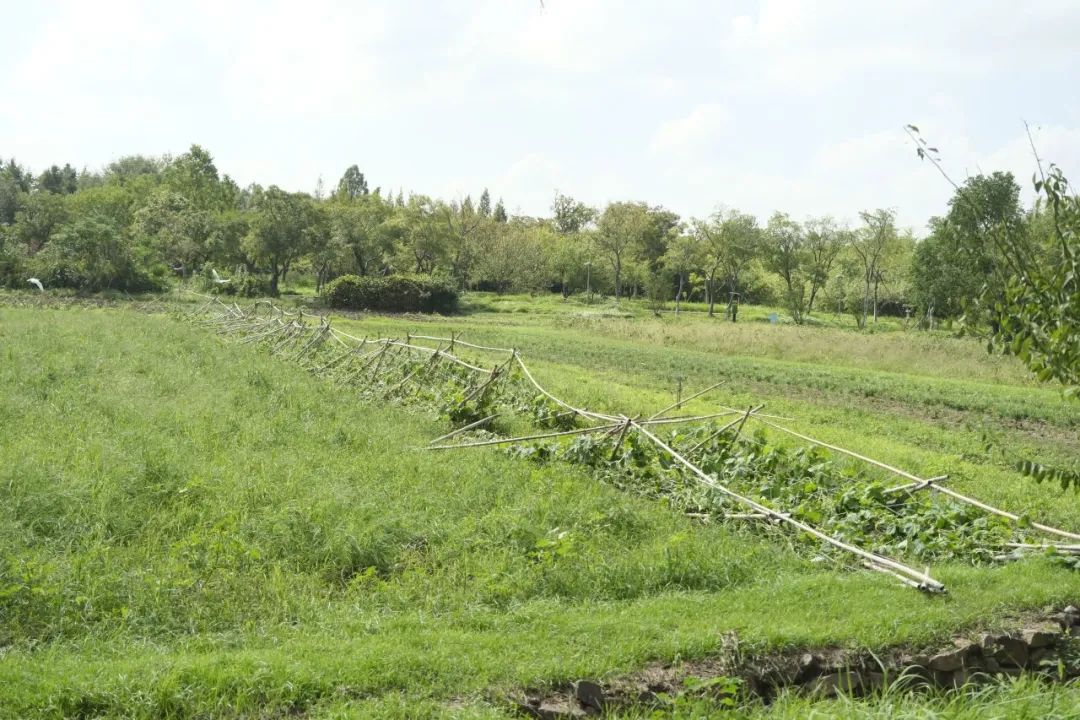
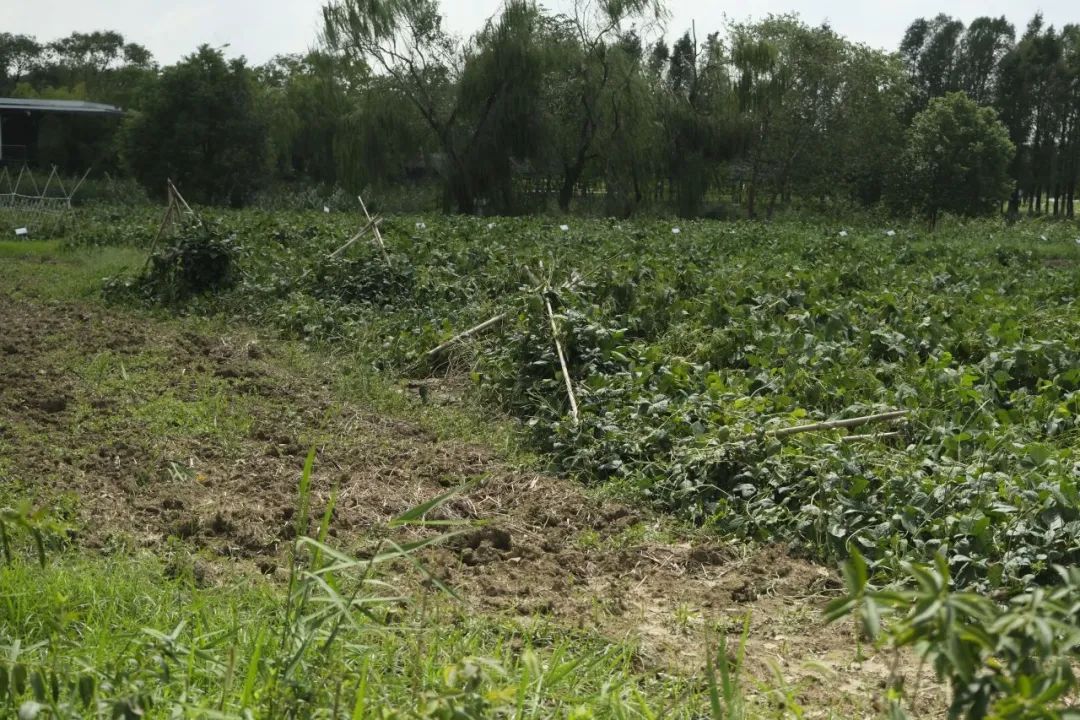
The farm spans 86 mu, comprising over 40 mu of woodland and a 30-mu vegetable cultivation area. Unexpectedly, despite facing the typhoons head-on, the losses were not extensive: the two most critical wooden utility buildings remained unaffected; as for crops, only the maize and trellised vegetables suffered severe lodging. Other losses included a few trees and some advertising signs. Farm owner Yuan Qinghua explained: “Our farm is relatively small and doesn’t have much heavy infrastructure. We also grow a wide variety of crops, which allows us to adjust and recover more quickly after a disaster.”
Because Lexiangu Farm is located not far from Hangzhou Bay, it experiences typhoons every year. Yuan told me they have extensive experience in typhoon defence. “Before a typhoon arrives, I pay very close attention to changes in its path, checking the forecasts every hour or two. This allows me to make a comprehensive judgement based on wind direction and expected rainfall and implement defence measures in time.”
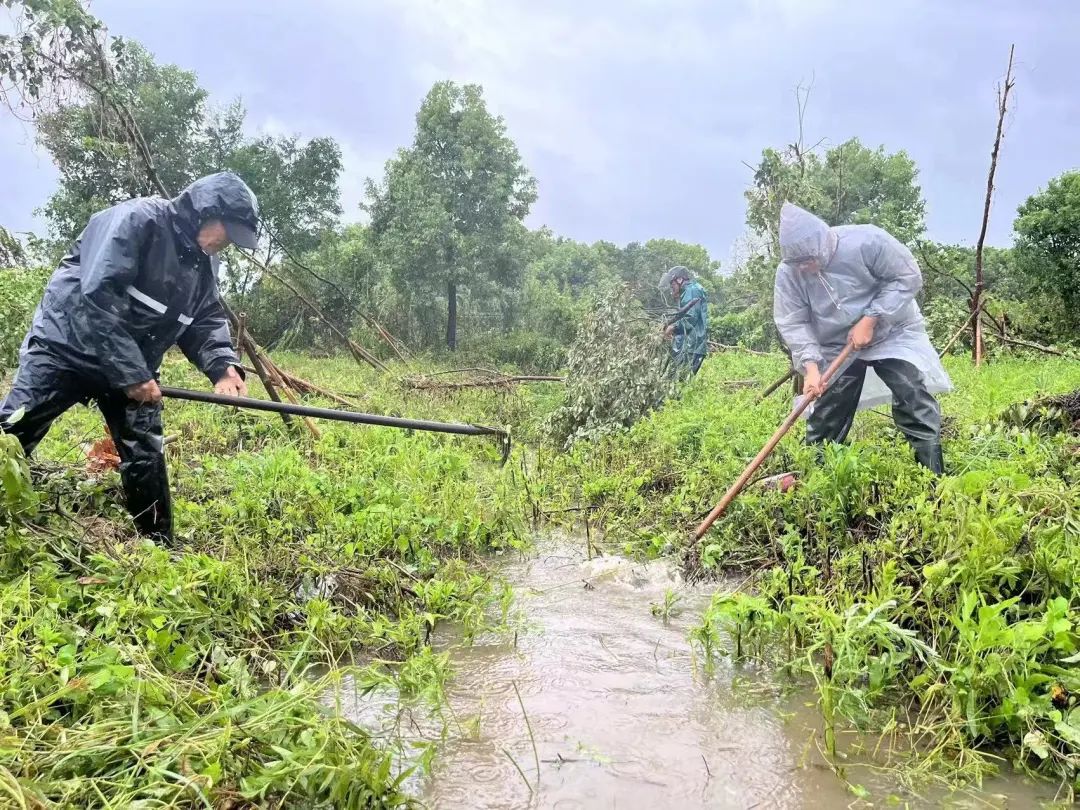
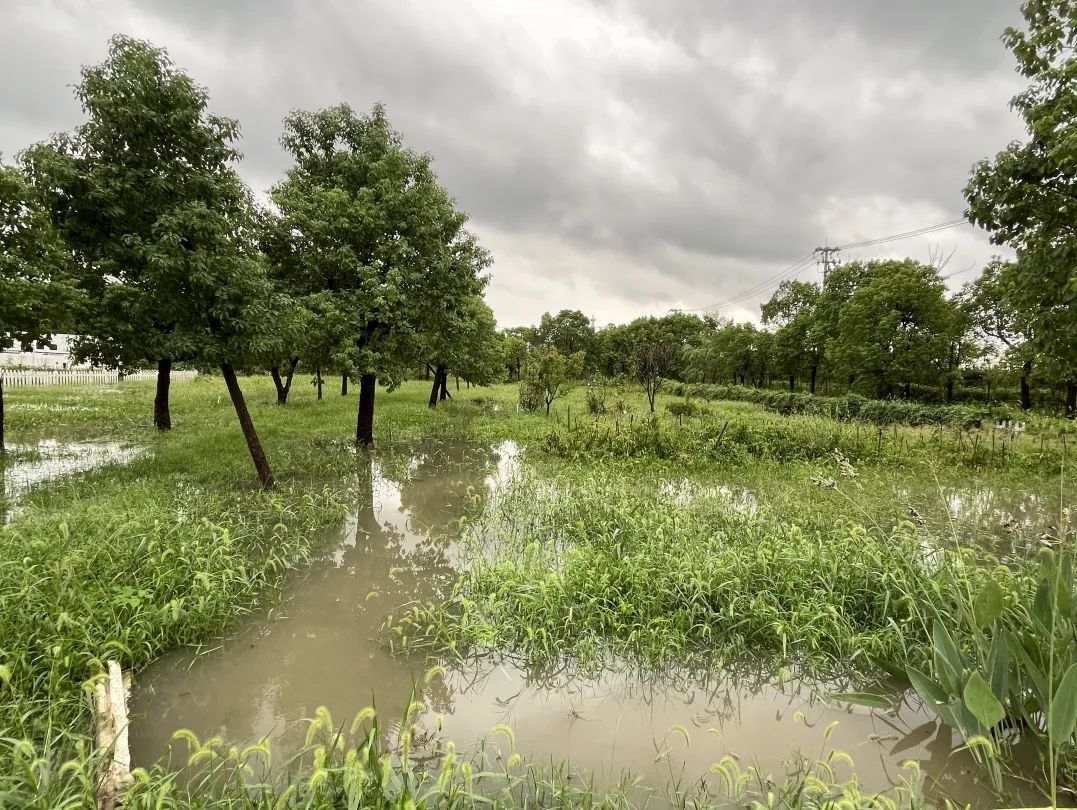
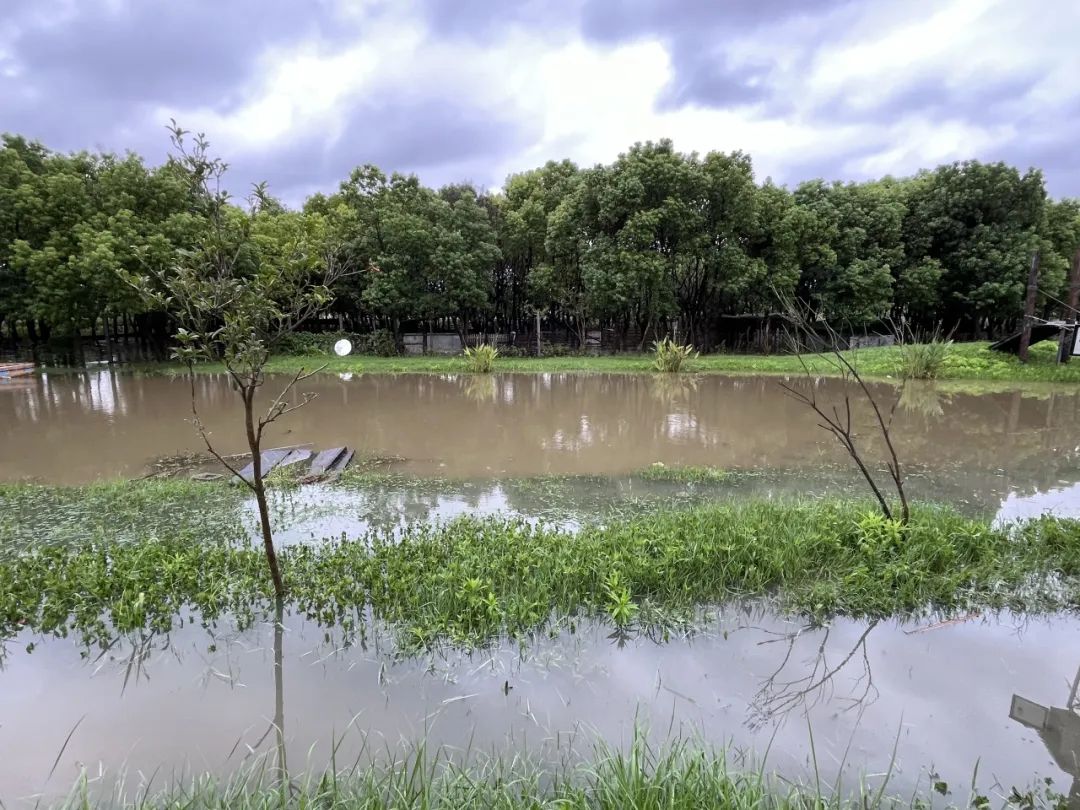
Two days before the storms hit, he had already begun methodically organising staff for defence: all tents and awnings were dismantled, greenhouse films were removed, and taller structures were secured with ropes. Anticipating that heavy rain would lead to waterlogging, all drainage ditches inside and outside the farm were cleared to ensure water could drain away quickly. Once all measures were in place, all farm staff were evacuated to safer areas for shelter as the typhoons arrived.
Now, however, Yuan’s greatest concern is the prospect of a severe drought following the floods. Such “yo-yoing” weather swings could affect the planting and survival rate of autumn vegetables, so he plans to replant after the typhoons to mitigate the losses.
II. Kunshan Yuefengdao Organic Farm: Tall Trees Catch the Wind, New Greenhouses Survive
As Typhoon Bebinca approached, the Kunshan Meteorological Observatory issued a series of orange rainstorm warnings and blue typhoon warnings, triggering a Level IV emergency response across the city. At 11:30 am on 16 September, the centre of the typhoon entered Kunshan, with maximum wind speeds reaching Force 13 and regional single-day rainfall between 150-180mm. Then, on 19 September, Pulasan arrived, bringing sustained torrential rain to a farm that had only just begun to catch its breath.
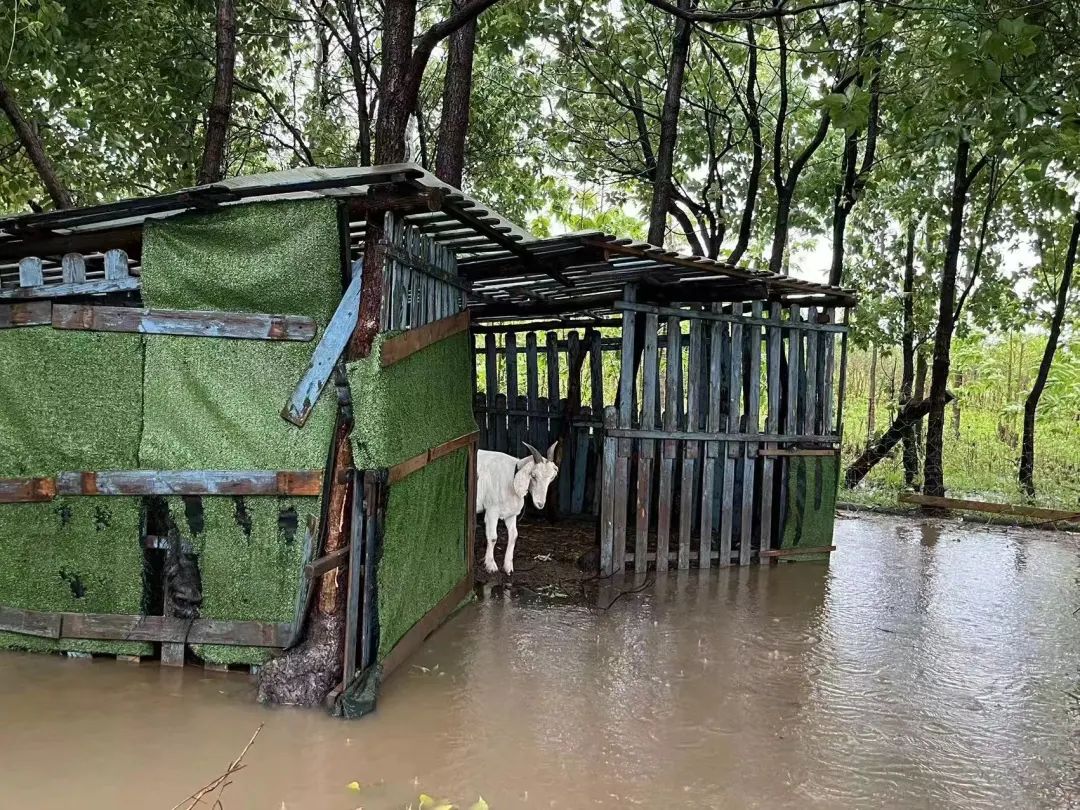
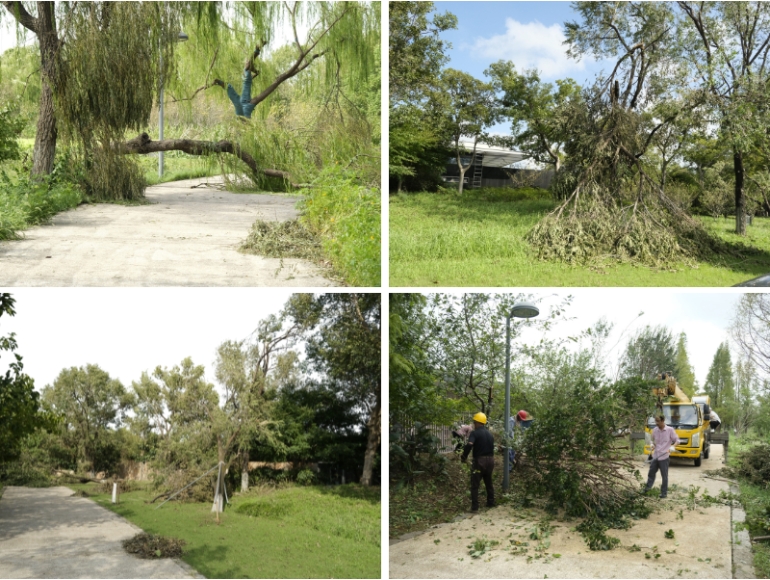
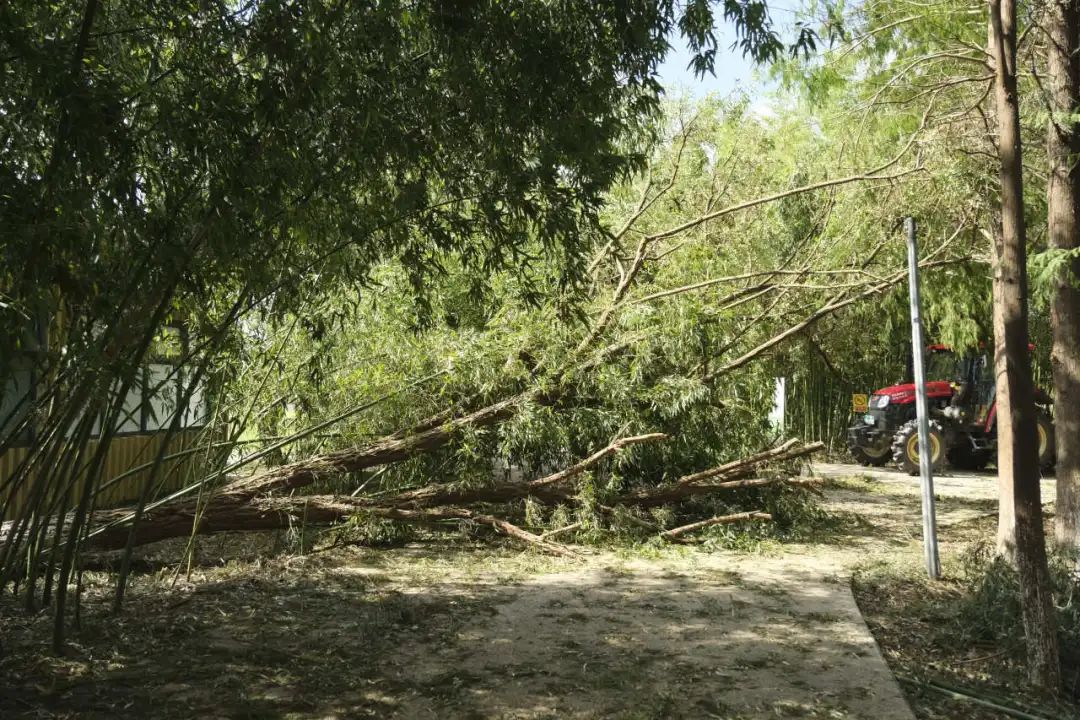
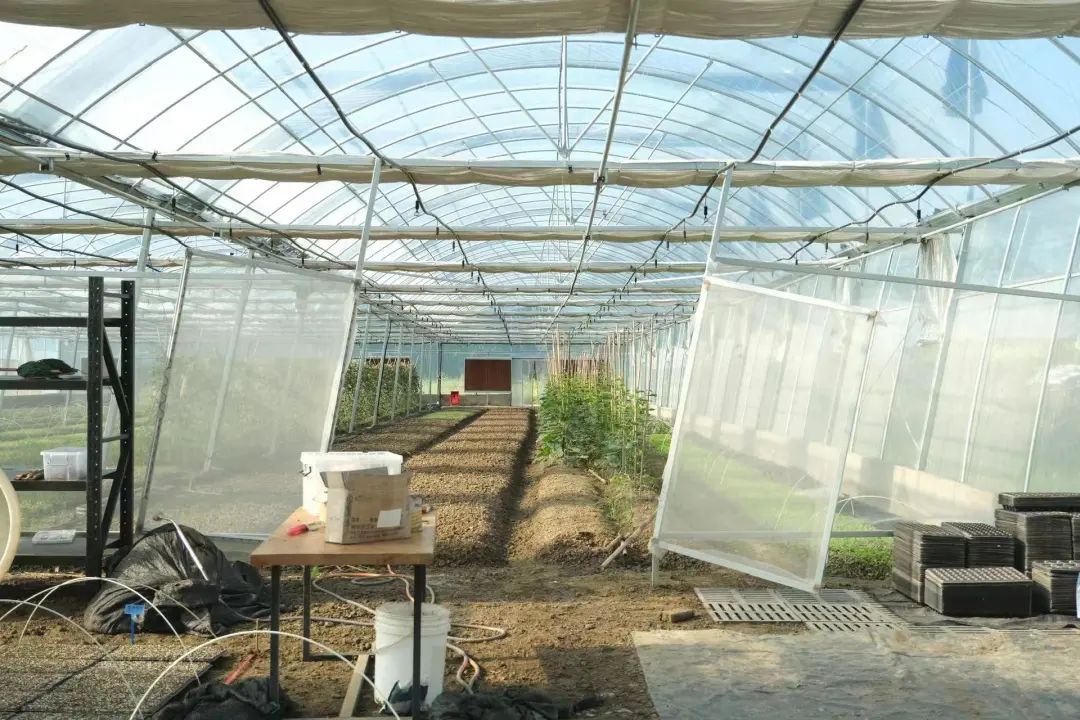
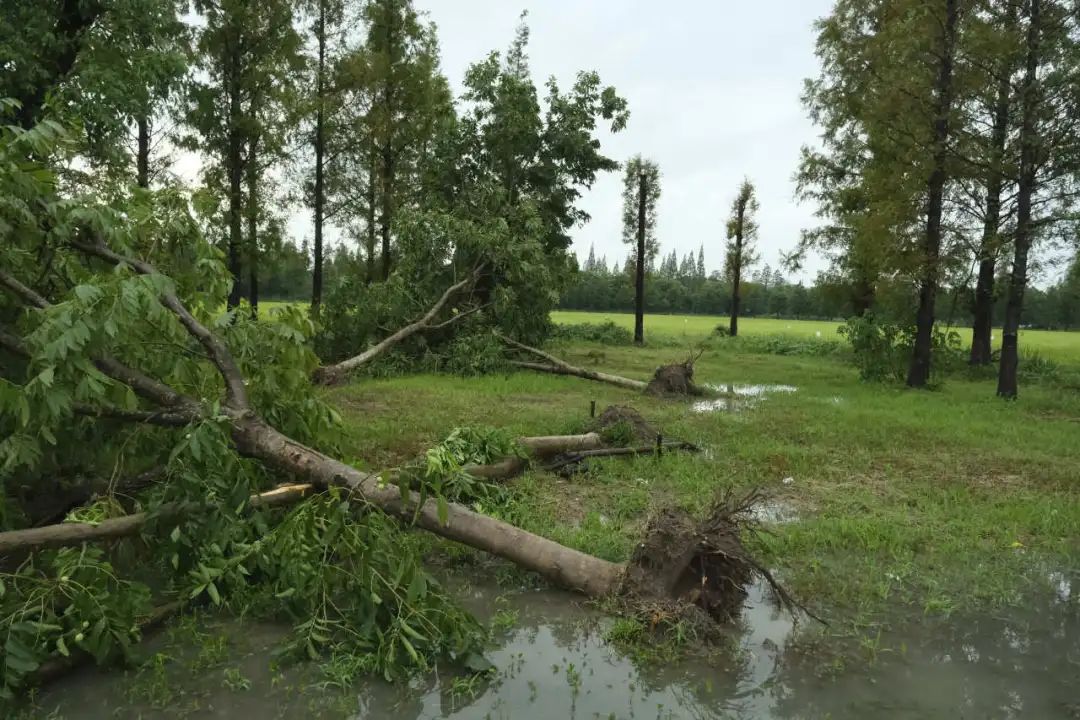
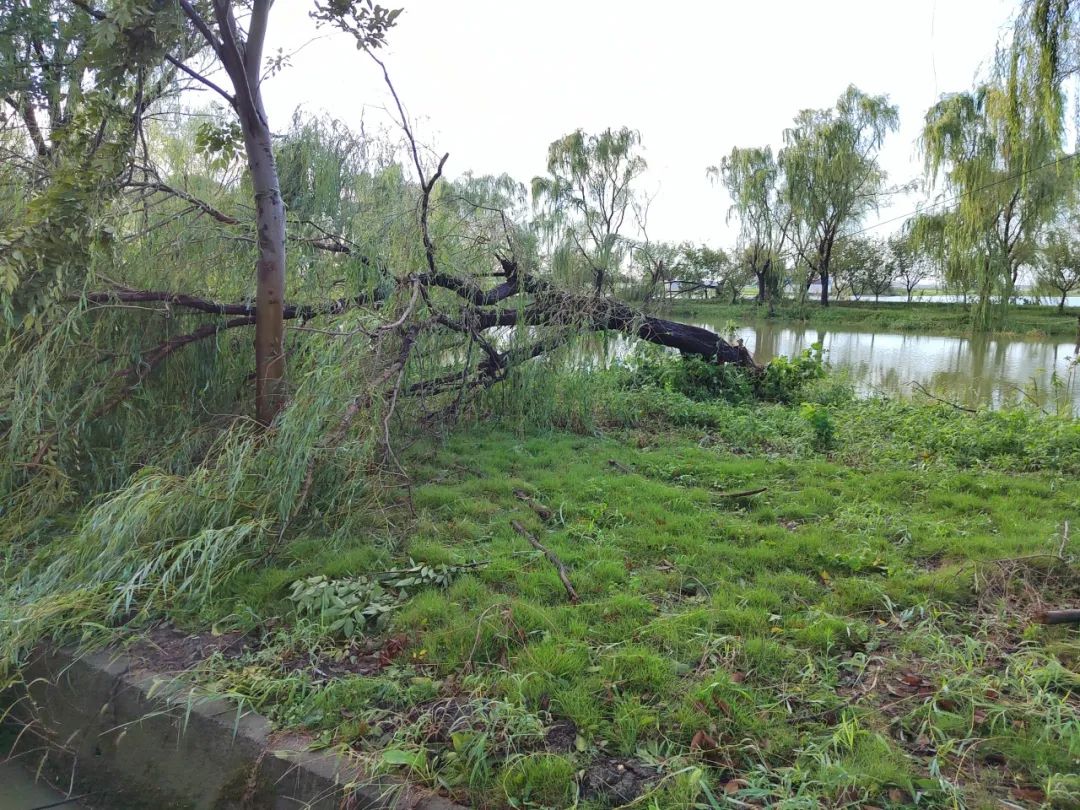
As a comprehensive experiential farm, Yuefengdao has always attracted urban tourists with its beautiful scenery and lush canopy. However, during the typhoons, the trees and infrastructure became the hardest-hit areas: about one-tenth of the trees with a diameter at breast height of 30-40cm were snapped in half, and fallen branches and leaves blocked roads and ditches, requiring significant manpower to clear. Some infrastructure also suffered varying degrees of damage—most notably the brand-new vegetable greenhouses, which cost hundreds of thousands of yuan; steel pipes as thick as a wrist were bent or broken, leaving the entire structure tilted. Repairs will take time, significantly impacting the production of autumn vegetables.
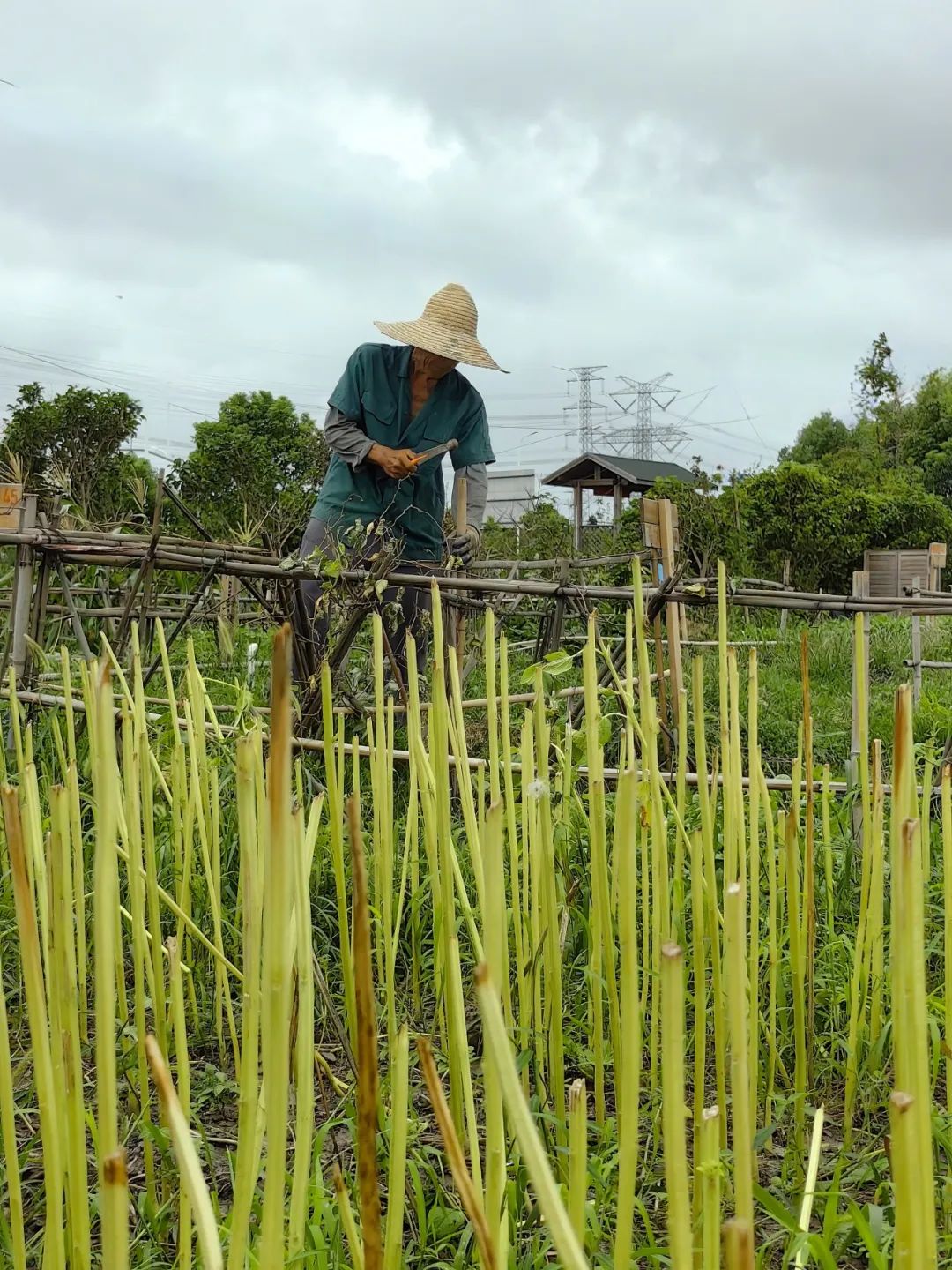
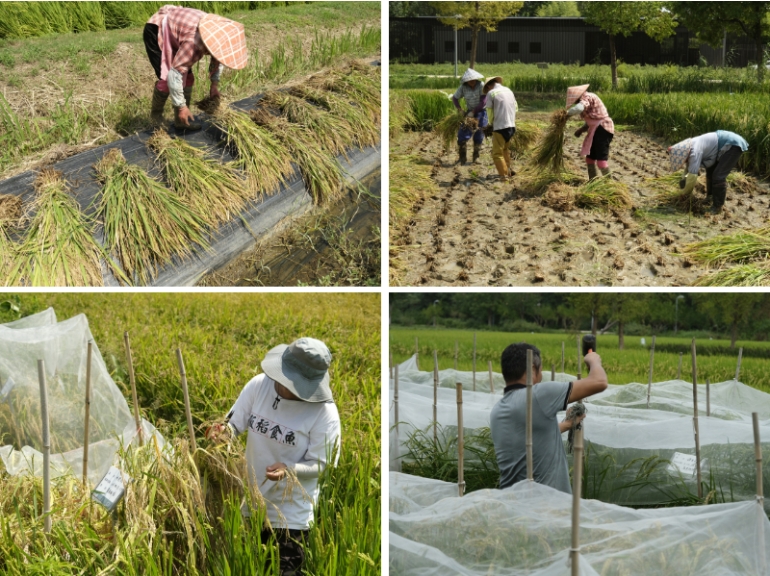
Technical Supervisor ‘Brother Atong’ told me that crop losses were substantial, with maize and cucumbers—both in their harvest season—completely wiped out. Fortunately, the lodging of the rice was not too severe. “Firstly, the rice variety is well-adapted to the local climate. Secondly, the rice is currently in the anthesis and grain-filling stages; once the heads form and become heavy, I expect large-scale lodging. It was a stroke of luck in an otherwise unfortunate situation.”
Yuefengdao also maintains a conservation base for heritage seeds for both dryland and wetland crops, accumulating over two hundred local heirloom varieties since 2021. To Brother Atong, these seeds are his most precious assets. The typhoons caused all the supports for leguminous crops, such as lentils and cowpeas in the dryland plots, to collapse, which may affect the process of seed saving.
III. Suzhou May Field Organic Farm: Agricultural Insurance in Place, but High Volume of Greenhouses Leads to Heavy Losses
To maintain a stable year-round supply of vegetables, the farm has invested heavily in infrastructure. Within an area of 219.85 mu, it has 166 single greenhouses, 6 multi-span greenhouses, and simple facilities for fruit trees.
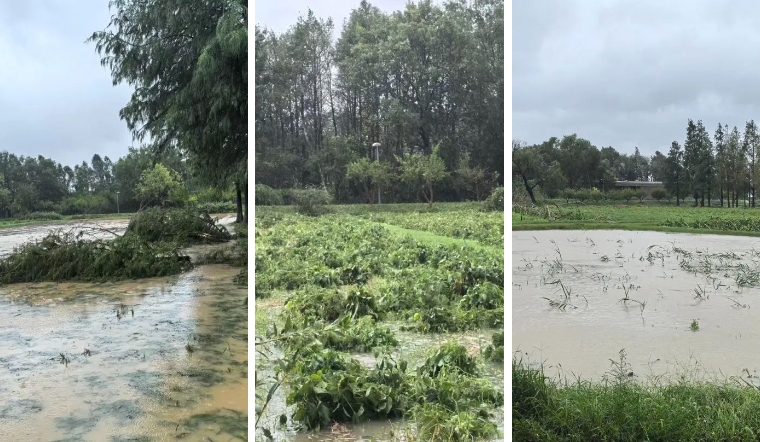
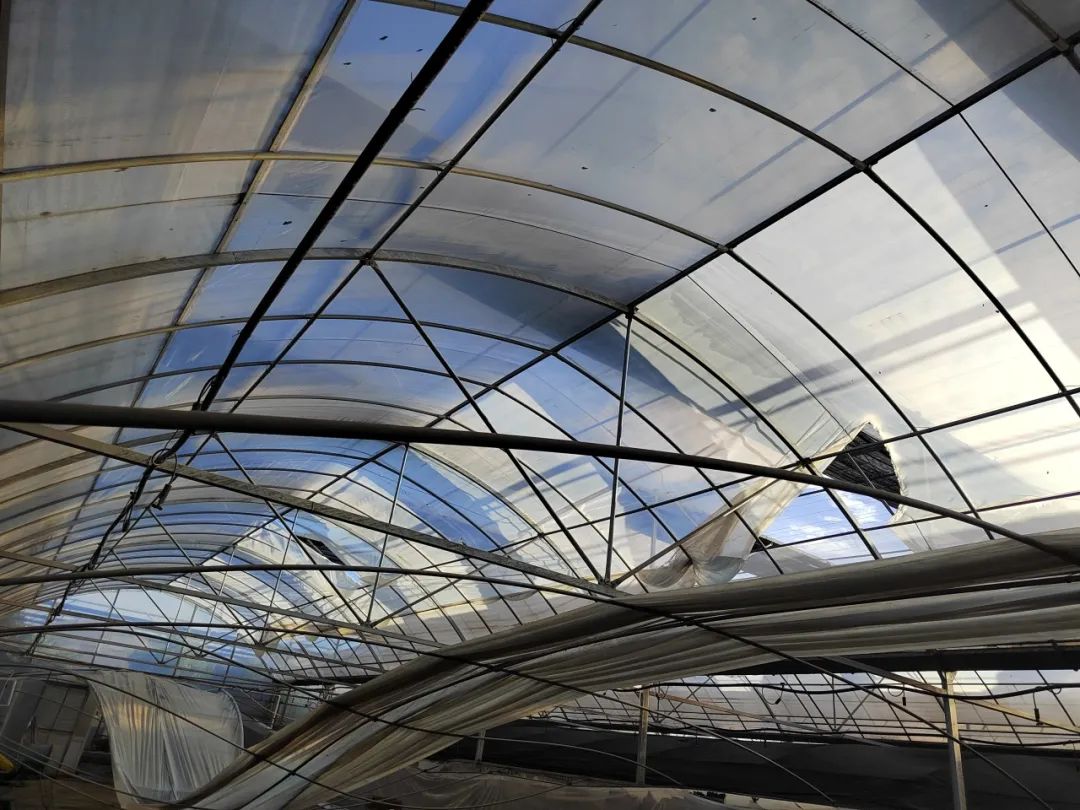
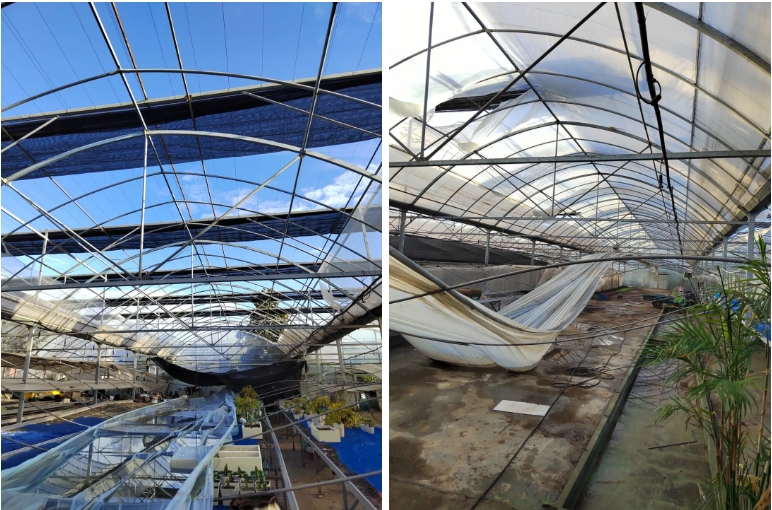
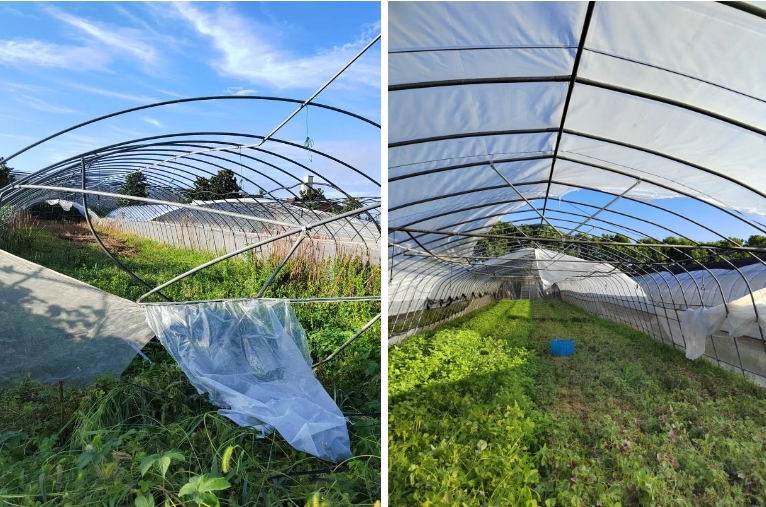
Before the typhoon arrived, the farm took proactive defensive measures: clearing drainage ditches, fixing greenhouse film securing lines, closing doors and windows, and conducting safety training for staff. However, based on photos sent by technician Xiao Shi, the damage to the greenhouses is extensive; many of the roof films were blown away, and the most expensive multi-span greenhouses suffered severe roof damage.
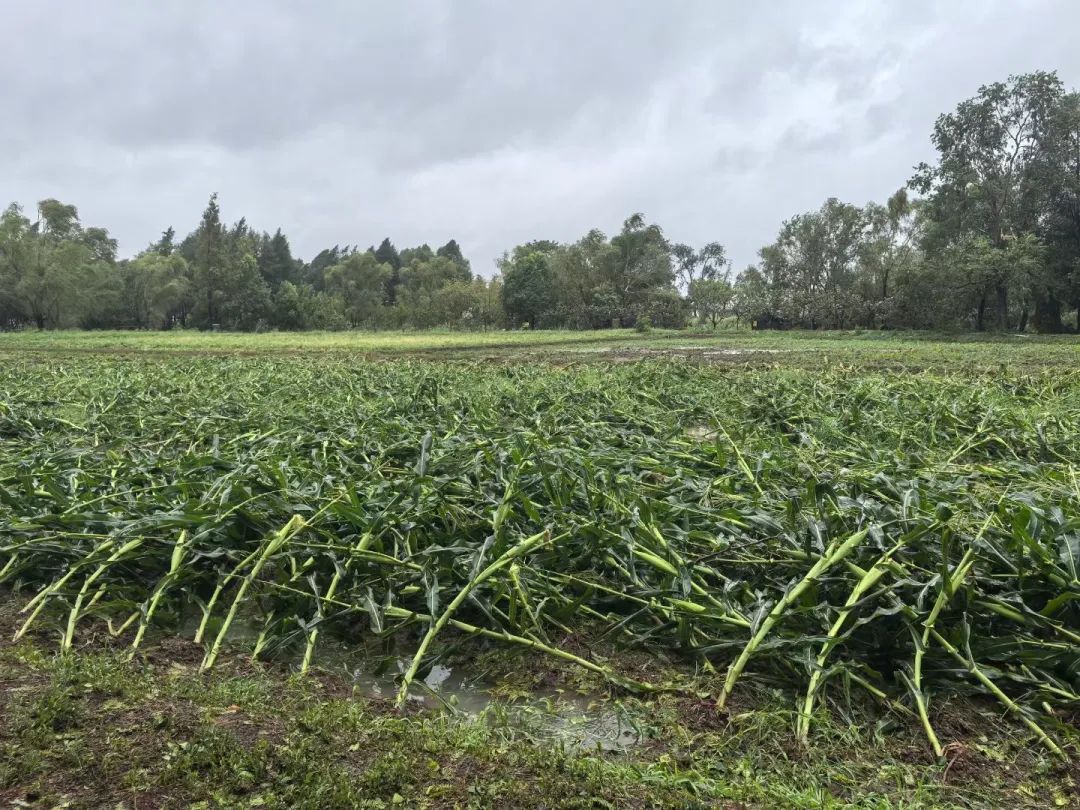
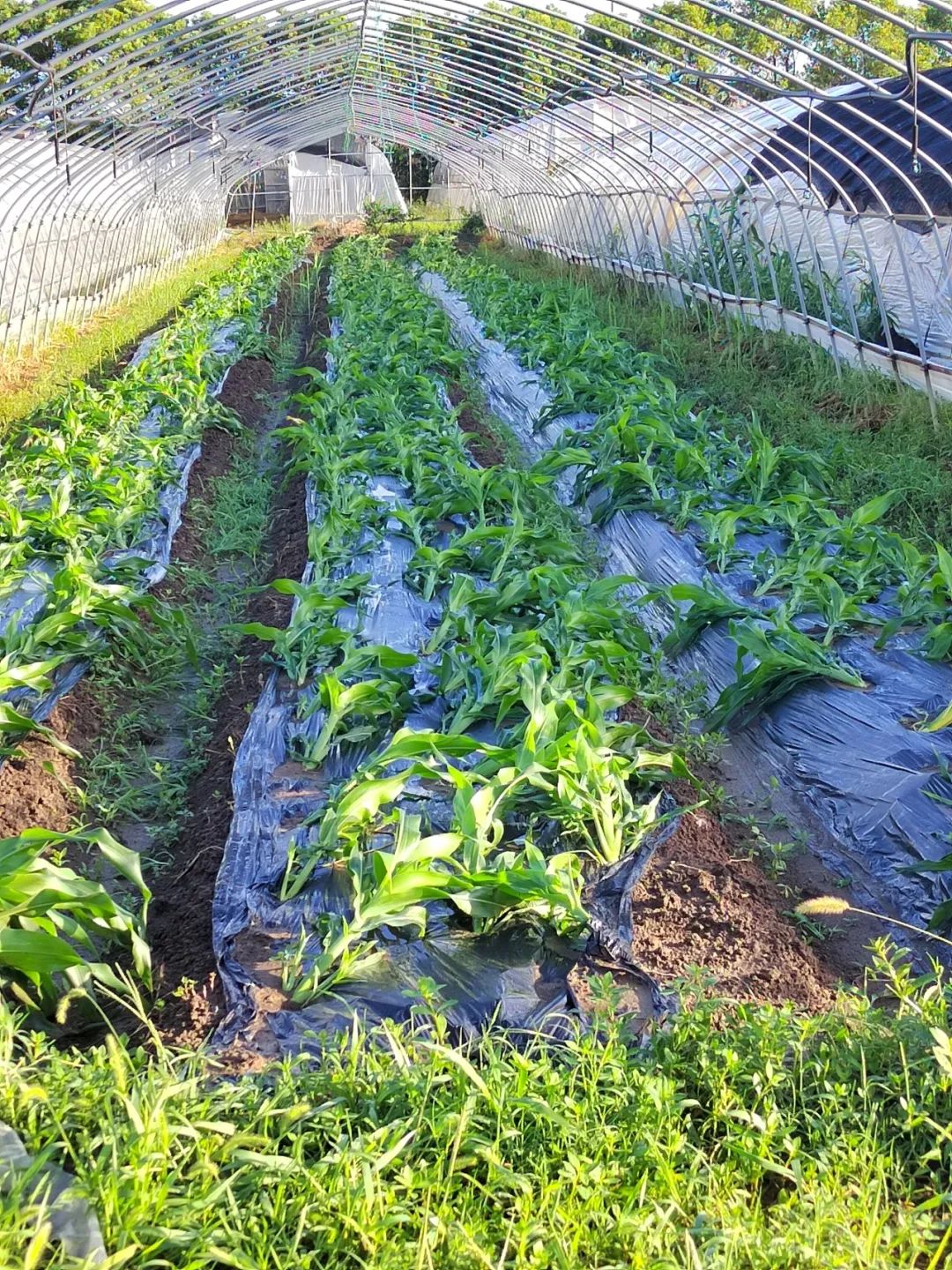
According to farm statistics, after the two typhoons, 65 greenhouse films were destroyed, 15 steel frames were damaged, and over a hundred insect nets were destroyed or torn off. The bird nets over the pear trees were destroyed, and all the maize and okra planted in the open were flattened.
Xiao Shi broke down the costs for me: “The greenhouse films need to be replaced. A 6-metre film for a single greenhouse costs around 600 yuan, with group films at 120, plus accessories like clips, slots, and securing lines. Then there are the insect nets at 200 yuan each, and since over a hundred have come off, they all need replacing. The multi-span greenhouses are even more expensive; the outer film for one section is 6,000, so replacing two sections costs 12,000. In the end, the insurance payout is based on a proportion of our insured value, estimated at around 100,000 yuan. That will only cover the cost of the films, not even counting the 600–900 yuan for labour per unit. With an area this large, we’ve essentially worked for nothing this whole year.”
It is worth mentioning that May Field Organic Farm had purchased agricultural insurance, making it the only farm among the interviewees to do so. Although the insurance provides a partial payout, it remains a drop in the ocean compared to the losses caused by the natural disaster.
IV. Jiaxing Fukangsheng Grain Farm: Resilient Crops, Expert Management
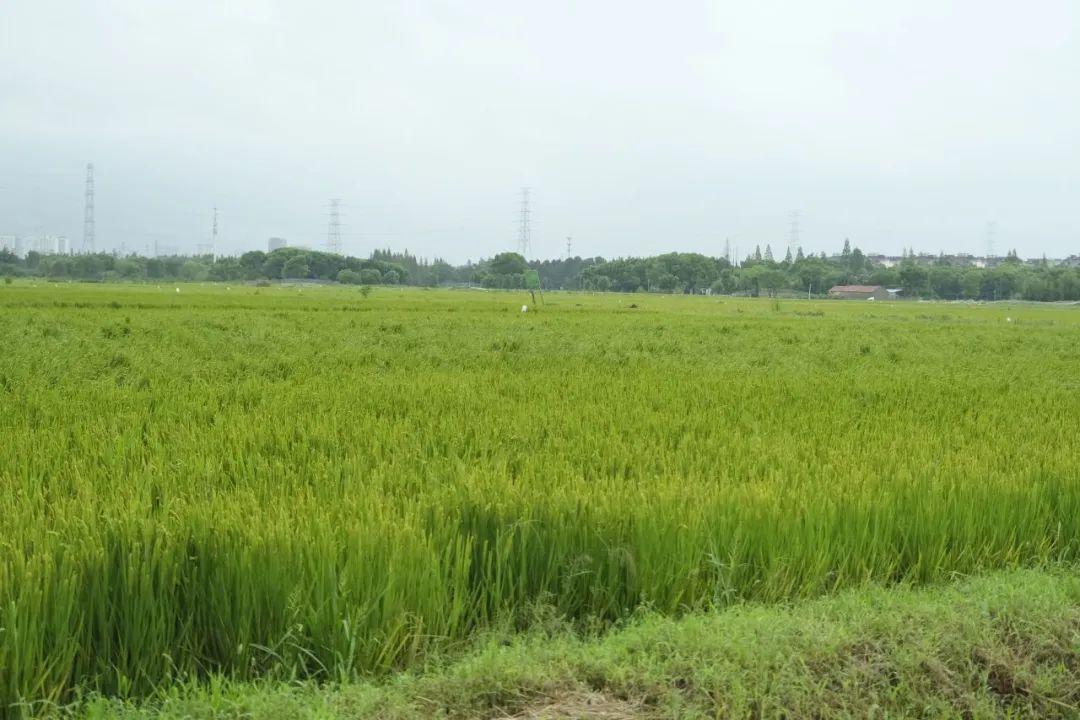
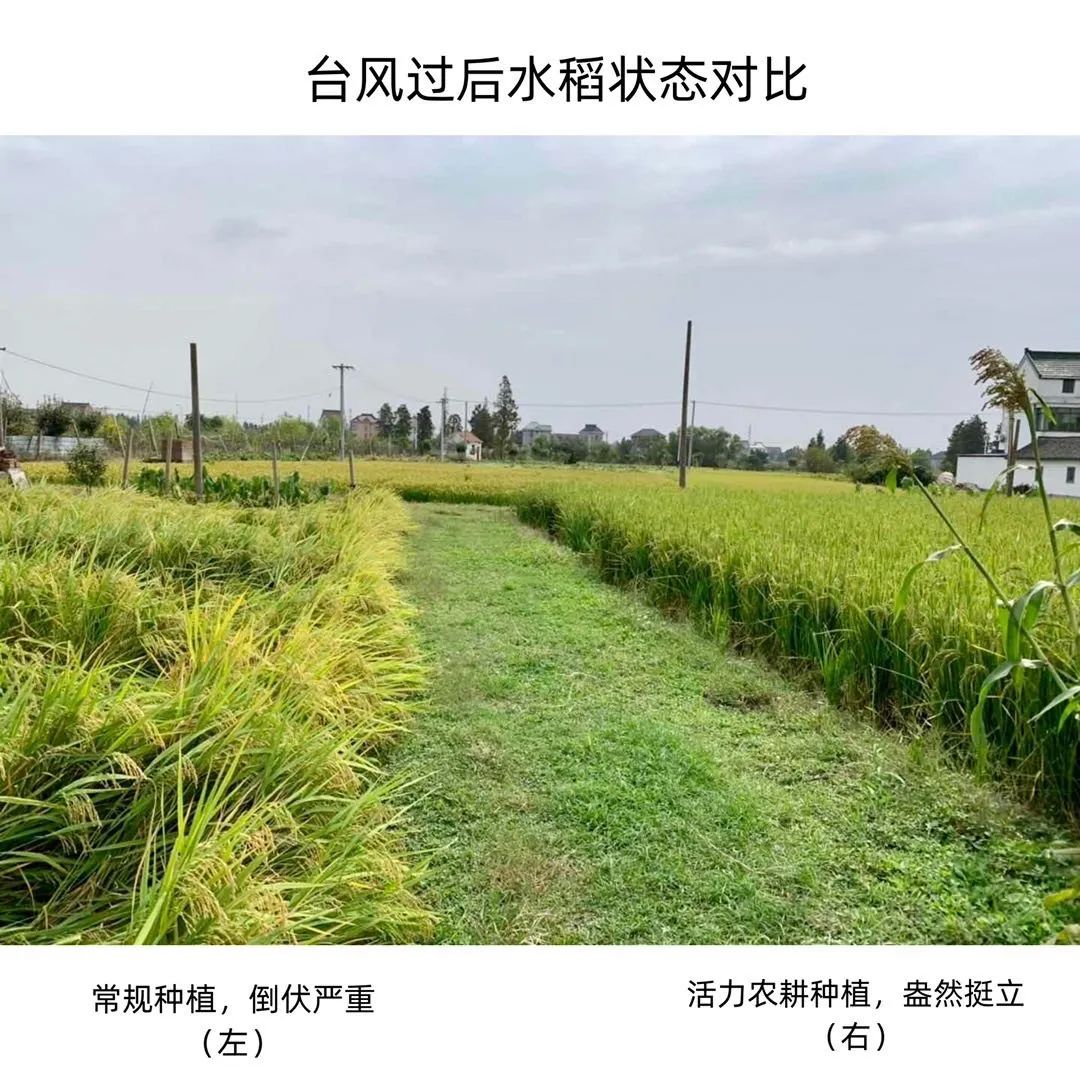
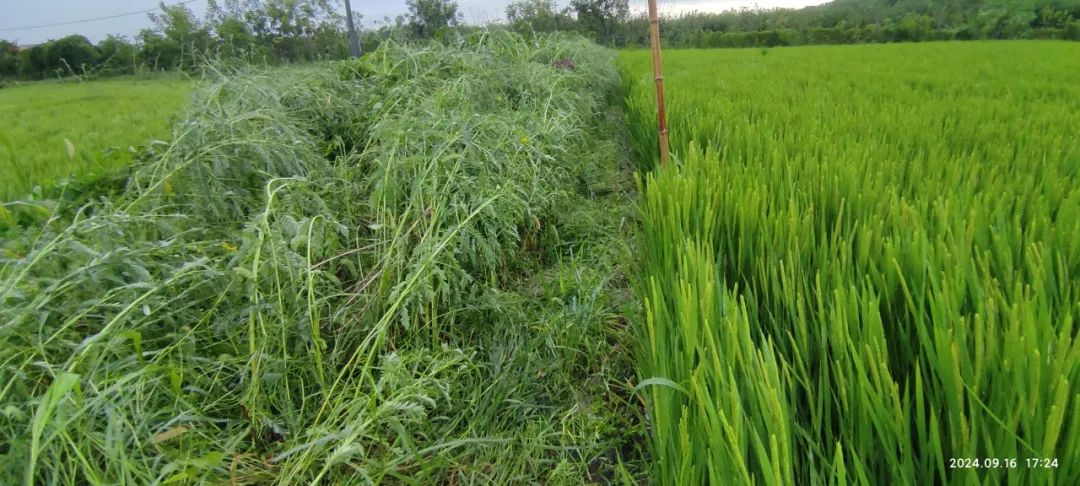
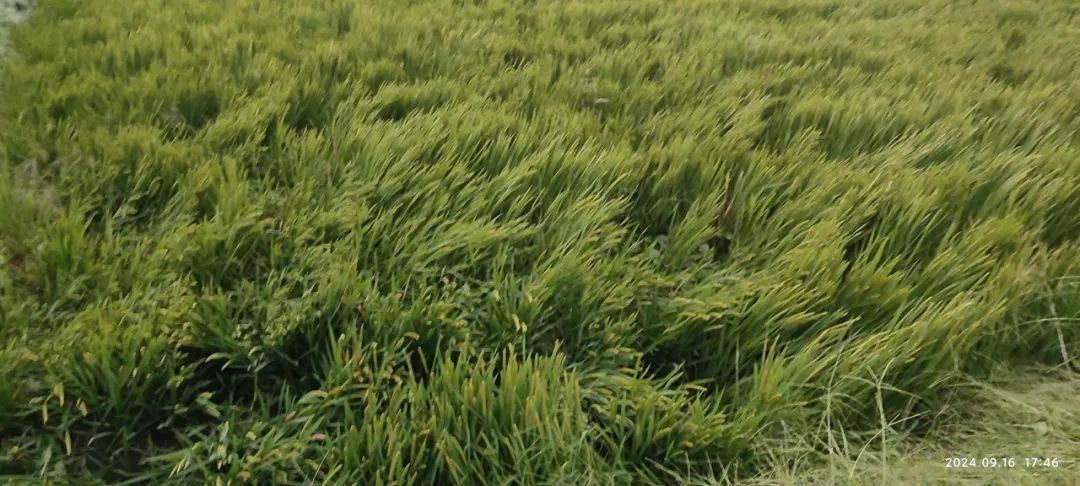
During my visits to the farm over the last two years, both occurred shortly after typhoons. In the fields, the difference between Liu Wei’s rice and the surrounding plots was striking: while the rice on other plots had completely lodged, his remained vibrant, with very little falling over.
Liu Wei explained: “My farming method is based on ‘soil health’. Following the ancient wisdom of ‘treating the disease before it manifests’, I manage the farm by respecting the natural laws of the soil ecosystem and the symbiotic relationship between crops.”
Liu Wei employs biodynamic farming, which focuses on sustainable cultivation through techniques such as crop rotation, the use of green manure, and soil-friendly mechanical operations.
When I asked him to elaborate, he said: “Simply put, when the soil is healthy, the crops can fully absorb nutrients, which strengthens their immunity. The stems become strong and resilient, and the root systems develop deeply, allowing them to effectively withstand typhoons and other natural disasters.”
During the two typhoons last week, Jiaxing was within the zone of force 7 to 9 winds. Rainfall reached heavy to locally torrential levels, with short-term precipitation in the farm’s area exceeding 100mm. Following these consecutive typhoon strikes, I contacted Liu Wei once again.
Liu Wei mentioned that he had never seen such wind and rain: “The rain was so dense it fell in parallel sheets; it was surreal.”
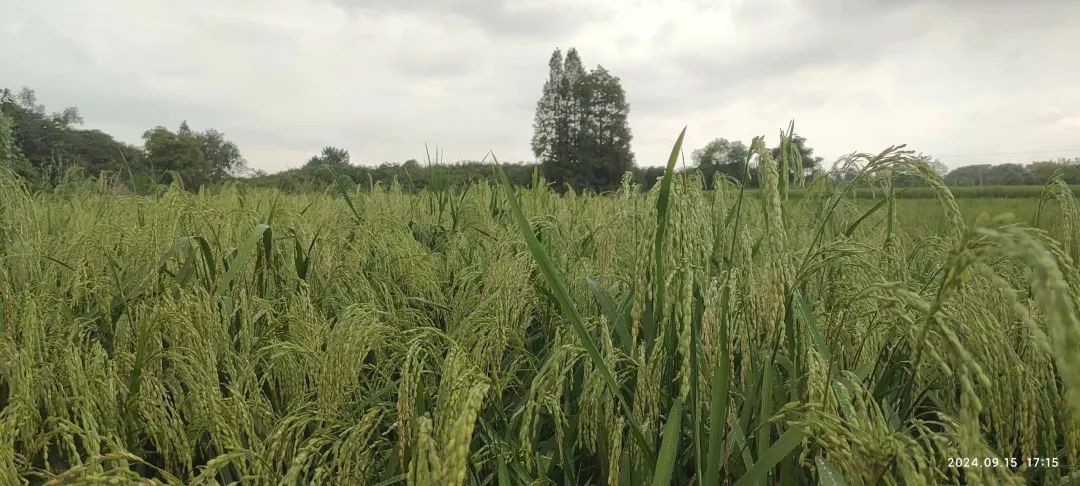
The rice was affected, with a small portion of the harvest lost and some issues with poor pollination during the flowering stage. Fortunately, the losses from lodging were not significant.
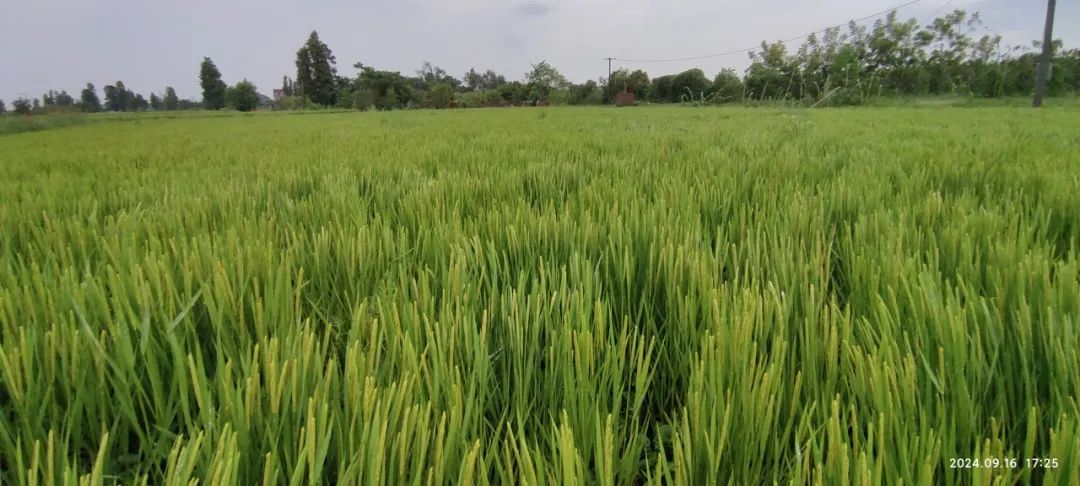
However, the traditional ‘Su Yu Nuo’ variety suffered severe lodging. Liu Wei reflected on three reasons for this: first, seed degeneration, as he had been unable to save seeds last year and had to use seeds from the year before; second, the soil was too fertile, leading to some overgrowth, with stems reaching 1.3 metres; as the crops entered the maturation phase, they became top-heavy and prone to lodging in high winds; and third, water control was inadequate during the pollination phase, as he had failed to adjust the levels according to the actual conditions.
Ever the thinker, Liu Wei concluded: “One shouldn’t blindly pursue soil fertility; instead, management must be adjusted based on the characteristics of the crop and the climate. To simplify management, I have reduced the number of varieties to ten this year. If I had planted dozens of varieties like last year—many of them tall, traditional strains—it would have been a disaster.”
Liu Wei did not purchase agricultural insurance, but he noted that he received early warning notices from the local government. Furthermore, the “Hangjia Hunan Drainage Project” assisted farmers in pumping water from the fields before the storm hit, greatly reducing subsequent waterlogging and inland flooding.
V. Seeing the People of Local Life Amidst Extreme Weather
I live in Kunshan, which was also in the core path of the typhoon. As the storm passed, the entire city dimmed. Violent gusts swept in with waterfall-like rain, and I could feel the entire building shaking. After the typhoon, the building lost both power and water; the government had to mobilise personnel from Northern Jiangsu for emergency electrical repairs. The city was left in shambles, and everyone huddled in their homes, shivering.
Reports stated that two delivery drivers died from electrocution during the storm. Someone in my residents’ group chat lamented: “We thought we were far from disaster, but in an instant, people were gone.”
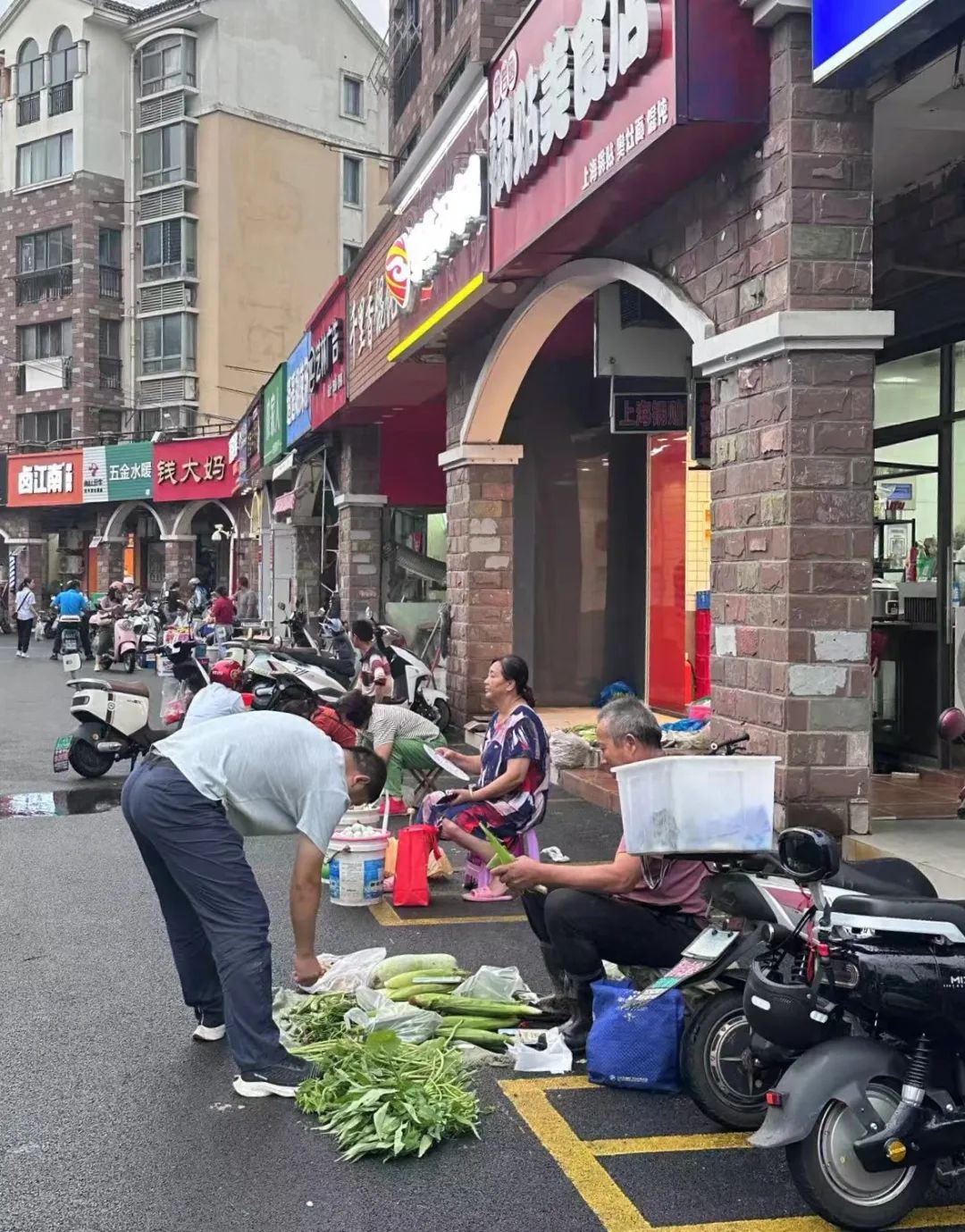
After the typhoon, a few elderly residents were selling vegetables in the commercial street outside my door. One man was selling maize exceptionally cheaply—a large pile for just 10 yuan. I asked him why it was so much cheaper than others. He replied: “I grew this in my own field. The maize was all knocked down by the typhoon. I thought it would be a waste to leave it in the ground, so I harvested it all. The fields were flooded and waterlogged; just give me whatever you can. It’s a natural disaster; there’s nothing we can do.”
People in cities rarely feel what is happening elsewhere. The more convenient our lives become, the further we drift from local life and from the land. Yet, everyone is equal before natural disasters. When an entire region suffers the onslaught of nature’s fury, it provides us with an opportunity for reflection.
Although these interviews are not exhaustive, and some disaster reports from other farms could not be included in time, I hope more people can look beyond the food on their plates to the vast fields, and see what those on the agricultural front line are experiencing. In the face of climate change, the threat of typhoons may increase, but I hope today’s experiences can provide valuable lessons for the future.

A metaphysics enthusiast focused on climate and agricultural issues, seeking unity between heaven, earth, and the self.
Editor: Wang Hao
This interview was supported by the ‘Linglong Project’ of Friends of Nature