
A Tribute to a Firefly | Grandma Kouzi
I. My Story with Fireflies
I was “firefly-ed”—passively whisked away to Ren’ai Township, a renowned firefly sanctuary. At first, I didn’t understand why it was essential to stay in a village guesthouse. It was originally a visit arranged for a conference, but the accommodation was self-funded. It was a bit pricey for me; if I’d had a choice, and it weren’t for the inconvenient transport and a bit of social awkwardness, I would have opted out.
At nightfall, I followed the crowd out of the village, not quite knowing what was happening. Once we turned onto a narrow lane, the streetlights vanished. The path grew narrower, flanked by ditches thick with long, lush grass, where tiny specks of fireflies began to appear. Having never seen such a sight, I, as a Northerner, couldn’t help but cry out in amazement. Everyone else was much the same, regardless of whether they were from the south or north, whether they had seen fireflies before, or even if they had known about the itinerary.
As we pressed on, nearing the mountain forests, the road grew narrower, the foliage denser, and the air more humid. The fireflies grew more numerous until we reached the edge of the woods, where I was stunned by the surging tide of them—tens of thousands, perhaps even more, rolling and surging like waves. If one stood perfectly still, they could be completely enveloped by them.
I, and everyone around me, fell silent—the shock was so absolute that words simply failed us.
A firefly’s life, after a long period of dormancy, lasts only three to seven days as a dancing, glowing adult. I was fortunate enough to encounter thousands of them in those fleeting moments.
Early the next morning, I returned to the foot of that mountain alone. Not for the sea of floating lights, but to express my gratitude and bid a quiet farewell to the place that had birthed such a breathtaking spectacle. It was a rare encounter in life, one that would not happen again.
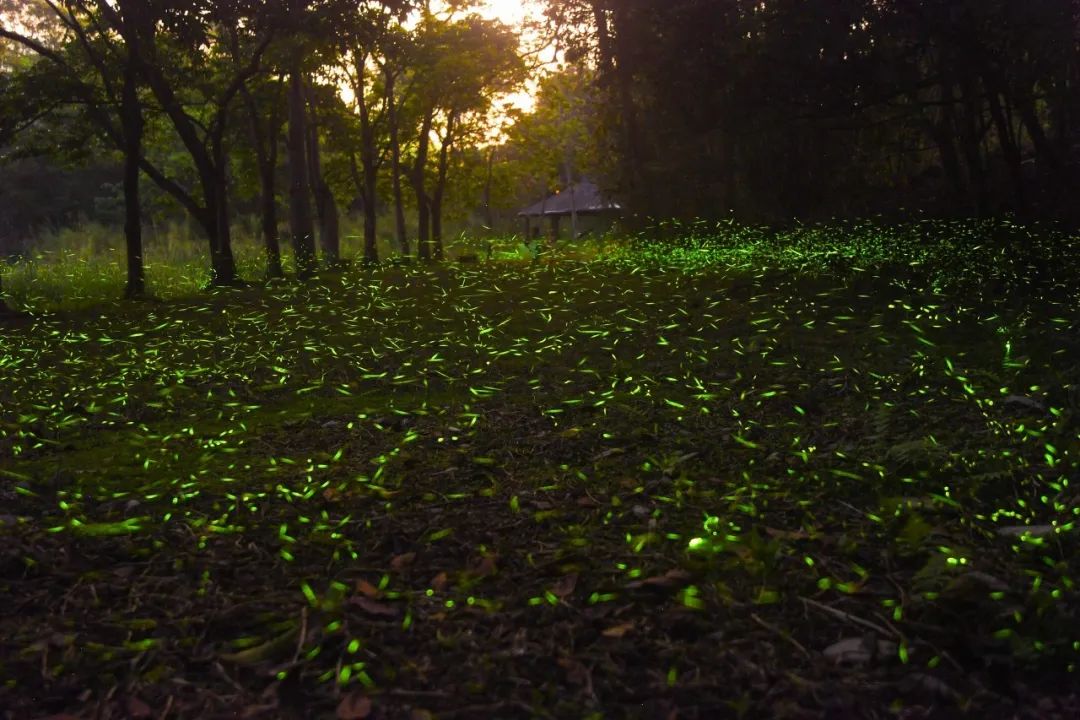
Halfway through, the leader stopped and asked everyone to switch off their headlamps. In the pitch-black rainy night, hundreds of tiny specks of light drifted. A troop of city dwellers, night-walkers, stood in silence in the rain for a long time.
During my two years farming in Yilan, I walked through the nocturnal countryside countless times. In early summer, I would even specifically seek out damp, water-logged areas of weeds and reeds, hoping for a “chance encounter” with the lights, but to no avail. My fellow farmers told me that fireflies are extremely particular about their environment; the few famous firefly-watching spots in Taiwan are the result of long-term ecological restoration. One would think that Shengou Village in Yilan, which hosts one of Taiwan’s largest communities of smallholders practising friendly farming, would be enough, but for the fireflies, it seemed it still wasn’t.
Fireflies are sensitive not only to chemical fertilisers and pesticides, but also to human activity. They retreat when humans approach; you won’t find them where people are densely packed. The poet Du Mu wrote, “A small silk fan brushes the drifting fireflies”—that garden must have been vast and sufficiently far from the crowds.
Three years ago, I finally acquired “Villain’s Valley”. There are no streetlights on the village roads; while others might find this a regret, I am glad to be far from light pollution. On quiet nights, sitting alone without a lamp, I feel as though I am the only soul between heaven and earth. When a few drifting fireflies flicker in early summer, I feel a profound sense of gratitude—this already exceeds all my expectations for this piece of land.
II.The Tale of Guarding Against the “Yellow Melon-Guard”
In the first year, heaven granted my zen wish: there was indeed nothing to harvest. In the second year, after sowing, I couldn’t even see any gourd or bean shoots. As an “experienced old farmer”, I couldn’t help but wonder: where on earth had all those seeds gone?
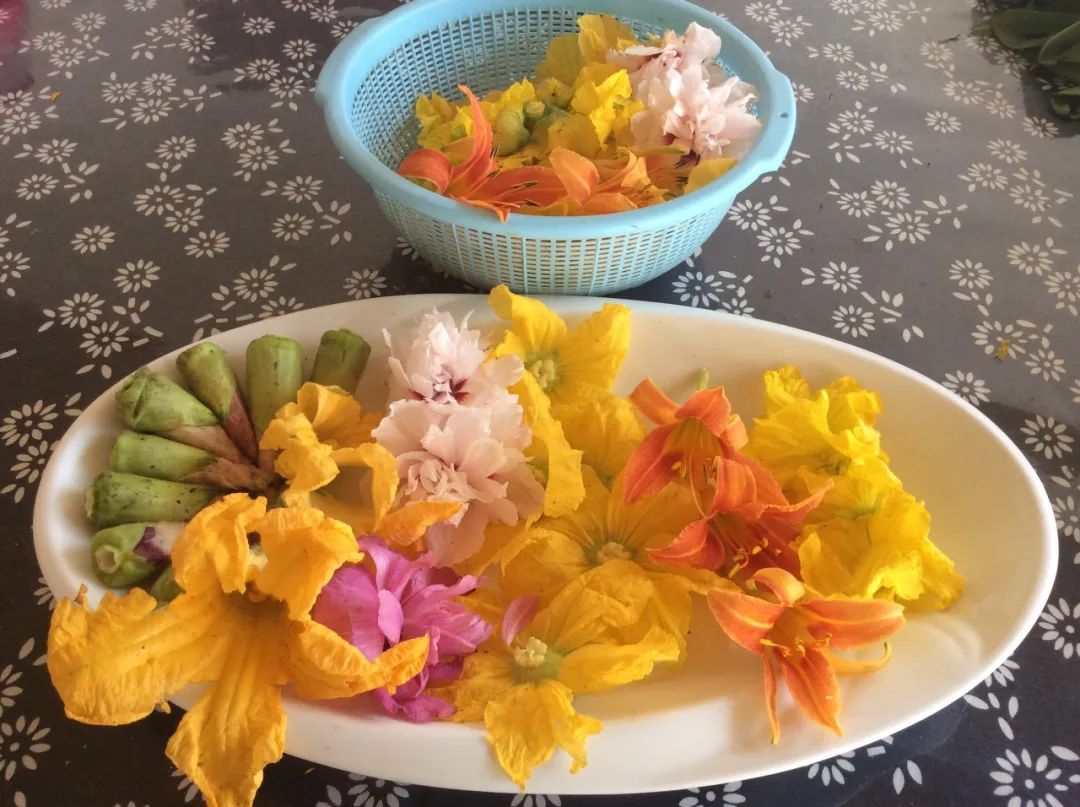
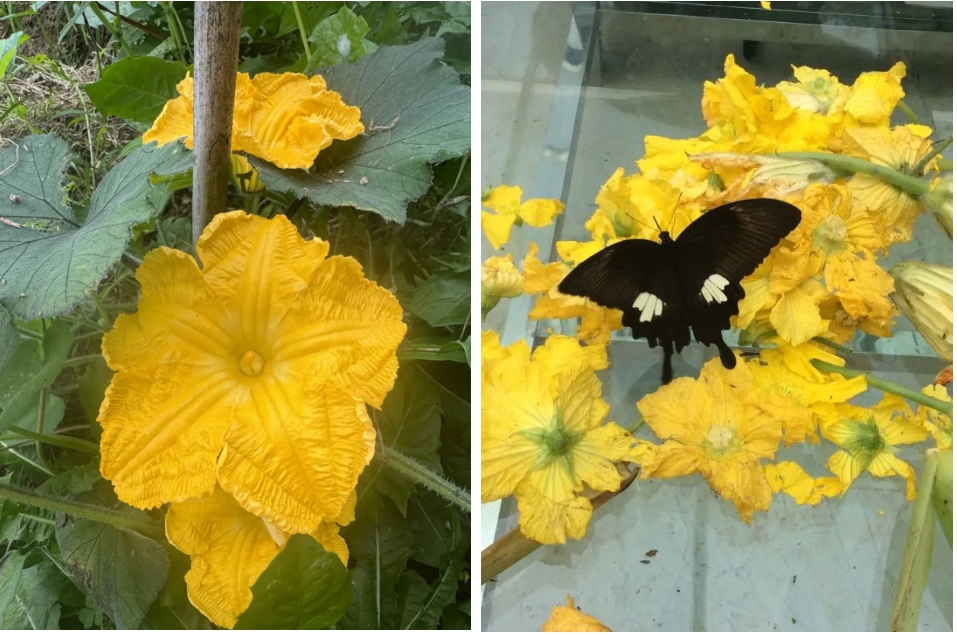
This year marked the third spring. Having learned my lessons from the previous two years, I knew I could no longer afford to be so “zen”. From the very start of spring, I made a clear plan. I treated the early spring planting with great care, setting up trellises for the climbers and assigning specific spots for the gourds and beans in the peripheral patches. I love pumpkins, so I saved seeds from every delicious variety last year, sorting them into packet after packet. In total, I had over half a kilogram of seeds. Anyone who saw them would laugh and tell me: with this many seeds, you could plant several acres.
Rainfall was plentiful this spring, and the seeds sprouted shortly after planting. While patrolling the fields and seeing the various sprouts emerging, I even began to worry: “What will I do if I can’t eat them all?” But the good news didn’t last long. Just like the previous two years, the various gourd and bean shoots “vanished”. Upon closer inspection, I discovered they had been eaten clean—not gradually, but wiped out entirely in a very short space of time.
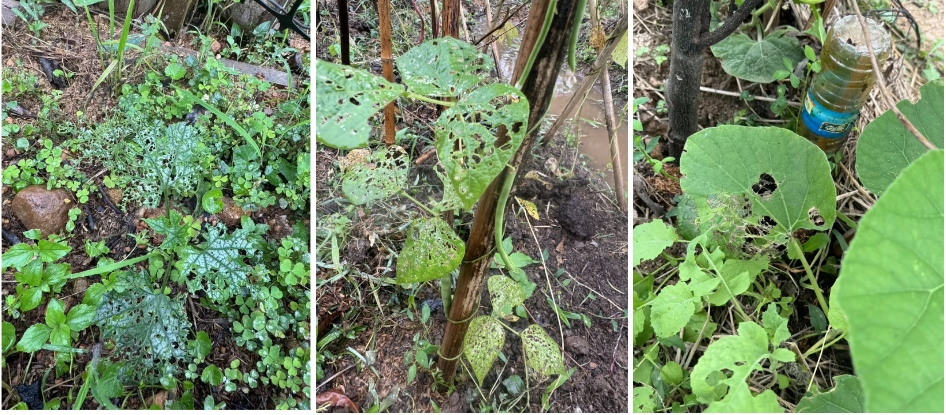
I had plenty of seeds, so I planted a second round. After all this fuss, twenty-odd days had passed, and it was already late March. This time, I intentionally buried extra seeds in each hole, thinking: if I plant this many, surely a few must survive. To my dismay, once they sprouted, they were wiped out again.
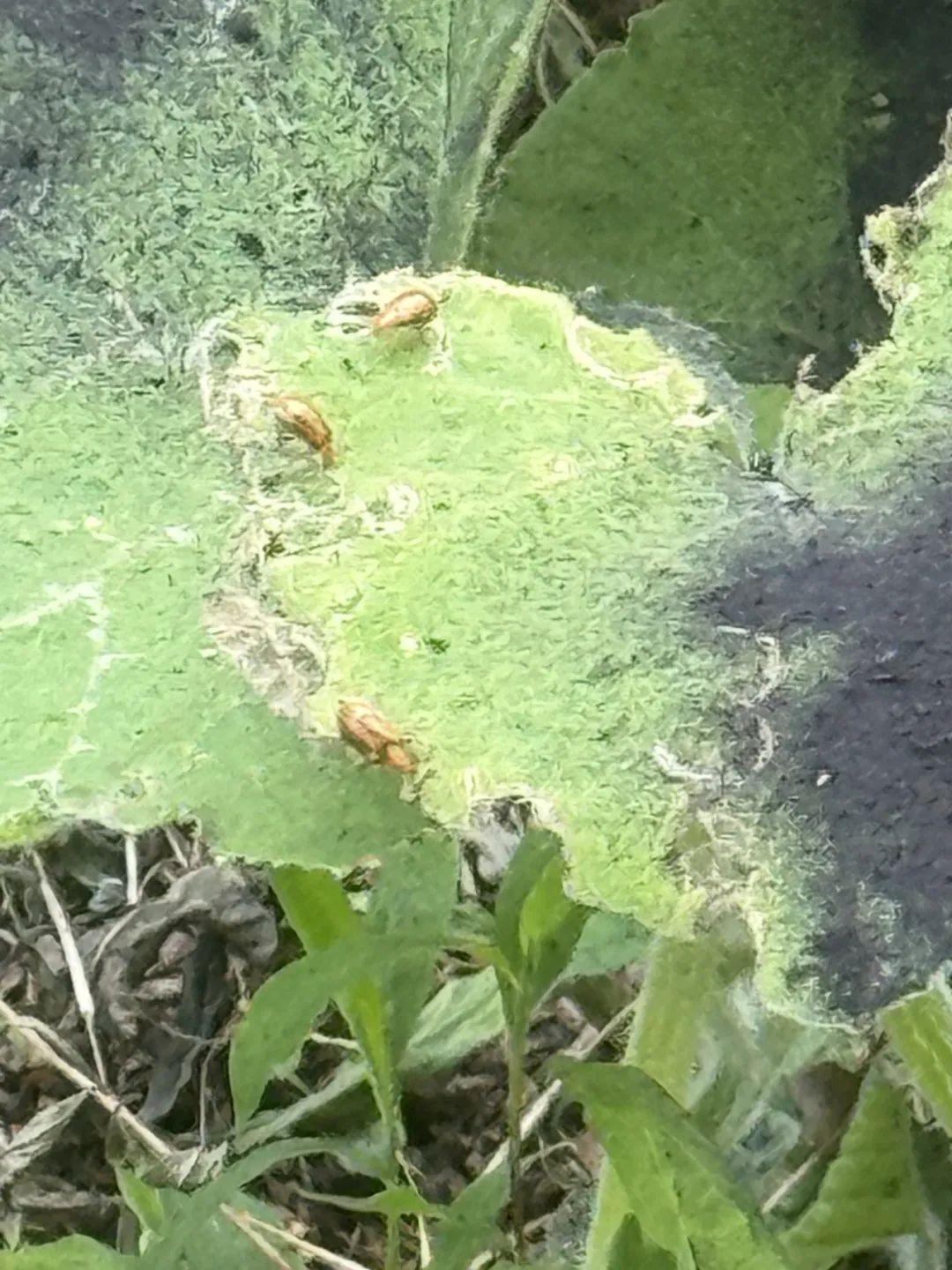
The tender shoots were devoured by a swarm of yellow flying insects. I don’t have any actual photos—partly because the insects are very alert and hard to photograph, and partly because I hated them so much that the moment I saw one, I squashed it, forgetting entirely to take a picture.
By the third round of sowing in April, I had searched online and discovered that these insects are called yellow cucumber beetles. The name itself sounds daunting: these wicked yellow beetles just sit there, lurking, waiting for my gourds to sprout.
I heard that wood ash was effective, so as soon as the seeds broke the surface, I gave my tender shoots a heavy “smoky eye” look of ash. It was useless. This blurry image shows a yellow cucumber beetle munching away on a leaf clad in wood ash.
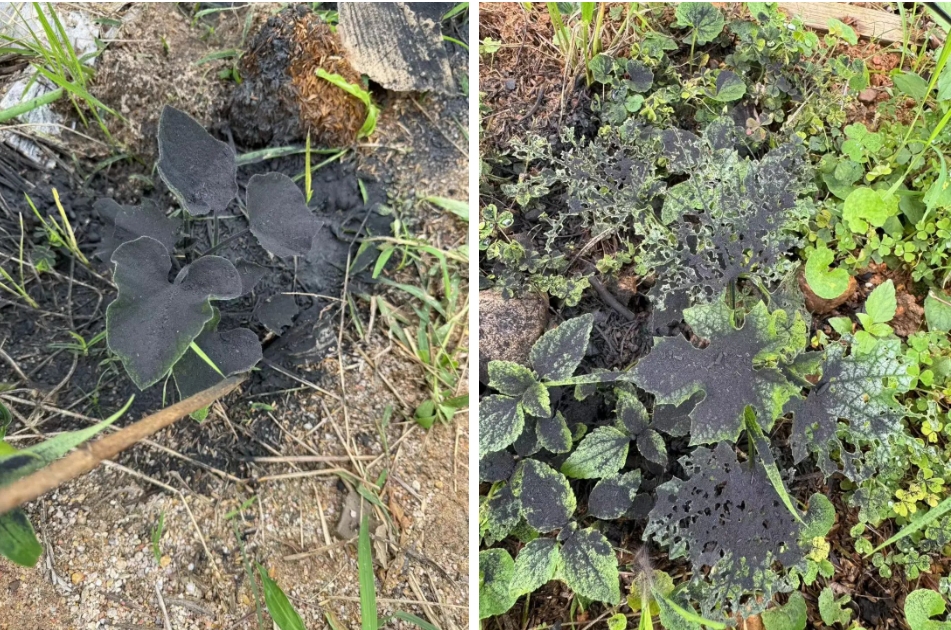
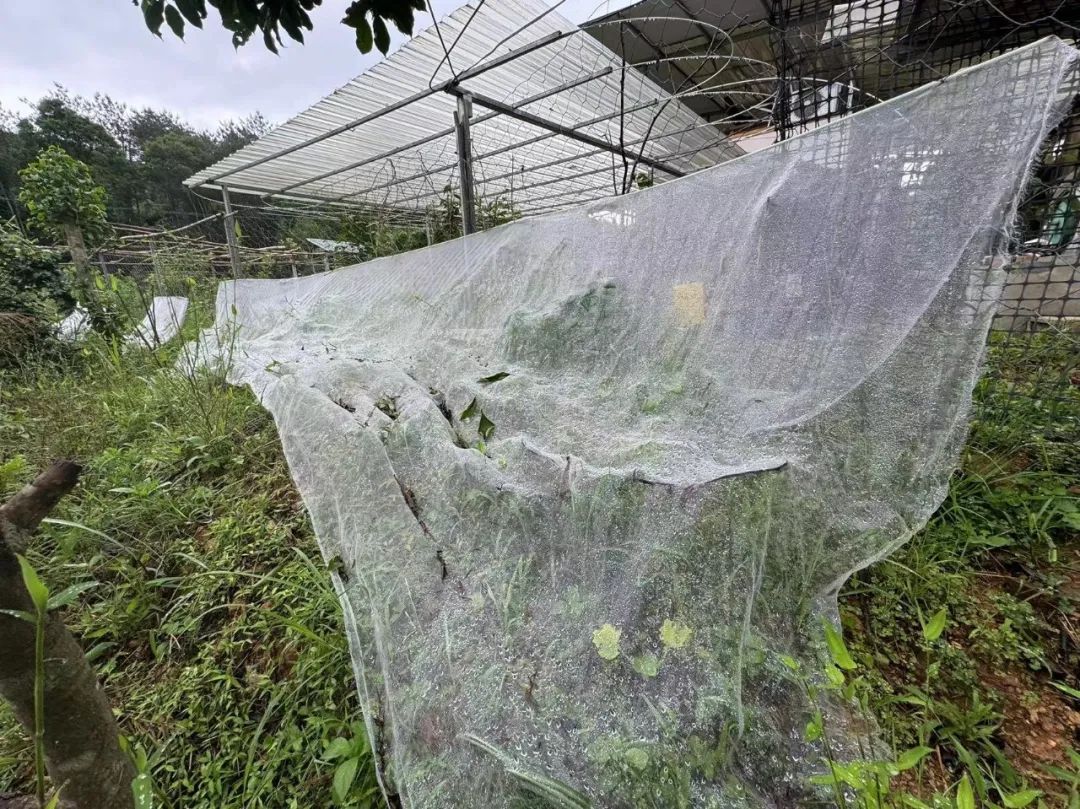
Before I knew it, early spring had turned into early summer. After these three rounds of struggle, the half-kilogram of pumpkin seeds I’d stored had all vanished into the soil. I sought help from local friends and managed to get another half-kilogram of seeds to keep trying. This time, I stopped relying on luck and bought mesh, erecting insect nets around the gourd seedlings. The survival rate of the shoots inside the nets was indeed higher, but then came the wilting.
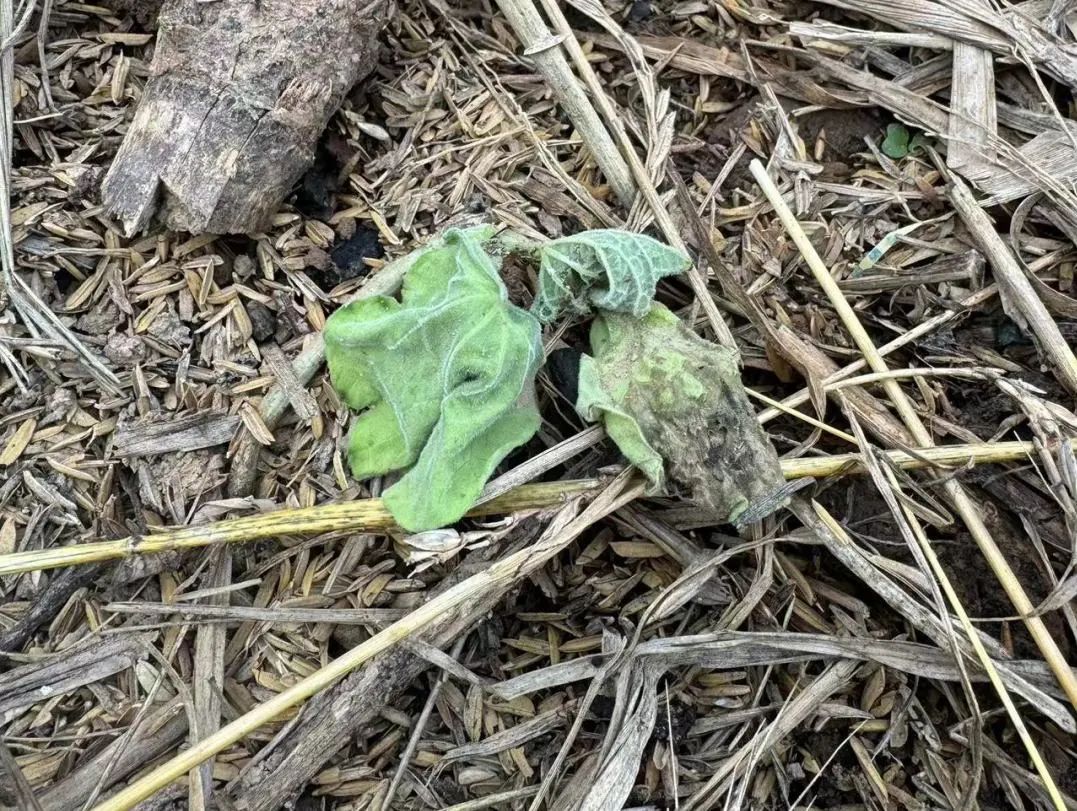
Steeling myself, I delved deep into the history of the yellow cucumber beetle and learned that they “infest various gourds, with watermelons, pumpkins, muskmelons, and cucumbers being the worst affected, but they also attack crucifers, solanaceous plants, legumes, sunflowers, citrus, peaches, pears, apples, buckthorns, mulberries, and more…” This isn’t a ‘cucumber beetle’—it’s a ‘Yellow Guard-Me’ beetle. Knowing I don’t use pesticides, it specifically guards my little plot, munching on everything I plant.
Even more terrifying is that both the adults and larvae are pests: the adults love gourd leaves and petals, while the larvae stay underground to feed exclusively on the roots. I plant everything, and it turns out everything I plant is part of an all-you-can-eat buffet for the yellow cucumber beetle; it truly counters me in every possible way. And their active period is long enough to make me break down in tears in Evil Valley: they overwinter in my field, emerging from hibernation in early spring at 6–10°C, just in time for the first spring sowing. They can run riot in my field. In a warm region like Fujian, apart from a brief hibernation, they can produce two to three generations a year, with adults and larvae taking turns to plague me all year round…
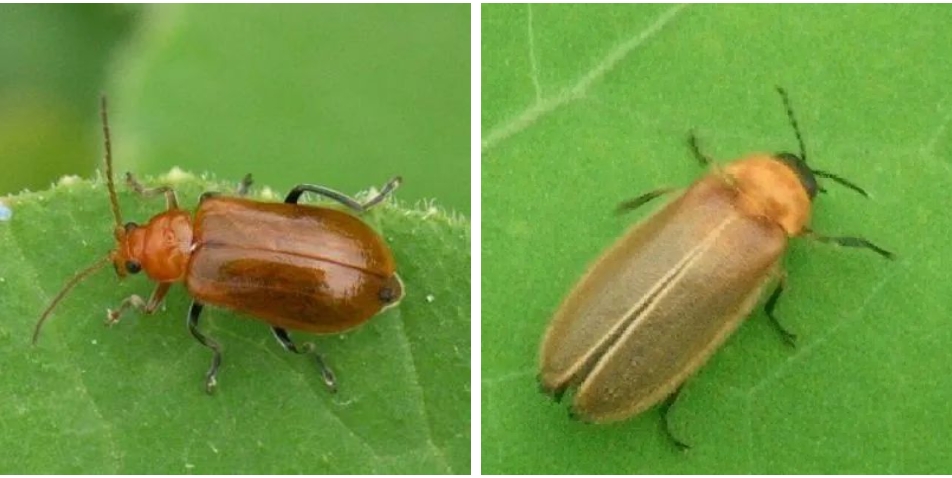
When I complained to my local friends, I heard that some people also call them “fireflies”. That one casual remark shattered my worldview. A quick search online revealed that the yellow cucumber beetle is also known as the yellow-legged cucumber beetle, and colloquially as ‘yellow-ying’ or ‘gourd-ying’.
I assumed that ‘ying’ meant firefly.
Suddenly, the fireflies of the night were no longer enchanting—they were no longer floating fairies, but clearly malevolent ghost-fire. Last night, returning from a swim, I saw a flickering light in the grass near the quail coop. I rushed over and stomped it immediately. The firefly stopped moving, but there was still a faint glow, so I stomped again, and again, and again…
I am writing this short piece now because, after carefully researching the yellow cucumber beetle and consulting a friend who is a local “walking encyclopaedia”, I have learned that this ‘ying’ is not that ‘ying’. Locals call the yellow cucumber beetle a ‘firefly’ simply because they look similar; in reality, yellow cucumber beetles cannot produce light at all. As for actual fireflies, they are not only the legendary fairies of light but also beneficial insects that, in their larval stage, feed on pests like apple snails and garden snails.
Alas, I am sorry, fireflies. I was wrong.
I dedicate this text to mourn and to apologise. How tragic!


Unless otherwise noted, all illustrations in this article are by the author
Editor: Wang Hao