
Fighting for farmers’ right to sell dry goods: our proposed amendments
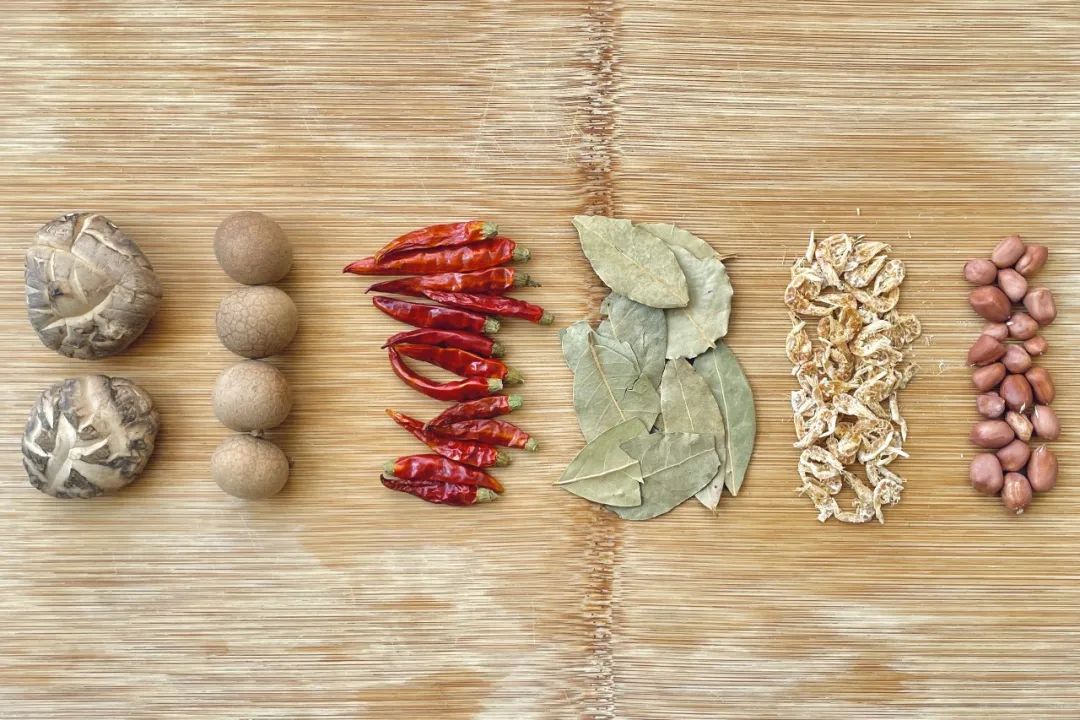
Last week, Foodthink’s focus on the proposed revisions to the Administrative Measures for the Supervision and Management of Quality and Safety of Edible Agricultural Products in Market Sales sparked significant interest among our readers. The removal of “drying” from the definition of “edible agricultural products” suggests that farmers who produce and sell their own dried vegetables, fruits, or fish may soon face legal penalties.
Before the public consultation deadline of 4 June, Foodthink joined forces with concerned readers, farmers, experts, businesses, media outlets, and non-profit organisations to submit a formal set of recommendations. We believe it is crucial to legally safeguard the right of smallholders to produce and sell dried goods without needing a formal food production licence, and we strongly urge the State Administration for Market Regulation to retain the term “drying” in the revised measures.
Over the past ten days, through discussions with farmers, consumers and experts, we have come to realise that regardless of the outcome of these legislative suggestions, the gradual erosion of smallholders’ production rights has been an underlying theme in the transformation of rural China and its agriculture over the last forty years. It is a hidden obstacle to the success of “Rural Revitalisation”, and the current issue surrounding dried goods is merely the tip of the iceberg.
Therefore, submitting these recommendations is not the end of the journey.
First and foremost, we hope that the public and the relevant authorities gain a deeper understanding of the predicament facing farmers. Fostering a discussion on this basis will help build a consensus among consumers, regulators and legislators on the need to protect farmers’ rights and interests.
In last Thursday’s article, we gathered a range of perspectives from fellow farmers. Recently, mainstream media outlets such as *The Beijing News* and *Jiemian* have also published pieces discussing the potential impact of these revisions on farmers. This increased attention suggests that our appeals are beginning to have an effect. In the next stage, we will provide further responses to some of the viewpoints raised.
Secondly, we recognise that drying is only a small part of a much larger problem. In reality, almost any form of primary processing carried out by farmers without a food production licence places them on the fringes of legality. In practice, whether a processed product is deemed legal depends entirely on the ruling of local market regulatory authorities (formerly the Food and Drug Administration), or can even be subject to the whims of “professional complainers” who manipulate the law for profit. The same product may be legally produced and circulated in one region, only to face heavy fines in another. If dried chillies are prohibited today, what of chilli powder, dried longan, goji berries or Sichuan pepper? If the current trend of regulatory revision continues, the leeway afforded to farmers will only continue to shrink. This is a trend that many smallholders and sales platforms have already felt over the past few years.
While it is not impossible for individual farmers to fight their own battles with enforcement agencies to protect their interests, for many, facing regulatory pressure alone and wading through mountains of legal text is an almost insurmountable task.
- What legal and policy restrictions have you encountered while engaging in the simple processing and sale of agricultural products?
- How much cost and effort have you expended (or might you need to expend) to comply with relevant laws and regulations?
- Which channels are currently available for your processed goods? Have you encountered any obstacles in selling them?
- Which requirements from the market regulatory authorities do you consider reasonable, and which do you find unnecessary?
- In terms of both legislation and enforcement, how should the market regulatory authorities act to better adapt to the reality of farming?
As consumers, farmers, sellers, farmers’ cooperatives, and public interest organisations concerned with agricultural development and the interests of farmers, we wish to express our concerns and offer suggestions regarding the proposed removal of ‘drying’ as a standard for edible agricultural products in the recently released *Measures for the Supervision and Administration of Quality and Safety of Edible Agricultural Products in Market Sales (Draft for Comment)*.
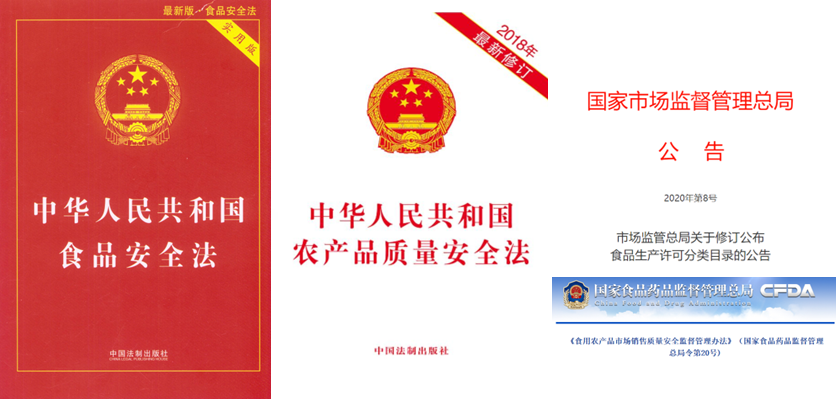
We note that the *Draft for Comment* removes ‘drying’ as a processing method from the definition of ‘edible agricultural products’. This implies that dried agricultural products will no longer be classified as such. Consequently, pursuant to Article 35 of the *Food Safety Law*, the production of all dried products would henceforth require a corresponding food production licence.
In practice, as the *Classification Catalogue for Food Production Licences* includes categories such as dried vegetables, dried fruit, and dried aquatic products, enforcement agencies have frequently viewed the sale of dried agricultural products processed by small-scale producers without a food production licence as an illegal act, issuing penalties under Article 122 of the *Food Safety Law*.
Once drying is formally removed from the definition of edible agricultural products, producers will lose their final legal basis for appealing decisions regarding home-processed dried agricultural products.
The reality of China’s agriculture is characterised by a vast number of small-scale farmers. Beyond those capable of obtaining food production licences, the production of dried goods involves a huge number of ordinary farmers, family farms, and farmers’ professional cooperatives. Many of these entities lack the scale and financial resources to apply for such licences. This change will directly impact a wide range of agricultural producers, particularly smallholders who rely on dried products as their primary livelihood; effectively, it excludes them from the drying and processing stage.
We believe it is crucial to legally guarantee the right of smallholders to produce and sell dried products without needing a food production licence. Our reasons are as follows:
Firstly, dried agricultural products are a vital part of smallholders’ livelihoods; prohibiting them would make these livelihoods unsustainable. It is well known that processed foods require a food production licence, a standard that is unattainable for many small farmers. Even as a secondary option, applying for a small workshop certificate requires significant time and effort. For many smallholders already facing operational pressures, this would undoubtedly exacerbate their hardship. Currently, China has 210 million small farmers; those relying on dried products are found across the country, from dried fruits in the Northwest and dried aquatic products on the coast, to tea and traditional medicinal herbs in the mountains, and dried chillies and Sichuan peppercorns in the Southwest.
Smallholders who process their own produce are particularly affected. They do not need to source raw materials externally but instead use their own harvests for simple sun-drying or oven-drying. These dried products have higher added value and avoid the costs associated with centralised factory processing, significantly boosting their income. Specifically, products such as red dates, goji berries, walnuts, and certain edible fungi are virtually impossible to sell fresh; they only acquire nutritional and commercial value after drying, and the vast majority of farmers dry them personally before sale. Removing drying as a standard for edible agricultural products will place immense economic pressure on these smallholders and may even jeopardise their livelihoods.
Furthermore, home-processed dried agricultural products do not change the fundamental nature of the food, nor do they increase food safety risks. Most drying occurs naturally. These products possess not only a unique taste but also rich nutritional value. To be sure, there have been incidents involving sulphured goji berries or dried fish containing preservatives, but these are the actions of isolated producers, including some large-scale licensed producers. Prohibiting individual production only pressures smallholders without eradicating food safety risks. Moreover, forcing these products into the category of ‘processed foods’ fails to reflect their actual attributes.
More importantly, a total ban on dried products produced by smallholders is impractical within the current market circulation and regulatory system. Most home-dried agricultural products are distributed through traditional channels such as farmers’ markets, characterised by diverse sources, multiple tiers of trade, and difficulties in traceability. Removing drying as a standard will not completely stop these products from circulating in farmers’ markets; instead, it will place significant pressure on grassroots law enforcement and provide legal grounds for so-called ‘professional fake-product hunters’ to abuse the law to target smallholders, disrupting the market and wasting enforcement resources.
Therefore, we strongly urge the State Administration for Market Regulation to retain ‘drying’ in the definition of edible agricultural products, thereby protecting the interests of smallholders and promoting rural revitalisation and sustainable agricultural development.
We further believe that relevant laws and regulations should more broadly protect the processing rights of smallholders, beyond just dried products. To cancel or restrict the right of smallholders to process edible agricultural products not only contradicts the fundamental logic of social co-governance in China’s food safety system but also runs counter to the international consensus on the production and development of small-scale farming.
Firstly, the fundamental logic of China’s social co-governance of food safety is predicated on the deep involvement of small-scale farmers. Restricting or removing the right of smallholders to process edible agricultural products undermines their accountability in ensuring food safety, while simultaneously inflating the costs of administrative governance and grassroots enforcement. The increasing sophistication of the food safety supply chain cannot obscure the reality that smallholders remain excluded from core decision-making processes in trade. Furthermore, within the Chinese context, there is a stark imbalance between the vital responsibility smallholders bear in safeguarding national food safety and their precarious economic status and limited developmental rights. They are often reduced to mere providers of raw inputs at the tail end of the supply chain, or treated as outsiders to the distribution of profits at the end of the value chain. The instances of fraud in edible agricultural products observed in some provinces are a direct symptom of smallholders being denied sufficient developmental rights throughout the production, processing, and commercialisation of these goods.
Secondly, as the global food system transforms, safeguarding the right to lead and participate in the processing of edible agricultural products has emerged as a common policy objective for food security, food safety, and nutritional security—a goal that continues to be refined and updated in UN reports. For instance, in the 2022 *The State of Food Security and Nutrition in the World* report, the Food and Agriculture Organization (FAO) formally integrated ‘agency’ as a new dimension within the concept of food security. In this context, food security encompasses not only food availability, safety, and nutrition, but also the security of rights. Consequently, agency emphasises that farmers should possess the autonomy to decide which foods to consume and produce, determine how they produce, process, and sell food within the system, and actively participate in the formulation of food system policies and governance processes.
Therefore, enabling small-scale farmers to lead and participate in the processing of edible agricultural products—particularly the value-added processing of local specialities—is essential to safeguarding their agency and autonomy across the entire industry chain. It is a fundamental requirement for maximising their developmental rights and encouraging them to take proactive responsibility for food safety. Moreover, this objective aligns closely with the ‘Big Food Concept’, which advocates for the ‘all-round and multi-channel development of food resources’ and the ‘development of a rich and diverse range of food varieties’. By doing so, the inherent diversity of small-scale farmers can become a powerful driver for implementing a tailored approach to land use—cultivating grain, pursuing commerce, raising livestock, fishing, or forestry where the conditions are most suitable. This allows us to ‘seek food from forests, rivers, lakes, and seas, and from facility agriculture’, truly ensuring that ‘farmers can profit, and profit more’. Only when farmers can genuinely increase their earnings will social co-governance of food safety become viable, thereby reducing administrative and enforcement costs and achieving the ultimate goal of strengthening food safety at its source.
Accordingly, we urge the market supervision authorities to adhere to the following principles when drafting laws, regulations, and policies affecting farmers:
(1) Proactively disclose the basis for revisions
While the State Administration’s public explanation for the current revision of the *Measures for the Supervision and Administration of the Quality and Safety of Edible Agricultural Products Market Sales* provides detailed justifications for most changes, it offers no explanation for the modification of the definition of ‘edible agricultural products’. We note from the revision notes that the State Administration for Market Regulation (SAMR) has gathered extensive feedback, including perspectives from the grassroots level.
Given the significant impact on the livelihoods of countless smallholders, we recommend that the relevant departments proactively publish the research data and feedback that informed this revision, particularly the findings based on small-scale producers. We intend to formally request the disclosure of this government information through official channels in due course.
(2) Clarify the scope of ‘edible agricultural products’ to preserve space for small-scale processed goods
Regardless of whether the provisions regarding ‘drying’ are ultimately revised, we hope the State Administration for Market Regulation will issue subsequent guiding documents to more clearly define the scope of ‘edible agricultural products’. This would guide grassroots enforcement to adopt differentiated management measures for different categories of processed goods, thereby protecting the right of farmers to autonomously produce certain simple processed products.
(3) Establish long-term mechanisms to implement differentiated management
In the long term, we suggest adopting a differentiated approach to management for producers of different scales. Even for those producing the same product, a distinction should be made between small-scale producers processing their own agricultural produce and large-scale food enterprises using outsourced materials for processing. This is a common regulatory model internationally.
For instance, a separate category could be established for primary processed agricultural products, allowing for distinct management separate from the two broad categories of edible agricultural products and food, thereby appropriately lowering the entry threshold for producers. Regarding product categories, those that have traditionally been processed independently and carry lower safety risks should be prioritised. When identifying producing entities, consideration should be given not only to the production process of the processed goods themselves but also to the nature of the producer and the source of the materials.
Consideration could also be given to optimising the existing local systems for small-scale food processing workshops, implementing a registration or notification system alongside the licensing regime. This would safeguard the legitimate interests of farmers while easing the burden of regulation.
We hope that the State Administration for Market Regulation will give serious consideration to the appeals of the general public, consult extensively with all parties, and formulate more scientific and rational management measures. These should ensure food safety without imposing an excessive burden on small-scale farmers, while encouraging and supporting smallholders to improve their production standards and provide consumers with safer, healthier agricultural products.
We thank the State Administration for Market Regulation once again for their attention to our suggestions and look forward to further comprehensive and direct communication.
Editor: Foodthink